




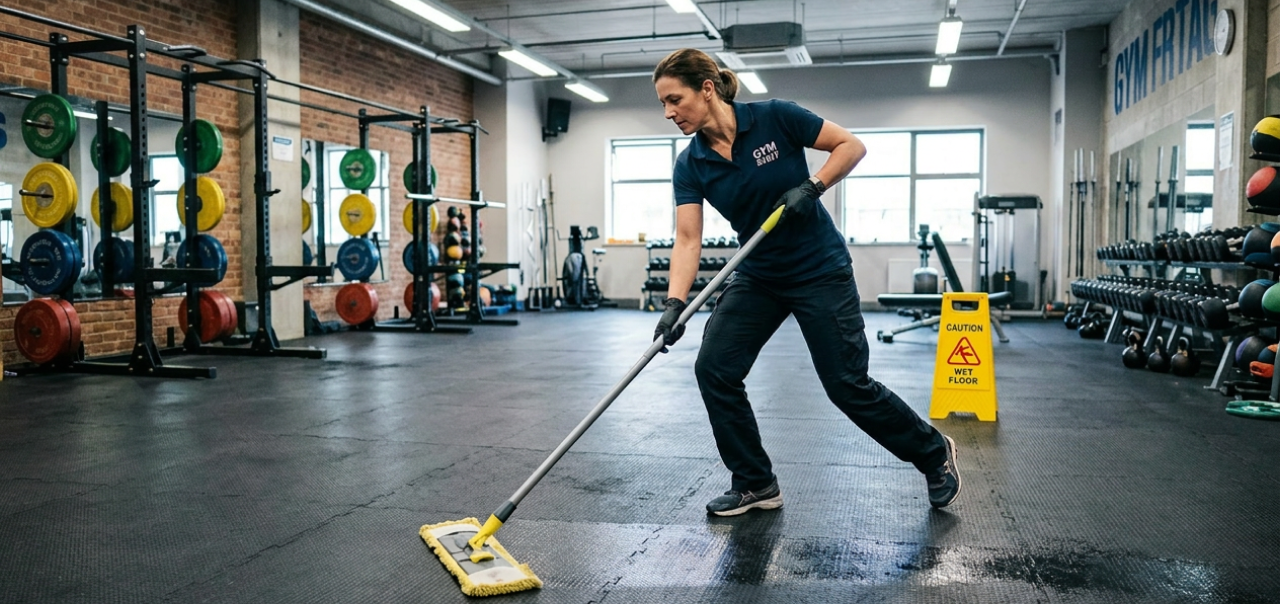
White residue shows up on gym mats even when you're constantly cleaning.
You use disinfectant after every class, mop the floors daily, and still end up with a chalky film across the surface. It's more visible on black mats, but the problem affects all flooring types in workout areas. That buildup has multiple sources. If you don't address what's causing it, wiping it down just spreads it around.
This guide covers what creates white residue on different gym floor types, how to clean gym mats properly, and how to stop buildup from returning.
What Causes White Residue on Gym Mats?
White residue on gym mats builds up from dried sweat minerals, disinfectant film, and hard water deposits that collect in textured surfaces.
Sweat contains salt and minerals that dry into a visible film. Disinfectants leave behind residue when applied too heavily or not rinsed properly. Hard water adds its own layer of minerals during mopping. Textured vinyl and rubber flooring trap all of this in grooves that surface cleaning can't reach.
Why Different Gym Floor Types Collect Residue
Not all gym flooring reacts the same way to cleaning products and sweat.
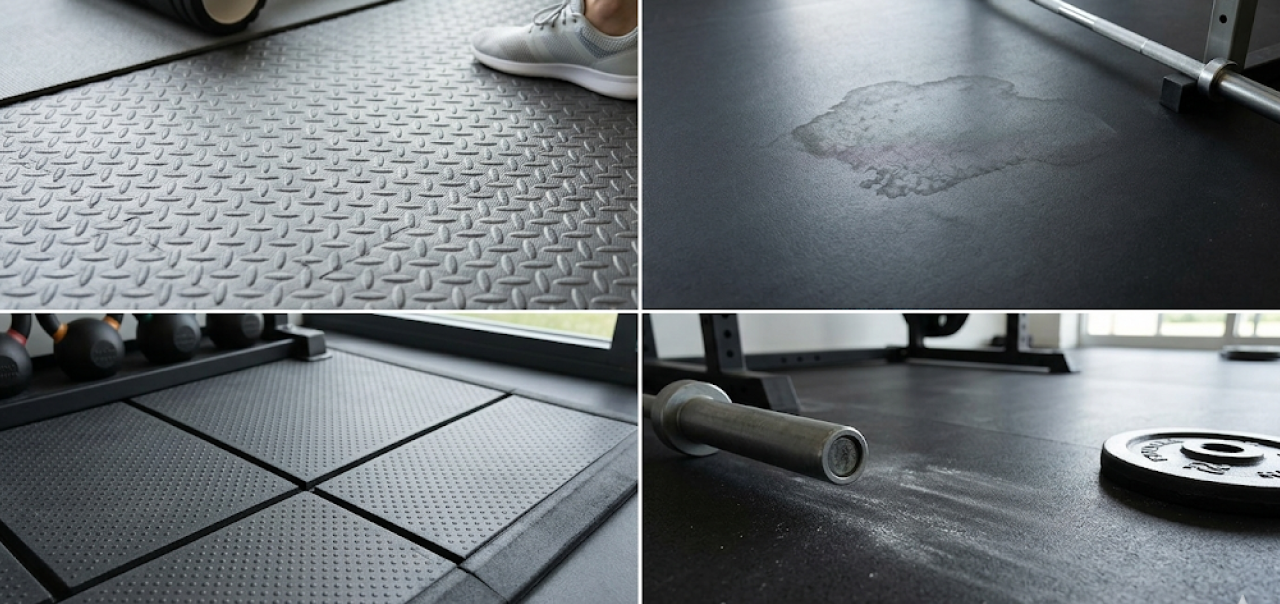
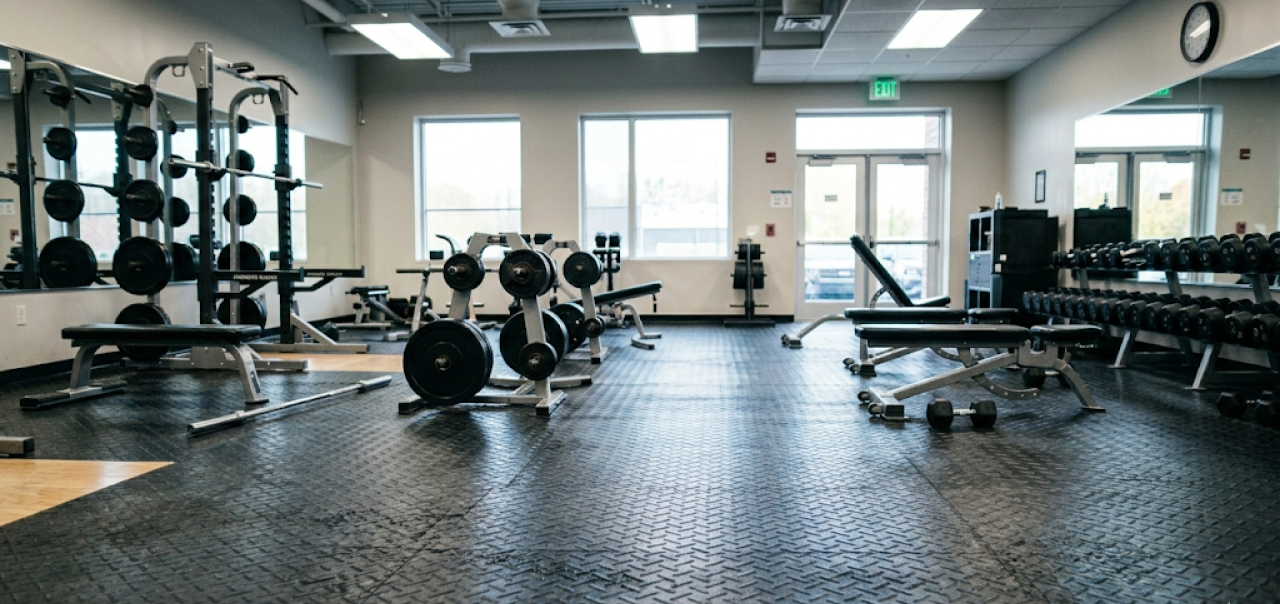
Textured vinyl mats (the basket-weave or diamond-pattern floors common in stretching zones and functional training areas) trap residue in surface grooves. Standard mopping glides over the texture without pulling buildup out.
Smooth rubber flooring shows residue faster because there's nowhere for it to hide. The film sits on top and catches light, making even small amounts visible.
Interlocking rubber tiles collect buildup along seams and edges where cleaning tools don't make full contact. Corners become problem zones.
Rolled rubber gym flooring in weight areas picks up chalk dust, grip-enhancer residue, and sweat. When staff disinfects equipment above the floor, overspray adds to the problem.
How Disinfectants Contribute to the Problem
Facilities rely on disinfectants to sanitize high-touch and high-sweat areas. That's necessary. The issue is how they're applied.
Disinfectants are designed to stay wet long enough to kill bacteria and viruses. When cleaning staff:
• Apply too much product per pass
• Don't give the disinfectant enough time to work before wiping
• Layer applications without rinsing between
When this happens, they leave behind a film that builds up with every shift.
Over-application is common in high-turnover facilities. Staff want to get the job done fast, so they saturate surfaces. The excess doesn't evaporate; it dries into a residue layer. For more on addressing facility-wide cleaning issues, see Top Cleaning Challenges Facility Managers Face (and How to Solve Them).
How to Clean Gym Floor Mats and Remove White Residue
Step 1: Use a Neutral pH Cleaner
Start with a gym floor cleaner that won't damage rubber or vinyl. Avoid harsh degreasers, strong solvents, or bleach-heavy products—they can break down the flooring material.
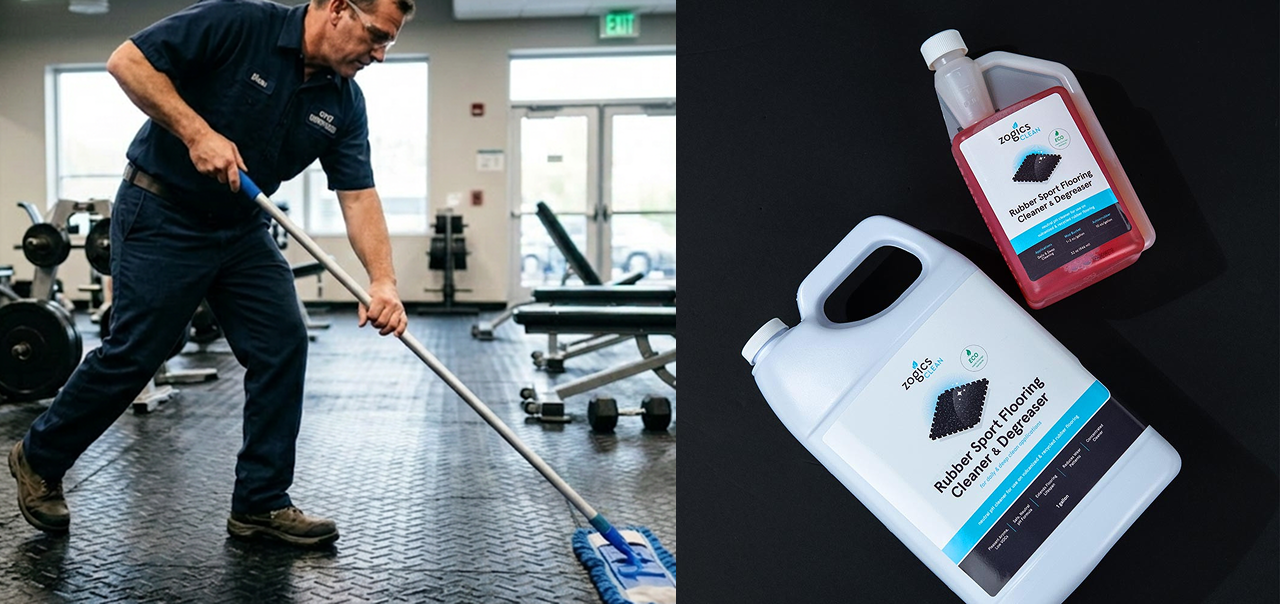
Zogics Rubber Flooring Cleaner for gyms is a concentrated, EcoLogo-certified formula designed for rolled rubber, interlocking tiles, and commercial rubber surfaces. It cuts through sweat, chalk, and grease while protecting the flooring. The transparent bottle includes a 1 oz measurement chamber marked in 1/2 oz increments, so dilution stays consistent across shifts. Use with a mop and bucket or automatic floor scrubbers.
Work the cleaner into textured surfaces with a microfiber mop or soft brush. The goal is to loosen what's trapped in the grooves, not wipe the surface.
Dilution rates depend on the application.
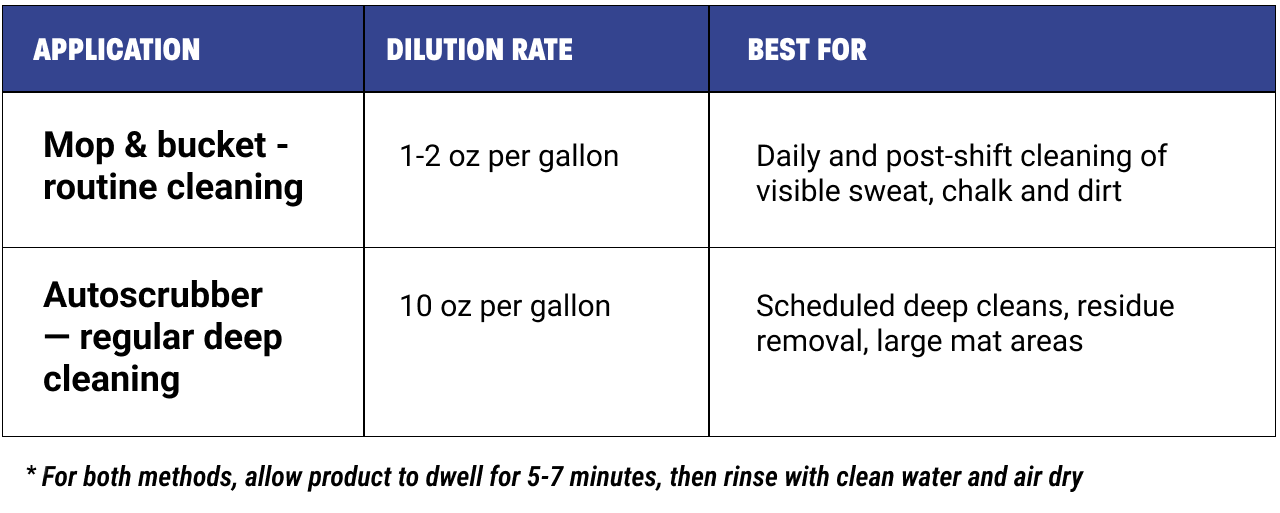
At the routine mop-and-bucket rate, a single 128 oz bottle yields up to 32 gallons of working solution. Work the cleaner into textured surfaces with a microfiber mop or soft brush.
Step 2: Rinse the Surface Completely
Staff skips this step more than any other. Without proper rinsing, residue returns within days when cleaning gym floor mats.
If you don't remove the cleaning solution, you're replacing one layer of film with another. Use clean water with a separate mop head or damp microfiber pads. Change water frequently. Dirty rinse water spreads residue instead of removing it.
Step 3: Let the Floor Dry Properly
Air drying matters. If moisture sits in textured grooves, minerals get pulled back to the surface as water evaporates.
Good airflow helps. In facilities with poor ventilation, run commercial fans or schedule deep cleaning when the space isn't in use so floors dry completely.
Step 4: Adjust Your Daily Cleaning Process
Once you remove the buildup, stop it from returning.
That means:
• Using less product per cleaning pass
• Avoiding repeated layering without rinsing between shifts
• Rotating deeper cleans into your schedule instead of relying only on surface wipes
Facilities that skip rinse steps tend to see buildup return within days.
For guidance on structuring cleaning routines that prevent rework, see How to Create a Cleaning Schedule That Reduces Downtime and Labor Costs.
Preventing Residue from Coming Back
Proper gym mat cleaning requires the right tools and process to reduce both buildup and labor time.
For daily cleaning: Use controlled-dispense systems or properly diluted spray bottles. Over-saturation is one of the main causes of residue. Standardize mixing amounts across shifts, so staff apply consistent amounts.
For periodic deep cleaning: Use microfiber mops that reach into textured surfaces, not cotton mops that push water around. Auto scrubbers work well for large mat areas. When cleaning gym floor mats, avoid using the same mop for both cleaning and rinsing.
For multi-location facilities: Standardize products and mixing amounts. Different sites using different chemicals often lead to inconsistent residue issues across locations.
What to Look for in a Gym Floor Cleaner
When evaluating cleaning products for gym mats and flooring, check for:
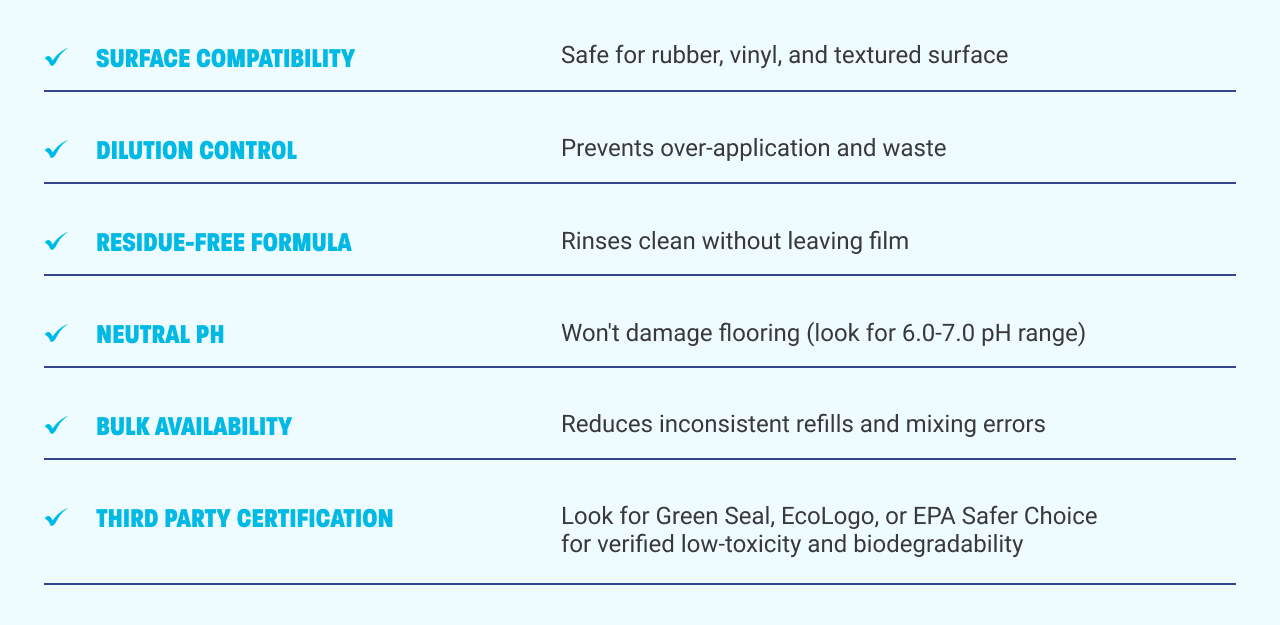
If white residue keeps showing up across multiple areas, it's a process issue, not a single product failure.
When to Deep Clean vs. Daily Maintain
Daily maintenance: Quick mop with diluted gym floor cleaner after busy periods. Focus on visible dirt and high-traffic areas. This keeps surfaces clean between deep cleans but won't remove buildup stuck in textured grooves.
Deep cleaning: Full process with scrubbing, thorough rinsing, and complete dry time. Schedule based on how many people use the mats:
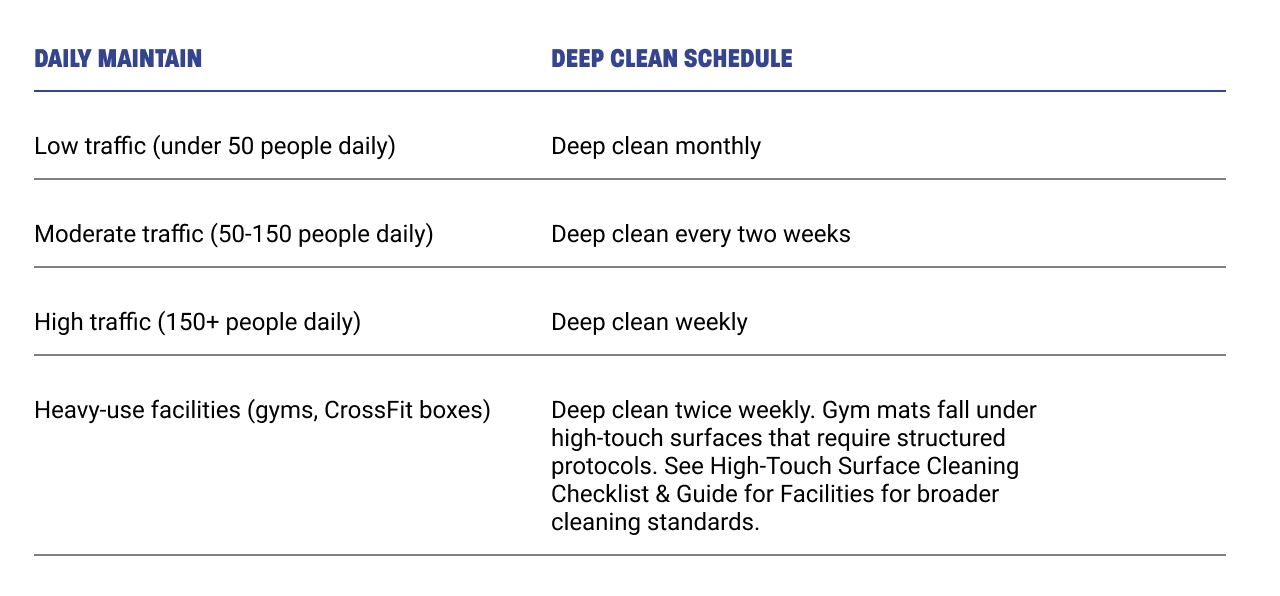
Signs you need to deep clean sooner: visible haze, sticky feel, odor that persists after daily cleaning, or complaints about mat condition.
Building a Cleaning System That Lasts
If residue is showing up across multiple areas or locations, it's time to standardize both products and process.
• Use the right gym floor cleaner for the surface type
• Control how much product is applied
• Build in proper rinse steps
• Keep tools consistent across staff and shifts
For comprehensive guidance on gym cleaning best practices, see Importance of Keeping Your Gym Clean.
We provide commercial cleaning supplies, disinfectants, and floor care solutions for gyms, schools, healthcare facilities, and multi-location operations. We help teams reduce rework, improve consistency, and maintain clean, safe environments under daily use. Connect with our product specialist to set up a system that works across your facility.
Shop Commercial Cleaning Chemicals | Commercial Cleaning Tools →
Clean gym mats with a neutral pH floor cleaner, rinse with clean water using a separate mop, and let floors dry completely. The key is removing the cleaning solution entirely - any residue left behind becomes the next layer of buildup. Avoid over-saturating surfaces and standardize mixing amounts across shifts to prevent film from forming.
White residue comes from a combination of sweat minerals, cleaning product buildup, and hard water deposits. Textured mats trap residue in surface grooves, making it more visible over time.
Yes, when disinfectants are overused or not rinsed properly. They leave behind a film that builds up over time, especially on textured surfaces.
It also doesn't dissolve mineral or sweat buildup; it just bleaches the color out of the residue, making the floor look cleaner temporarily while the buildup remains.
High-traffic facilities should deep-clean mats weekly or biweekly, depending on usage. Daily wipe-downs alone are not enough to prevent buildup in textured surfaces.
Use a neutral or low-residue floor cleaner designed for rubber or vinyl. Avoid heavy degreasers or products that leave films behind after drying. Look for formulas with controlled mixing amounts to prevent over-application.