




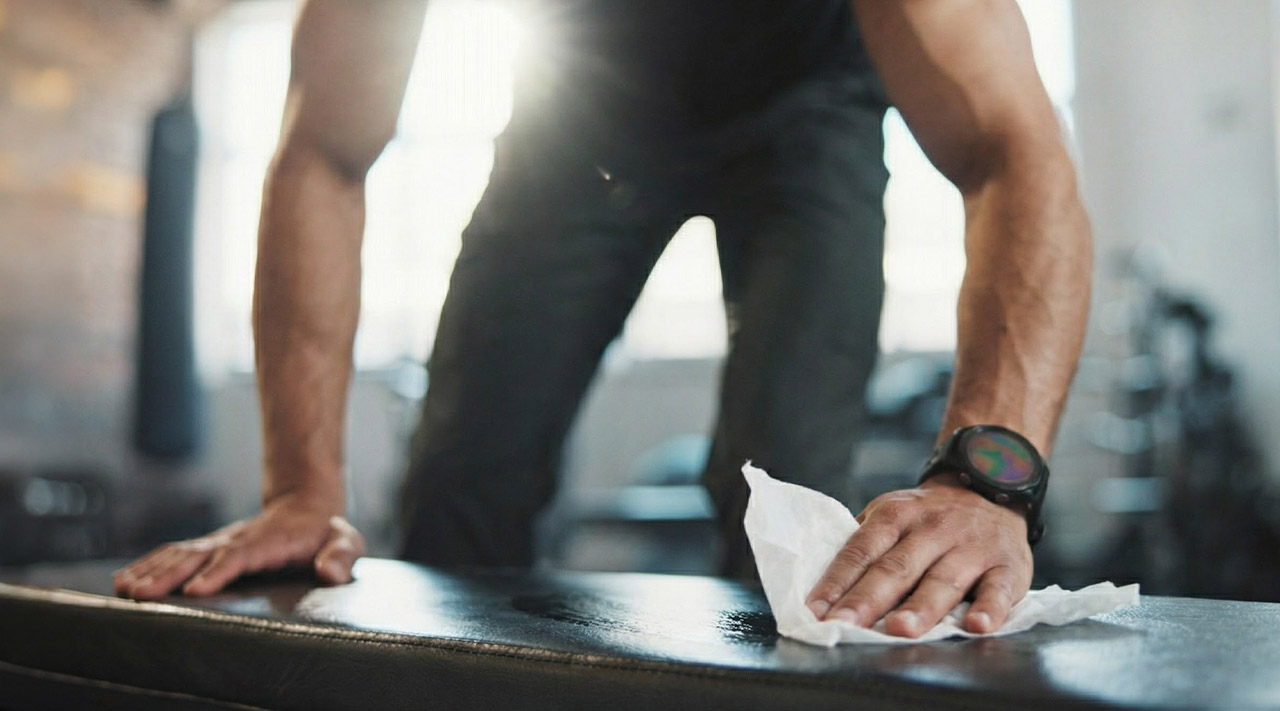
If you manage a gym or fitness facility, you already know disinfectant wipes are one of your most visible gym equipment cleaning tools and one of the most misunderstood by members.
Member complaints across fitness communities sound familiar: "People wipe the equipment, but it still doesn't feel clean." That frustration usually isn't about effort. It's about how disinfectant wipes actually work when members use them between sets.
Below are the five mistakes you see every day on your floor—backed by research—and what to do about them.
Mistake #1: Treating Disinfectant Wipes Like Paper Towels
What's happening:
Most members assume a quick swipe is enough. They grab a wipe, do one pass across a bench or handle, and move on—often before the surface is even visibly wet.
Why it's a problem:
Disinfectant wipes rely on both mechanical action (the physical wiping) and chemical contact. Research evaluating disinfectant wipes under realistic conditions found that wipe formulation and saturation level played a larger role in effectiveness than wiping technique when surfaces were cleaned quickly, which is exactly how members use wipes during peak hours.
When wipes are too thin, dry out fast, or don't hold enough solution, that quick swipe leaves contamination behind, even though the surface looks clean.
What to do instead:
Choose fitness equipment wipes designed for high-traffic use with:
• Balanced saturation levels—wet enough to disinfect without leaving surfaces soaking
• Durable material that doesn't shred or dry out mid-use
• Fast-acting formulas that work within realistic contact times
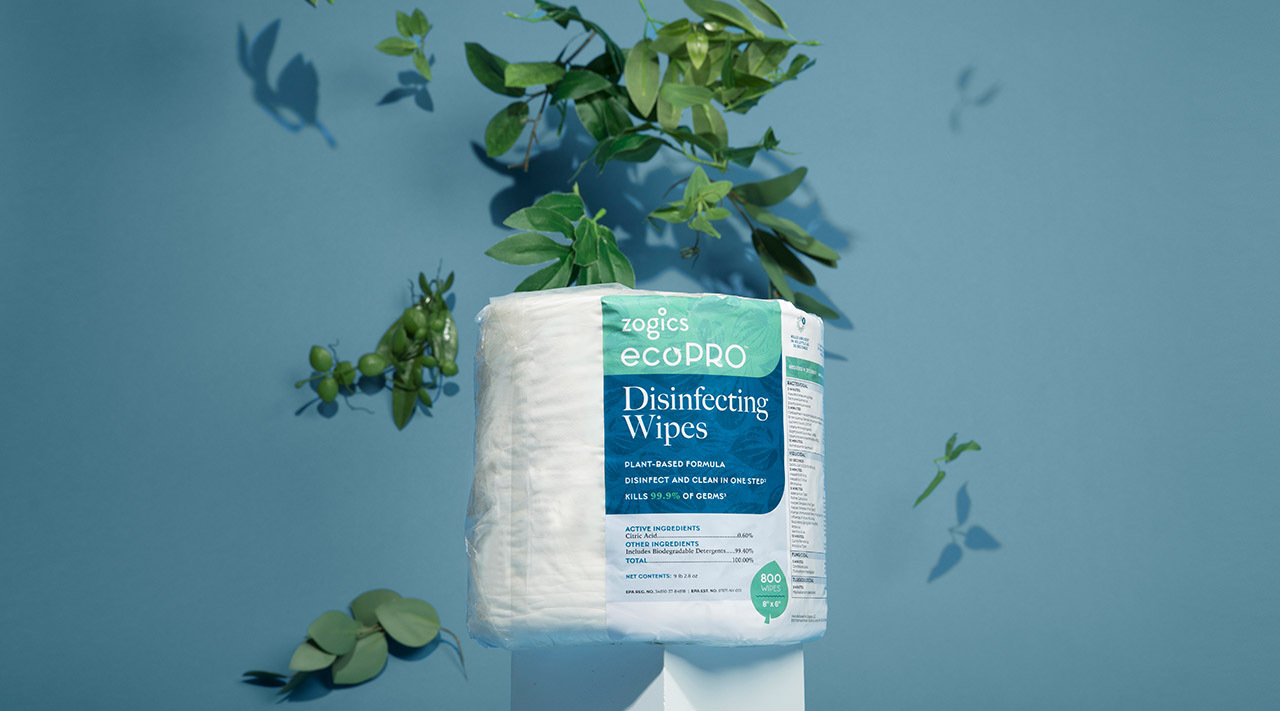
Zogics ecoPro Disinfecting Wipes use a durable fabric that holds up to heavy use, so members can clean equipment in one wipe instead of three. They're EPA-registered, botanically-derived, and free from alcohol, bleach, and phenol, making them safe for electronics and screens, and work on everything from glass and steel to rubber and vinyl. At 8" x 6", they're larger than most brands and made in the USA. Learn more about why professional-grade wipes matter in high-traffic facilities.
Mistake #2: Ignoring Contact Time Completely
What's happening:
Members wipe down a machine and immediately start their set. Equipment gets wiped between every user, but it's never actually disinfected because no one waits for the product to work.
Why it's a problem:
Contact time (sometimes called "dwell time") is how long a disinfectant needs to stay wet on a surface to kill pathogens. An analysis from infection-control experts found that disinfectant wipe "treatment time" is often confused with the longer contact times listed for spray products—and that real-world wiping rarely matches lab test conditions.
In practice, members aren't going to wait 3–5 minutes between sets. If your wipes require long contact times, they're not actually disinfecting anything during member turnover.
What to do instead:
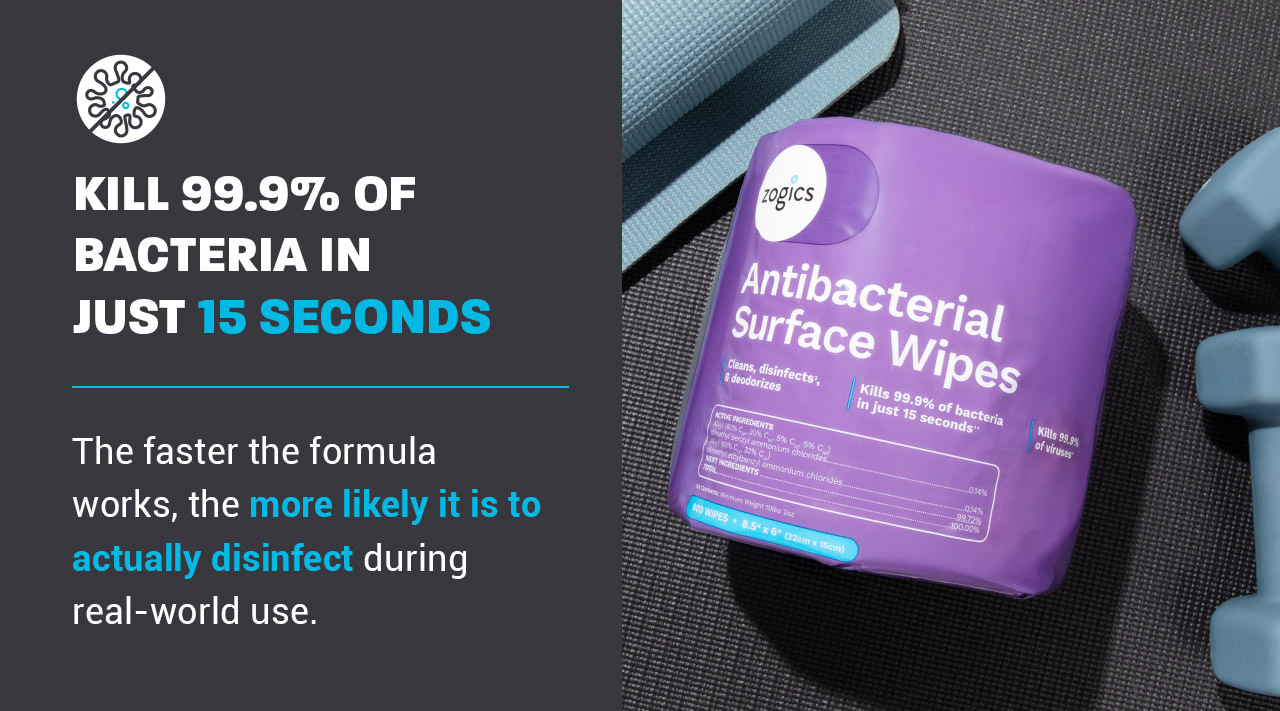
Look for antibacterial gym wipes with short, realistic contact times for common gym pathogens. The faster the formula works, the more likely it is to actually disinfect during real-world use.
For facilities that see constant equipment turnover, pairing member wipe-downs with scheduled staff cleaning using faster-acting disinfectants ensures surfaces are truly disinfected—not just wiped.
Zogics Antibacterial Disinfecting Wipes are powerful antibacterial surface wipes that kill 99.9% of bacteria in just 15 seconds—making them practical for high-turnover environments where equipment is constantly in use. They're free of bleach, alcohol, and phenol, work on a wide range of hard surfaces, and are made in the USA. Trusted by tens of thousands of facilities nationwide, including commercial gyms, fitness studios, schools, and healthcare environments.
Mistake #3: Using One Wipe for an Entire Machine
What's happening:
You've seen it: a member grabs one wipe and uses it on the seat, handles, screen, adjustment pins, and frame—sometimes across multiple machines—until the wipe is bone dry.
Why it's a problem:
A scientific review on disinfectant-impregnated wipes found that wipe material, saturation level, and the amount of soil (sweat, oils, grime) all influence whether microbes are removed or unintentionally spread across surfaces.
Once a wipe dries out or becomes overloaded with contaminants, it stops cleaning and starts transferring bacteria from one surface to another. That dried-out wipe isn't protecting anyone—it's cross-contaminating equipment.
What to do instead:
Educate members on wipe coverage:
• 1 wipe per machine (or 1 wipe per high-touch zone if it's a large machine)
• If the wipe dries out, grab a fresh one
For facility teams:
Make wipes easily accessible throughout the floor. If members have to walk across the gym to find a gym wipe dispenser, they'll stretch one wipe as far as possible. Station placement matters.
Zogics offers wall-mounted dispensers and freestanding wipe stations designed to keep wipes accessible in every zone of your facility—near cardio, free weights, group fitness, and locker rooms. For tips on preventing wipe clogs and multi-pulls with the right dispenser setup, check out our dispenser guide.
Mistake #4: Missing the Highest-Risk Touchpoints
What's happening:
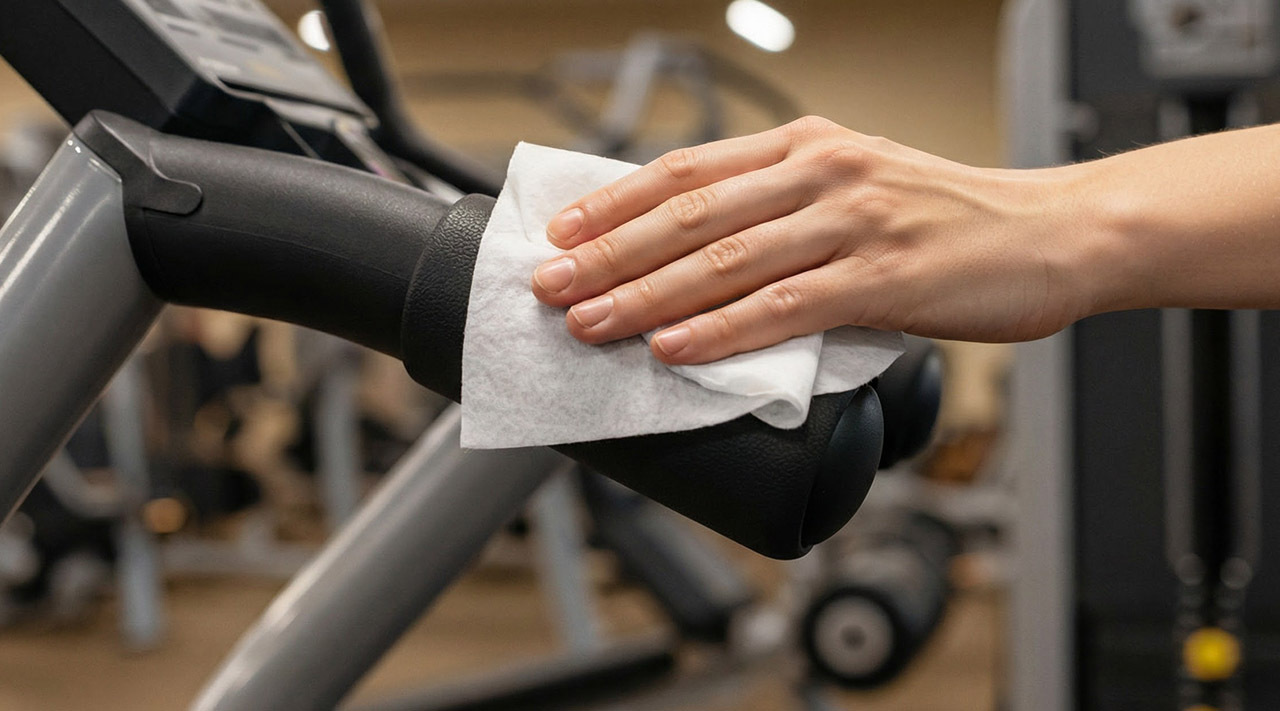
Members wipe the obvious spots—handles, seats, maybe a screen—but skip the small, high-touch areas that actually carry the most contamination.
Why it's a problem:
A study measuring ATP (biological residue) levels on gym equipment found that high-touch areas retained significantly higher contamination even when the equipment appeared visibly clean. The spots members skip are often the ones touched most frequently throughout the day:
• Weight selector pins
• Adjustment levers
• Side rails and grips
• Touchscreen edges
• Water bottle holders
These surfaces get touched dozens of times per hour but rarely get wiped.
What to do instead:
For members: Post simple signage near equipment showing which areas to wipe (with visuals).
For staff: During walkthroughs, prioritize these high-touch zones. Even a quick wipe-down of selector pins, levers, and side rails between deep cleans makes a measurable difference.
Bulk up for staff cleaning: For high-volume cleaning rounds, Zogics Gym Wipes Pallets and portable bucket refill systems reduce reordering frequency and restocking interruptions, which keeps your team focused on cleaning equipment, not managing inventory.
Mistake #5: Assuming Member Wipe-Downs Replace Staff Cleaning
What's happening:
Your members are wiping down equipment after every use. You assume that's enough to keep the gym clean—until you start noticing buildup, odor, or member complaints by afternoon.
Why it's a problem:
Member wipe-downs help reduce immediate surface contamination, but they're not a substitute for professional cleaning. Research comparing disposable disinfectant wipes to traditional cleaning methods found that wipes significantly reduced microbial counts—but only when used as part of a structured cleaning program that included routine deep cleaning.
Facilities that rely solely on member wipe-downs often see:
• Residue buildup on high-traffic equipment
• Persistent odors in cardio zones and group fitness rooms
• Declining member confidence in cleanliness by late afternoon
What to do instead:
Think of member wipe-downs as maintenance, not replacement. Your cleaning program should include:
1. Member wipe-downs (between uses)
2. Staff spot-cleaning during peak hours (high-touch zones, floors, screens)
3. Nightly deep cleaning (full equipment wipe-down, floors, locker rooms)
For multi-location operators:
If you're managing multiple sites, consistency matters. Standardizing on one wipe product across locations simplifies ordering, staff training, and quality control.
Zogics works with multi-location fitness chains to set up automated ordering, bulk pricing, and consistent product delivery across all sites. One SKU, one vendor, no guesswork. Learn how to master wipe reordering and never run out again.
What This Means for Your Facility
The research reinforces what experienced operators already know: disinfectant wipes work best when your system is designed around real member behavior—not an ideal technique.
When you choose wipes based on:
• Realistic contact times (not lab-perfect conditions)
• Durability that holds up to heavy use (so one wipe actually cleans one machine)
• Accessibility (dispensers where members actually use them)
...and back them up with routine staff cleaning, you'll see fewer complaints, better compliance, and equipment that actually feels clean throughout the day.
Next Steps: Choosing Wipes That Work
If you're evaluating wipes for your facility, here's what to prioritize:
• Realistic contact times (works within actual gym usage patterns)
• Durable material that holds up through full equipment wipe-downs
• EPA-registered (for verified kill claims)
• Fragrance options (some facilities prefer unscented; others want a clean scent)
• Dispenser compatibility (wall-mount, countertop, freestanding)
Learn more: Read our guide on Best Disinfectant Wipes for Gyms or Which Wipes Are Right for You? to compare options for your facility's needs.
Ready to order? Shop Zogics Disinfecting Wipes or talk to a Zogics product specialist for personalized recommendations.
Zogics is a trusted supplier of professional cleaning and disinfecting solutions for gyms, fitness studios, schools, healthcare facilities, and commercial properties. We work with single-location studios and national franchise chains to keep high-traffic spaces clean, safe, and compliant.
Gym equipment should be wiped down after every use by members. Staff should also perform spot-cleaning during peak hours and conduct thorough deep cleaning at the end of each day. High-touch areas like cardio equipment, free weights, and benches require the most frequent attention.
Sanitizing reduces the number of germs to safe levels, while disinfecting kills a higher percentage of pathogens (typically 99.9% or more). For gym environments where equipment is shared constantly, EPA-registered disinfectant wipes are recommended over basic sanitizers to ensure adequate protection against bacteria and viruses.
This depends on the product's contact time (also called dwell time), which is listed on the label. Most gym disinfectant wipes require surfaces to stay wet for 15 seconds to 4 minutes to be fully effective. Choose wipes with shorter contact times for high-turnover facilities where equipment is used continuously.
No. Once a wipe dries out or becomes overloaded with contaminants, it stops disinfecting and can actually spread bacteria from one surface to another. Use one wipe per machine, or one wipe per high-touch zone on larger equipment. If the wipe dries out mid-use, grab a fresh one.
Not all wipes are equipment-safe. Avoid wipes containing bleach, harsh alcohols, or phenol, as these can damage vinyl, rubber, and electronic screens over time. Look for wipes specifically formulated for fitness equipment that are free of corrosive chemicals and safe for repeated use on multiple surface types.
Quality gym disinfectant wipes work on most hard, non-porous surfaces including vinyl seat pads, rubber grips, stainless steel frames, painted surfaces, and touchscreens. Always check the product label to confirm compatibility, and avoid using wipes on damaged or porous surfaces where moisture can seep in.
This depends on your facility size and member traffic. A general rule: estimate 2–3 wipes per member per visit for member use, plus additional wipes for staff cleaning. A gym with 200 daily visits might use 400–600 wipes per day. For detailed calculations, check out our guide on wipe and dispenser calculations.
Both. Member wipe-downs after each use provide baseline maintenance and reduce immediate surface contamination. Staff cleaning—including spot-cleaning during peak hours and deep cleaning at closing—ensures equipment is thoroughly disinfected and high-touch zones that members miss are properly sanitized. A combination of both creates the safest environment.