




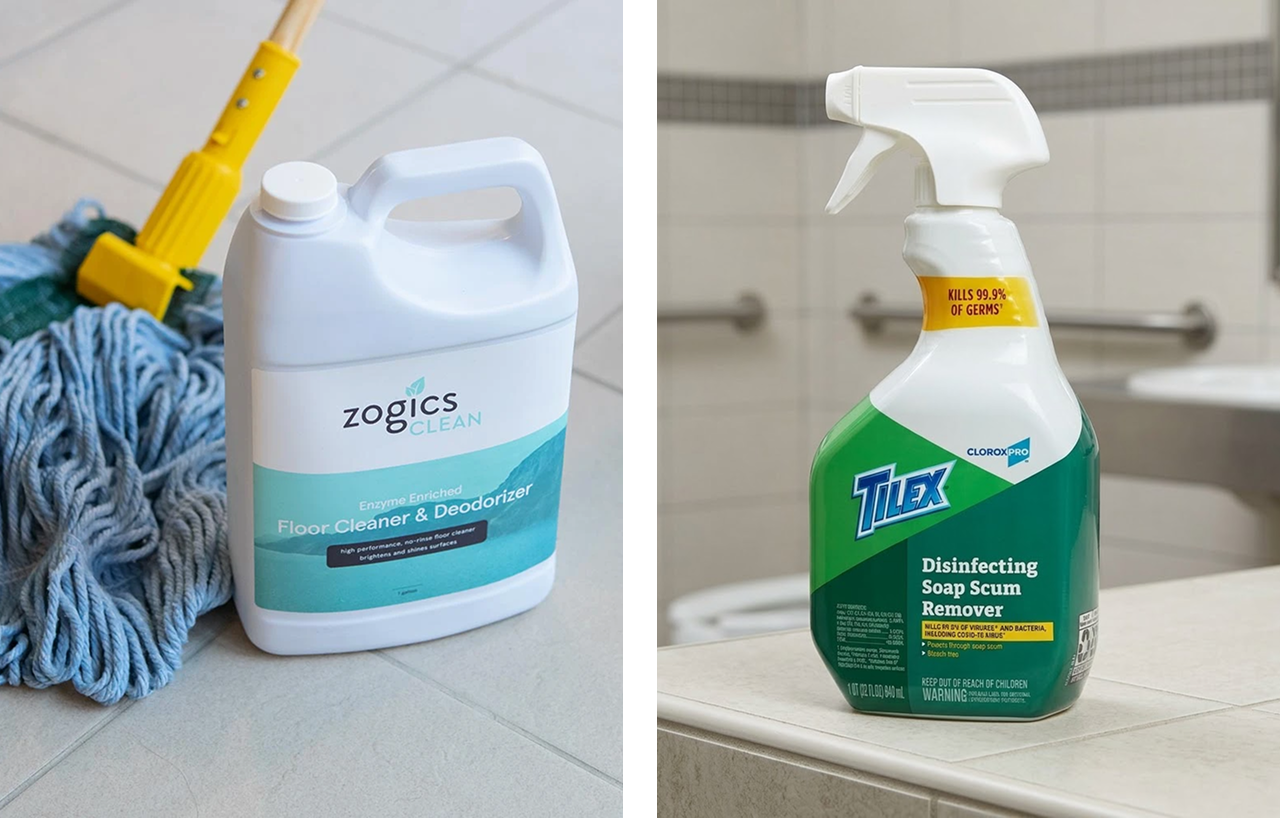
Enzyme cleaners and disinfectants solve different problems in commercial facilities.
A restroom gets disinfected three times a day, but the smell returns within an hour. Locker rooms are wiped down after every class, but carry a sweat smell by mid-afternoon. Trash areas get sprayed nightly, but the odor never fully disappears.
The cleaning is happening. The staff is showing up. The problem is using the wrong product for the job.
This post breaks down how each works, where each fails, and when to use them together.
What's the Difference Between Enzyme Cleaners and Disinfectants?
Enzyme cleaners break down organic matter that causes odors. Disinfectants kill bacteria and viruses on surfaces.
Enzymes digest the source—sweat residue, urine salts, food waste, sticky bacterial layers. Disinfectants target germs, but don't remove the material those germs feed on. If the source stays on the surface, the smell comes back.
Why Disinfectants Alone Don't Fix Odor Problems
Disinfectants are built to kill germs, not eliminate odors.
They kill bacteria and viruses on contact. They require proper contact time to work. They leave surfaces visibly clean. What they don't do: break down urine salts, remove embedded waste buildup, or eliminate odor sources in porous materials such as grout or rubber flooring.
That's why a restroom can pass inspection and still smell off an hour later. This comes up often in facilities switching to cheaper disinfectants to meet budget cuts. Teams are working, but the product isn't fixing the cause.
How Enzyme Cleaners Remove Odors (And Do They Work?)
Enzyme cleaners work differently.
They break down proteins, fats, and organic waste completely. They continue working after application, not during contact time alone. They target the source instead of masking the smell.
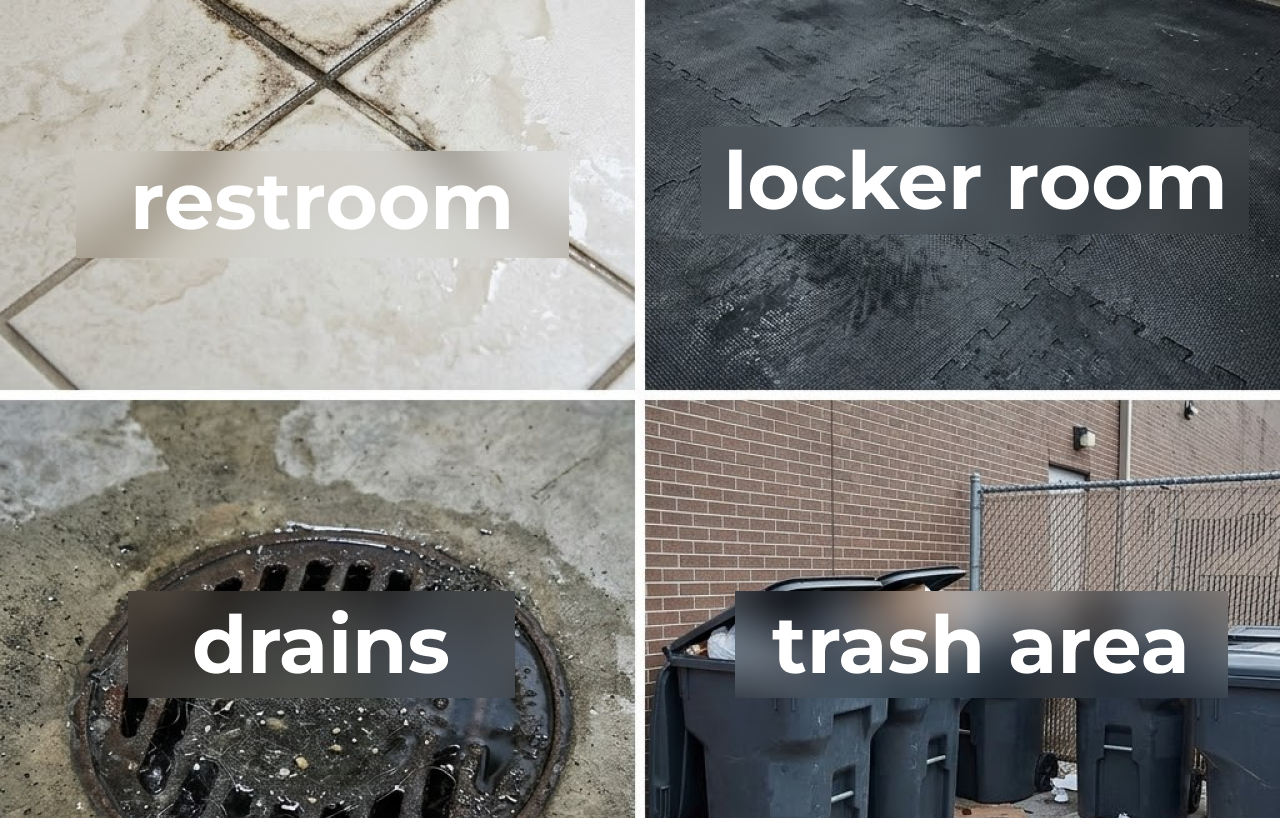
This matters in restroom grout and around toilet bases, locker rooms with rubber flooring, trash rooms and dumpster areas, and carpeted zones exposed to spills or urine.
A 2020 study published in Frontiers in Microbiology found that enzyme-based cleaning in food processing facilities reduced surface bacterial counts more effectively than standard cleaning—primarily by removing the organic buildup that harbors bacteria rather than killing them directly. The same principle applies in commercial restrooms and locker rooms: when the residue is gone, there's less for bacteria to colonize between cleans.
When to Use Enzyme Cleaners vs Disinfectants
The choice isn't one or the other. It's about using them at the right stage of the cleaning process.
Use disinfectants when:
You need to meet hygiene or inspection requirements. You're cleaning high-touch surfaces such as door handles, flush valves, or equipment touchpoints. You need fast, visible sanitation between uses.
Use enzyme cleaners when:
Odors keep returning after disinfecting. You're dealing with urine, sweat, vomit, or food waste. Surfaces are porous (grout, unfinished concrete, rubber flooring) and hold residue.
Use both when:
Cleaning restrooms, locker rooms, or trash areas. Managing recurring odor complaints that don't resolve with more frequent disinfecting. Running multi-shift operations where odor builds up between deep cleans.
Start with enzyme cleaning to break down the source, then disinfect to handle surface-level bacteria. Reversing that order limits effectiveness—disinfectant seals in the residue, and the enzyme can't reach it.
The Odor Control Protocol: Step-by-Step
Most odor problems in commercial facilities aren't solved by cleaning more often — they're solved by cleaning in the right sequence. Follow this protocol in restrooms, locker rooms, trash areas, and any zone with recurring odor complaints:
Step 1: Clear visible debris. Remove trash, wipe up standing liquid, and sweep or dry-mop the area before applying any chemical.
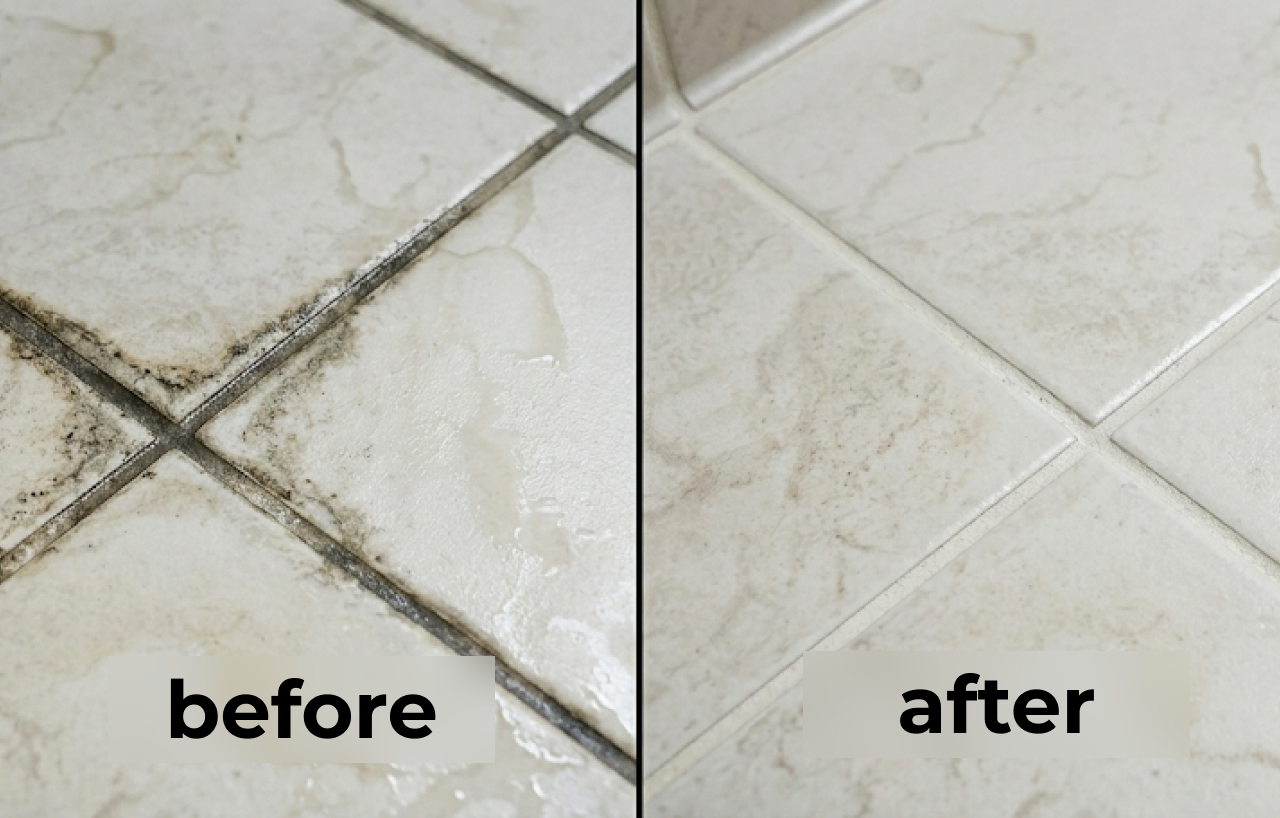
Step 2: Apply enzyme cleaner to odor-prone surfaces. Spray or mop onto grout lines, floor drains, toilet bases, urinals, and rubber flooring. These are the zones where urine salts, sweat proteins, and organic waste accumulate.
Step 3: Allow full dwell time. Enzymes work after application — don't mop up immediately. Follow product instructions; heavy buildup may require 5–10 minutes or a second application.
Step 4: Remove loosened residue. Mop or wipe away the broken-down waste. This step is what prevents odor from returning — the source is physically removed, not just sanitized over.
Step 5: Apply disinfectant for hygiene and compliance. Now that organic matter is removed, the disinfectant can reach the surface directly and perform as rated. Follow the contact time on the label.
Where Most Facilities Get It Wrong
The most common mistake isn't cleaning frequency, it's sequence and product selection.
Spraying disinfectant over unremoved buildup seals residue in place. Using surface cleaners on porous materials—grout, rubber flooring, unfinished concrete—leaves the odor source intact. Running high-frequency disinfecting schedules without enzyme treatment means the product isn't solving the problem; it's just sanitizing the top of it.
The result is predictable: cleaning logs show full compliance, but occupants still report odors. Custodial staff cleans the same zones repeatedly without a change in outcome. That's a workflow problem, not a staff problem—and it's fixed by matching product to surface chemistry, not by adding another cleaning pass. For a broader look at recurring facility cleaning issues, see Top Cleaning Challenges Facility Managers Face (and How to Solve Them).
Choosing the Right Products for Odor Control
Product choice affects both results and labor time.
For daily disinfecting:
Use fast-contact disinfectants that hold up in high-use areas. Diversey offers hospital-grade options trusted across commercial operations, from ready-to-use All-Purpose Disinfectant, Concentrated Disinfectant, and Non-Acid Bowl & Bathroom Disinfectant Cleaner.
For odor control:
Use enzyme-based cleaners in problem zones where uric acid, sweat, and organic waste build up: toilet bases and urinals, floor drains and grout lines, trash bins and dumpster pads, locker room flooring, and unfinished concrete. The best enzyme cleaner for urine smell targets these areas specifically, breaking down the source instead of masking it.
Zogics Enzyme Enriched Floor Cleaner & Deodorizer works as both an enzyme cleaner for grout and a commercial odor eliminator. It breaks down organic waste on tile, grout, and concrete while deodorizing. The concentrated formula dilutes up to 1:128, bringing the cost per gallon down to about 25 cents for light-duty cleaning.
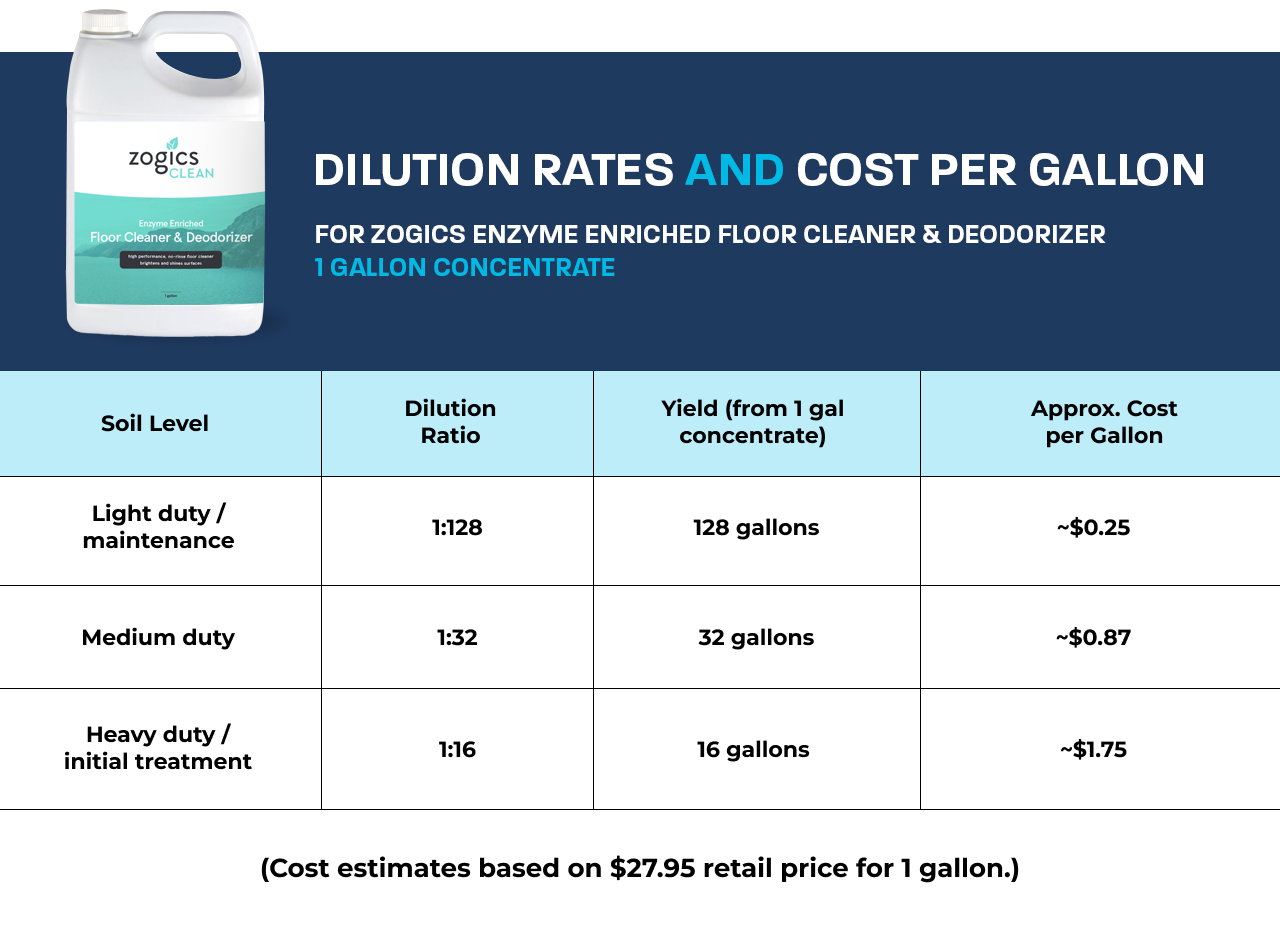
Use the heavy-duty dilution for first-time treatments or areas with significant buildup. Drop to maintenance dilution once odor is under control.
For restroom deep cleaning, Zogics Organic Acid Restroom Cleaner cuts mineral deposits and uric acid scale. Pair it with enzyme treatment around bases and drains for full odor control.
For combined workflows:
Build a two-step system: enzyme treatment on odor-prone areas first, then disinfectant pass for hygiene compliance.
This reduces repeat cleaning and keeps results consistent across shifts. Facilities managing multiple locations benefit from standardizing both products and processes. It simplifies training and delivers consistent results between sites.
Buyer's Checklist: Evaluating Cleaners for Odor Control
When comparing products, focus on performance under real conditions, not label claims:
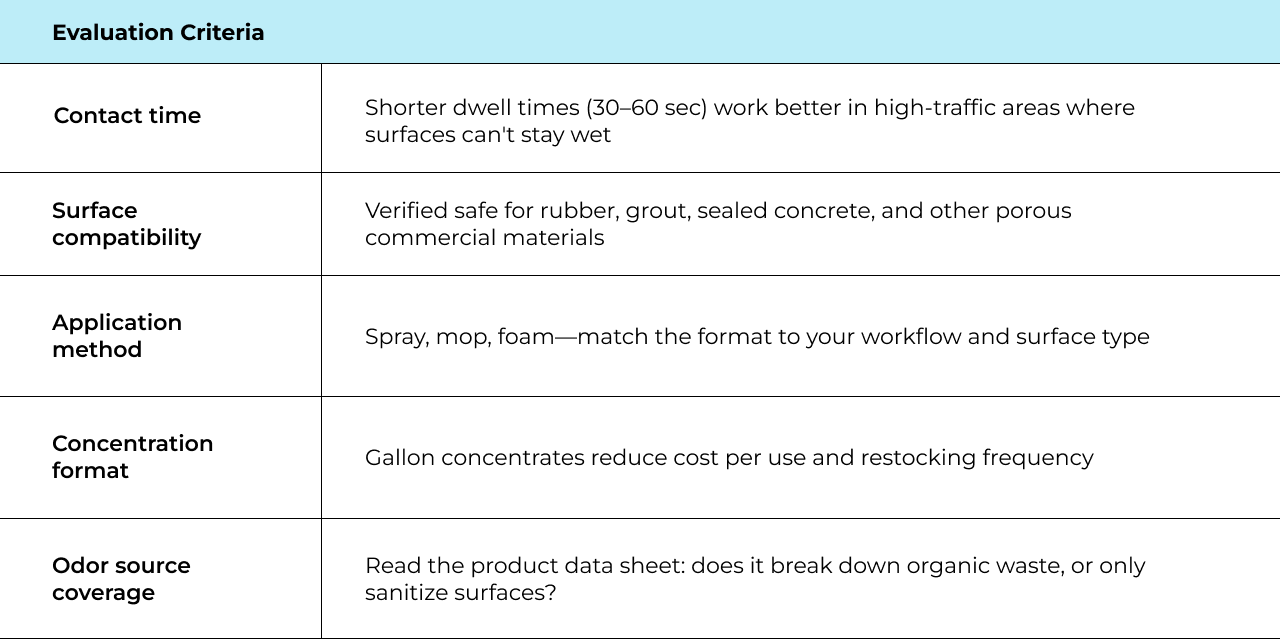
If odors keep returning after switching products, the issue is usually source removal, not disinfectant strength. You can't kill your way out of an odor problem when the residue causing the smell is still on the surface.
Building a Commercial Odor Eliminator System That Works
Facilities that rely on disinfectants alone end up cleaning areas multiple times without solving the problem. Staff get frustrated when their work doesn't produce results. Occupants complain. Management sees cleaning logs showing everything was completed on schedule, but can't explain why the smell persists.
Adding enzyme cleaning where it matters—restroom bases, drains, locker rooms, trash areas—reduces odor complaints and cuts repeat labor. When both products are used correctly, cleaning becomes more predictable and easier to manage across shifts and locations.
If you're dealing with recurring odor issues, start by identifying where the buildup happens and match the product to the problem. Use enzyme cleaners for waste buildup and odor sources. Use disinfectants for hygiene and compliance. Standardize both across your facility or locations.
We provide commercial cleaning supplies, disinfectants, enzyme cleaners, and facility solutions for gyms, schools, healthcare facilities, and multi-location operations. We help teams reduce rework, improve consistency, and maintain clean, odor-free environments under real-world conditions. Contact our team for product recommendations based on your facility type and traffic volume.
No. Enzyme cleaners break down organic matter—urine, sweat, food waste—but they don't kill pathogens. They have no EPA-registered disinfectant claims. For hygiene compliance, you still need a separate disinfectant applied after enzyme treatment. Use enzyme cleaners to eliminate odor sources; use disinfectants to meet sanitation standards.
Yes. Enzyme cleaners remove odors at the source by breaking down organic material such as urine, sweat, and food waste. Disinfectants kill bacteria but don't eliminate the residue causing the smell, so odors return.
Yes. Use enzyme cleaners first to break down organic matter, then apply disinfectant to sanitize the surface. Reversing the order reduces effectiveness because disinfectant can seal in residue.
Because disinfectants don't remove the underlying material causing the smell, residue, such as uric acid salts, sweat proteins, and sticky bacterial layers, remains and continues to produce odor even after bacteria are killed.
Use them in restrooms (around toilet bases, urinals, floor drains), locker rooms (rubber flooring, shower stalls), trash areas (bins, dumpster pads), and any surface where organic buildup causes persistent odor.
No. They solve different problems. Enzyme cleaners remove odor sources, while disinfectants handle sanitation and compliance. Both are needed in most commercial facilities—use them in sequence, not interchangeably.
Enzymes continue working after application, breaking down organic matter over several hours. For heavy buildup, allow longer dwell time or repeat application. Results improve with consistent use as residue layers are removed.
Enzyme concentrates can cost less per use than ready-to-use disinfectants when diluted properly. A gallon of enzyme concentrate can make 32-128 gallons of cleaning solution, depending on the soil level. Calculate cost per gallon of usable product, not bottle price.