Help Center

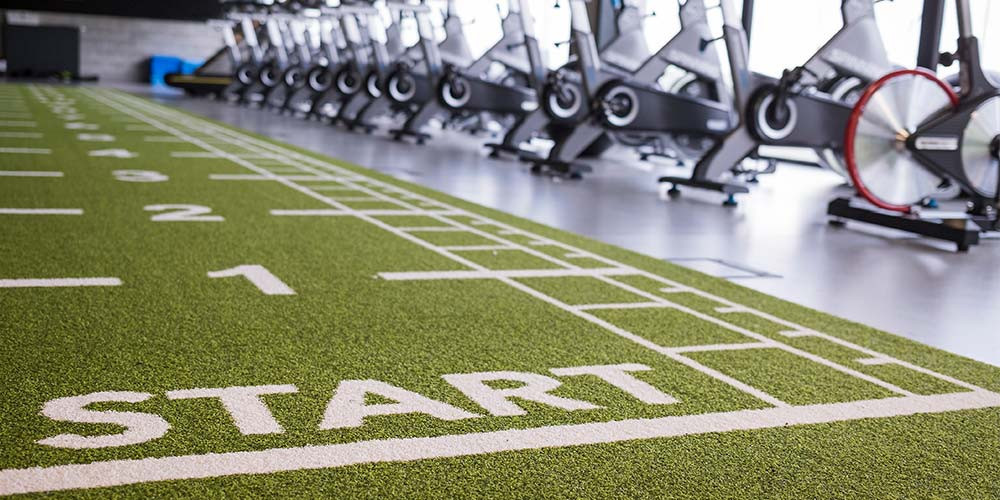
If you are looking to add an alternative workout area to your gym facility, consider incorporating indoor artificial turf flooring. Not only does it add visual appeal, but it also provides a safe and functional workout space that can benefit your members in several ways. In this guide, we’ll explore the benefits of artificial gym turf flooring, what to look for when choosing the right flooring, and how to install it.
What Type of Turf Do Gyms Use?
Gyms use commercial-grade artificial turf for gym environments, not residential or outdoor grass. This type of turf is built to handle heavy foot traffic, intense workouts, and repeated equipment use without wearing down quickly.
It’s designed for functional training, sled work, and high-impact exercise zones where durability and safety matter.
Unlike landscaping turf, gym turf is made with dense fibers, reinforced backing, and low pile height for better traction and less resistance when pushing sleds or moving equipment.
The right turf helps reduce injuries, improves grip, and keeps training areas looking professional year-round.
Why Incorporate Indoor Turf in Your Facility?
Adding artificial turf to your gym brings the outside in, without worrying about unpredictable weather. It is a durable option for functional fitness training and works well for yoga, strength training, and speedwork.
If members are preparing for outdoor events like marathons, turf provides an ideal surface for agility work. It reduces impact-related injuries, absorbs noise from lifting, and is easy to clean—making it a cost-effective option for gym owners.
Rubber vs Artificial Turf for Gym
Both rubber flooring and artificial turf are popular gym flooring options, but they serve different purposes. Rubber is ideal for weight rooms and cardio areas, while turf supports agility work and functional training.
Many gyms use both together: rubber under equipment and turf for training lanes and sled zones.
Gym Turf Flooring
Gym Turf Flooring is a non-rubber infill surface made from reclaimed rubber and polyethylene. It’s ideal for dragging, friction training, and heavy lifting.
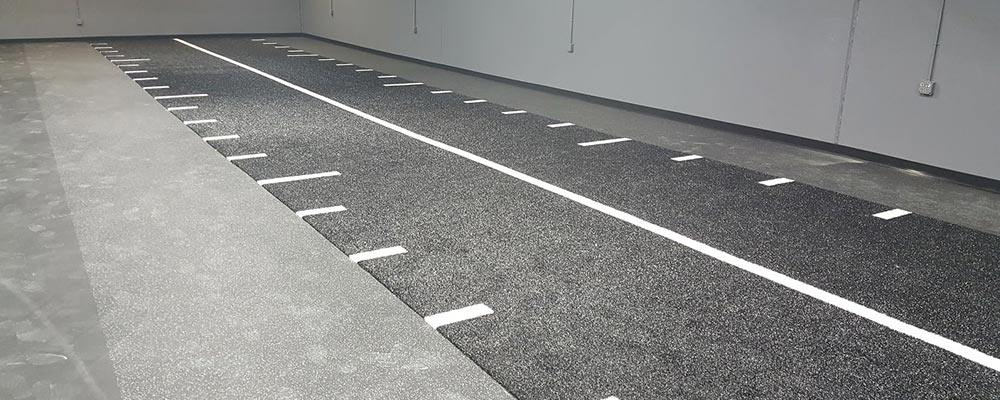
Available indoors or outdoors, turf can include training lines and distances that are woven directly into the material, so they don’t fade.

What to Look for in Artificial Turf Flooring
When selecting artificial turf flooring, consider face weight, pile height, and thickness.
1. Face Weight
The higher the face weight, the more durable the turf. Choose higher weight for high-traffic areas.
2. Pile Height
Lower pile height improves sled work and reduces trip risks.
3. Turf Installation
Installation requires a clean surface, adhesive, seam sealer, and drying time. Use our Turf Installation Guide for step-by-step support.
How to Clean Artificial Turf in a Gym
Artificial turf requires routine cleaning to prevent odor, bacteria, and wear. Regular brushing and disinfecting keeps turf safe and sanitary.
Read our full guide about How to Clean Indoor Turf.
Without proper maintenance, sweat and debris break down fibers and create long-term odor issues.
Daily Maintenance
- Sweep or vacuum debris
- Spot-clean sweat areas
- Disinfect surfaces
Deep Cleaning
- Brush fibers
- Use turf cleaner
- Rinse lightly
- Allow full drying
Ready for Turf?
Indoor turf supports training, reduces noise, and helps prevent injuries. It’s a smart upgrade for any gym.
Contact Zogics flooring experts for a quote or product sample.