Help Center

Quick Answer
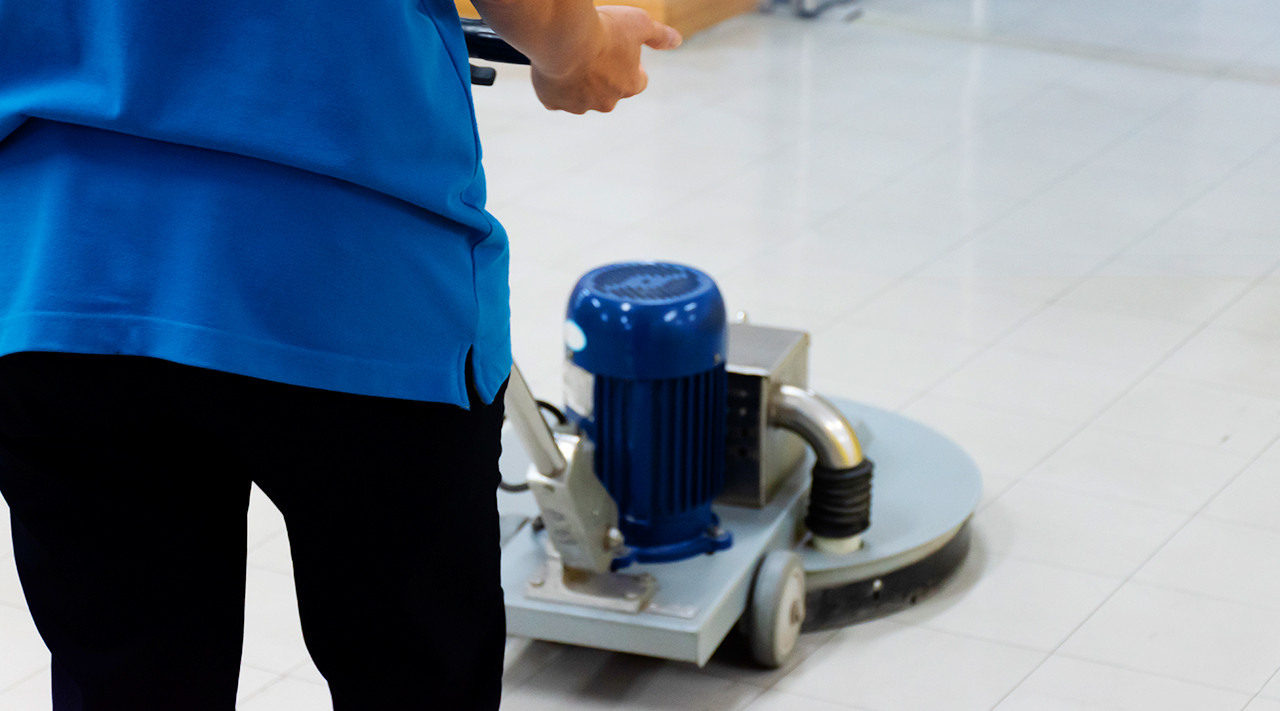
What They Do: Apply cleaning solution, scrub it with rotating brushes, then vacuum the dirty water back up — all in one pass.
Why That Matters: A mop redistributes dirty water. A scrubber removes it. That is the whole difference.
Do They Really Work: Yes. A walk-behind scrubber cleans 10,000–20,000 sq ft per hour against 3,000–5,000 for a mop and bucket.
The Floor Is Dry: Behind the squeegee the floor is walkable immediately, which removes the slip risk of a wet-mopped floor.
What Goes In It: Water plus a low-foam cleaner. Foam is what kills recovery on most scrubbers.
An industrial floor scrubber does three jobs in a single pass: it lays down cleaning solution, scrubs the floor with rotating brushes or pads, and vacuums the dirty water back up through a squeegee. The floor is clean and dry behind the machine.
That third step is what separates a scrubber from a mop. A mop moves soil around in water that gets dirtier with every dip. A scrubber lifts the soil off the floor and takes it away.
What Do Floor Scrubbers Do?
Floor scrubbers clean hard floors by combining four functions that would otherwise take four separate operations: they dispense solution, agitate the surface, extract the dirty water, and leave the floor dry enough to walk on immediately.
In practice that means a floor scrubber:
- Removes soil rather than spreading it. The recovery tank holds the dirty water, so it never goes back onto the floor.
- Applies consistent mechanical agitation. Brush pressure and speed do not vary with how tired the operator is.
- Dries as it goes. The rear squeegee means no wet-floor signs and no waiting for the surface to air dry.
- Uses controlled solution volume. Chemical and water are metered rather than poured, which cuts both cost and residue.
- Covers ground fast. This is where the labor case is made — see the productivity numbers below.
What Are Floor Scrubbers?
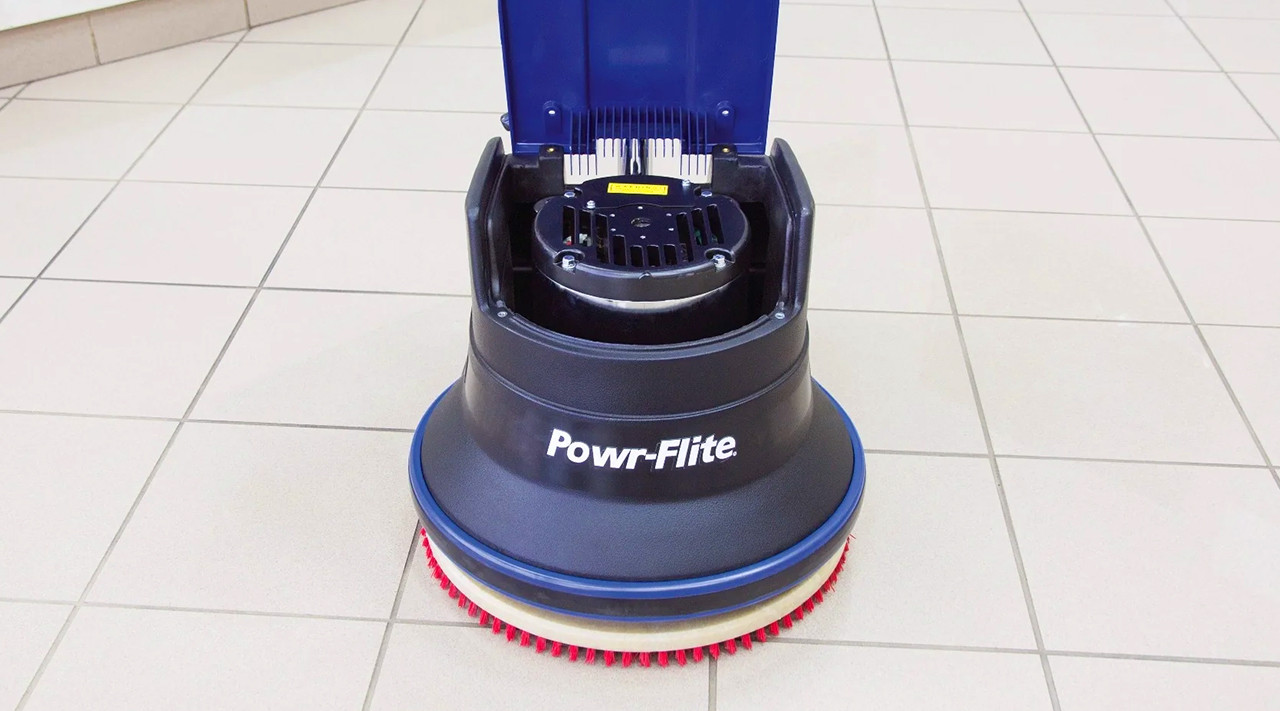
A floor scrubber is a powered machine with two tanks — one for clean solution, one for recovered dirty water — a scrubbing deck holding brushes or pads, and a vacuum motor with a trailing squeegee. They range from handheld units for restrooms and stairs up to ride-on machines for warehouse floors.
They are also called auto scrubbers, automatic scrubbers, or scrubber dryers. The names are interchangeable. What defines the category is the solution-scrub-recover cycle in one pass, which is what distinguishes a scrubber from a buffer, a burnisher, or a floor polisher — those machines agitate or polish but do not recover water.
How Does a Floor Scrubber Work?
Three stages, all happening within a few inches of each other as the machine moves forward.
| Stage | What Happens | What Controls It |
|---|---|---|
| 1. Solution Down | Clean water and cleaning solution are metered from the solution tank onto the floor ahead of the brushes | Flow rate setting and dilution ratio |
| 2. Scrub | Rotating brushes or pads agitate the surface, breaking the bond between soil and floor | Brush pressure, brush type, and travel speed |
| 3. Recover | A squeegee gathers the dirty solution and a vacuum motor lifts it into the recovery tank | Squeegee blade condition and vacuum seal |
Where it goes wrong: almost every "my scrubber leaves the floor wet" complaint is stage three — a worn or nicked squeegee blade, a clogged vacuum hose, or a recovery tank full of foam. It is rarely the brushes.
Do Floor Scrubbers Really Work? What the Productivity Data Shows
Yes, and the gap is not small. Using industry cleaning-time benchmarks, a mop and bucket covers roughly 3,000–5,000 square feet per hour. A walk-behind auto scrubber covers 10,000–20,000. A ride-on covers 20,000–40,000. That is three to five times the output from the same labor hour.
| Method | Square Feet per Hour | Floor Left | Soil Handling |
|---|---|---|---|
| Mop and Bucket | 3,000–5,000 | Wet — needs drying time and signage | Redistributed in increasingly dirty water |
| Walk-Behind Scrubber | 10,000–20,000 | Dry behind the squeegee | Extracted into the recovery tank |
| Ride-On Scrubber | 20,000–40,000 | Dry behind the squeegee | Extracted into the recovery tank |
Rates are drawn from published cleaning-time benchmarks; see ISSA guidance on calculating cleaning times for how production rates are derived.
Labor Hours Saved per Year
Taking the midpoints — 4,000 sq ft per hour mopping, 15,000 with a walk-behind scrubber — over a 260-day cleaning year:
| Area Cleaned Daily | Mopping Hours/Day | Scrubber Hours/Day | Hours Saved per Year |
|---|---|---|---|
| 5,000 sq ft | 1.25 | 0.33 | ~239 |
| 10,000 sq ft | 2.50 | 0.67 | ~477 |
| 20,000 sq ft | 5.00 | 1.33 | ~953 |
| 40,000 sq ft | 10.00 | 2.67 | ~1,907 |
Working the payback: a 20,000 sq ft facility saves roughly 953 labor hours a year. Multiply that by your loaded janitorial hourly rate to get the annual saving. At $18 an hour that is about $17,100 — enough to pay back a $2,499 walk-behind scrubber in under two months. Substitute your own wage rate; the hours are the part that does not change.
How Do Floor Scrubber Machines Help Maintain Commercial Floors?
Beyond speed, scrubbers extend the life of the floor itself. Consistent soil removal is what prevents the slow degradation that leads to early refinishing or replacement.
- They stop grit acting as sandpaper. Ground-in grit under foot traffic is the main cause of finish wear. Removing it daily protects the surface.
- They prevent residue buildup. Mop water leaves a film that dulls floors and, on tile, darkens grout. Extraction removes the solution before it can dry in place.
- They reduce slip risk. A floor that is dry behind the machine removes both the wet-floor window and the residue that makes floors slippery once dry.
- They apply consistent chemistry. Metered dilution means the floor gets the right concentration every time, not whatever was poured into the bucket.
- They cut water and chemical use. Controlled flow uses markedly less solution than repeatedly filling a bucket.
Pair the machine with the right chemistry for your flooring material — see our guide to commercial floor cleaners and how to match pH to floor type.
Types of Floor Scrubbers
Match the machine to the square footage and the obstacles. A large machine in a cluttered room is slower than a small one, and a small machine in a warehouse never finishes.
| Type | Best For | Typical Setting | Example |
|---|---|---|---|
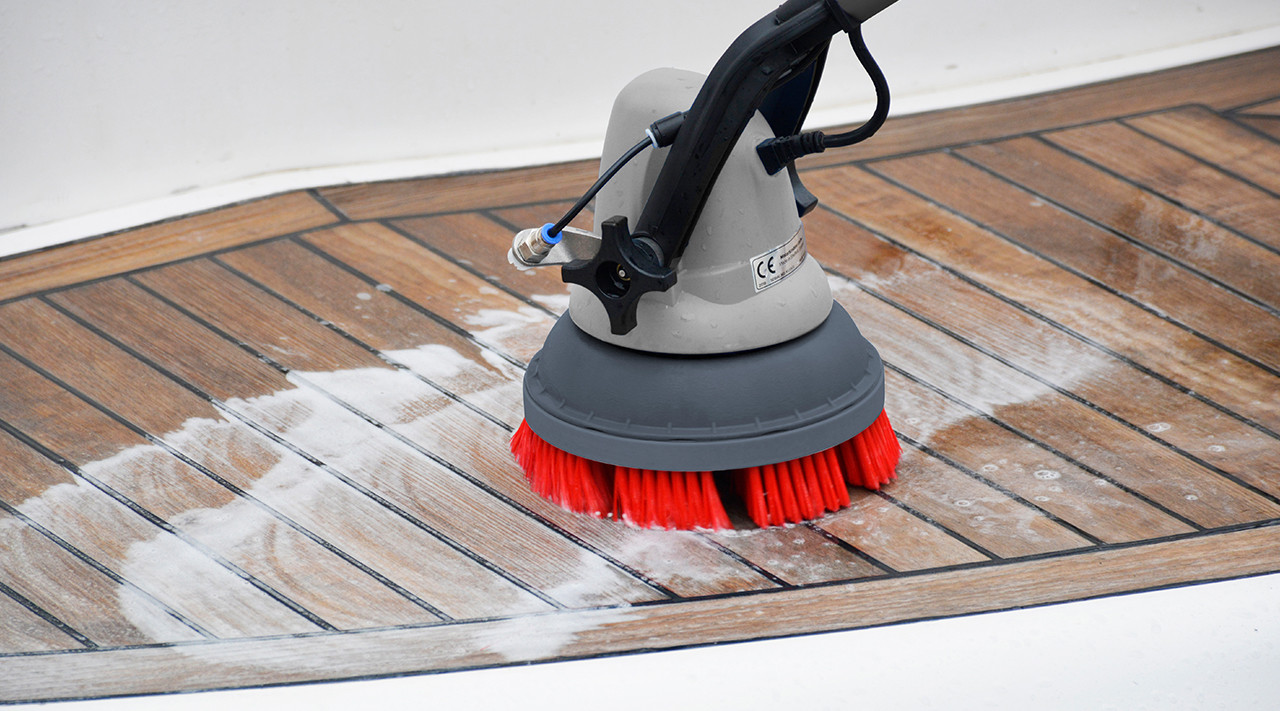
| Compact / Handheld | Tight spaces, edges, stairs, restrooms, under fixtures | Small kitchens, bathrooms, offices, gym locker rooms | MotorScrubber M3 Starter Kit — $775 |
| Walk-Behind | Medium areas where the operator walks the machine | Hallways, gyms, retail floors, schools | Namco Floorwash 1000 — from $1,440 |
| Multi-Surface Walk-Behind | Buildings mixing hard floor and carpet on one route | Mixed-flooring offices and hospitality | Powr-Flite Multiwash XL — $2,499 |
| Orbital Floor Machine | Scrubbing, stripping, and refinishing rather than daily cleaning | Periodic deep clean and restoration work | Oreck Commercial Orbiter — $571.98 |
| Specialty Mat Scrubber | Rubber mats, turf, and gym flooring | Fitness facilities and entry matting | Bulldog Mat Scrubber WD20 — $6,795 |
| Ride-On | Large open floor where travel time dominates | Warehouses, supermarkets, airport terminals | Browse floor cleaning machines |
Battery vs Corded Floor Scrubbers
Battery machines go anywhere and add no trip hazard. Corded machines cost less and never need charging. Choose battery for open floor and public areas, corded for smaller spaces near reliable outlets.
| Factor | Battery-Powered | Corded Electric |
|---|---|---|
| Range | Unlimited within battery runtime | Limited by cord length and outlet spacing |
| Safety | No trailing cord — important in occupied areas | Cord is a trip hazard in public spaces |
| Runtime | Finite; plan charging around shifts | Continuous, no downtime |
| Upfront Cost | Higher | Lower |
| Best Use | Large or obstacle-heavy areas, occupied buildings | Smaller well-powered spaces, continuous heavy tasks |
What Do You Put in a Floor Scrubber?
Water and a low-foam cleaning solution formulated for automatic scrubbers, diluted to the ratio on the label. The low-foam part is not optional.
Why foam matters more than anything else on the label: foam entering the recovery tank triggers the float shut-off, which cuts the vacuum. The machine then stops picking up water and leaves the floor wet — and the operator usually blames the squeegee. If your scrubber has suddenly stopped recovering, check what is in the solution tank before you replace any parts.
Choose the chemistry by flooring material, then confirm it is scrubber-safe:
- Daily cleaning on most sealed floors: a neutral cleaner such as Zogics All Surface Neutral Cleaner.
- Rubber gym flooring: a rubber-specific formula like Zogics Rubber Floor Cleaner & Degreaser.
- Organic odor in grout or porous floors: Zogics Enzyme Enriched Floor Cleaner.
Never pour undiluted concentrate or a household cleaner into the tank. Over-concentration leaves residue that dulls the floor and gums up the solution lines.
How to Use a Floor Scrubber
Sweep first, fill the tanks, scrub with overlapping passes, then empty and rinse both tanks. The two steps people skip — sweeping first and rinsing after — are the two that cause the most machine problems.
- Sweep or dust mop the area. Loose grit and debris will clog the vacuum hose and wear the brushes. This step is not optional on a dirty floor.
- Check the squeegee and brushes. Run a finger along the squeegee blade for nicks. A damaged blade is the number-one cause of streaking.
- Fill the solution tank. Clean water plus low-foam cleaner at the labelled dilution. Do not eyeball it.
- Set flow and brush pressure. Start low. More solution is not more clean, and excess just overloads the recovery tank.
- Scrub in overlapping passes. Overlap each pass by a few inches and move at a steady walking pace. Slow down on heavy soil rather than going over it twice.
- Watch the recovery tank. Empty it before it fills. A full tank stops the vacuum and the floor starts coming out wet.
- Empty, rinse, and dry both tanks. Leave the recovery tank lid open so it dries out — this is what prevents the smell that builds up in neglected machines.
- Lift the squeegee and brushes off the floor when storing, so they do not deform.
Troubleshooting Common Floor Scrubber Problems
| Problem | Most Likely Cause | Fix |
|---|---|---|
| Floor Left Wet | Worn squeegee blade, full recovery tank, or foam tripping the float | Check tank level first, then blade, then switch to a low-foam cleaner |
| Streaking Behind the Machine | Nicked or unevenly worn squeegee blade | Rotate or replace the blade. Blades are consumables |
| Hazy Film After Drying | Over-concentrated solution | Dilute to label rate. Rinse the floor once to clear existing residue |
| Weak Vacuum | Debris in the hose or a poor lid seal | Clear the hose and check the recovery tank gasket |
| Machine Smells | Recovery tank left sealed with residue inside | Rinse after every use and store with the lid open |
Frequently Asked Questions
What do floor scrubbers do?
They dispense cleaning solution, scrub the floor with rotating brushes or pads, and vacuum the dirty water back up through a squeegee — all in one pass. The floor is clean and dry behind the machine, rather than wet and coated in the soil a mop leaves behind.
What are floor scrubbers?
Powered cleaning machines with a solution tank, a recovery tank, a scrubbing deck, and a vacuum squeegee. Also called auto scrubbers or scrubber dryers. They range from handheld units for restrooms to ride-on machines for warehouses.
How does a floor scrubber work?
In three stages within inches of each other: solution is metered onto the floor, brushes agitate the surface to break the soil bond, and a trailing squeegee plus vacuum lifts the dirty water into a separate recovery tank.
Do floor scrubbers really work?
Yes. A mop and bucket covers about 3,000 to 5,000 square feet per hour. A walk-behind auto scrubber covers 10,000 to 20,000, and a ride-on 20,000 to 40,000 — three to five times the output from the same labor hour, with the floor dry immediately.
How do you use a floor scrubber?
Sweep the area first, check the squeegee blade, fill the solution tank with water and low-foam cleaner at the labelled dilution, scrub in overlapping passes at a steady walking pace, empty the recovery tank before it fills, then rinse both tanks and store with the lid open.
Are floor scrubbers better than mopping?
For hard floors, yes on both cleanliness and cost. A mop redistributes soil in water that gets dirtier with each dip; a scrubber extracts it. Scrubbers are also three to five times faster and leave no wet-floor period.
What do you put in a floor scrubber?
Clean water and a low-foam cleaning solution formulated for automatic scrubbers, diluted per the label. Match the chemistry to your flooring material — neutral for most sealed floors, rubber-specific for gym flooring, enzymatic for organic odor.
Can you use regular floor cleaner in a scrubber?
Usually not. Most general-purpose cleaners foam too much. Foam entering the recovery tank trips the float shut-off, which cuts the vacuum and leaves the floor wet. Always confirm the product is low-foam and scrubber-safe.
Why is my floor scrubber leaving the floor wet?
Check three things in order: whether the recovery tank is full, whether the squeegee blade is nicked or worn, and whether foam is tripping the float shut-off. It is almost never the brushes.
Do floor scrubbers dry the floor?
Yes. The trailing squeegee and vacuum remove the solution as the machine moves, so the floor behind it is walkable immediately. That removes both the drying wait and the slip risk of a wet-mopped floor.
Choosing the Right Floor Scrubber
Size the machine to your square footage and obstacles, then match the chemistry to your flooring material. The productivity gain is real enough that the machine usually pays for itself in labor within months, not years — but only if the solution in the tank is right for the floor and low-foam enough for the recovery system.
Browse floor cleaning machines and floor and carpet care chemicals, or call 888.623.0088 and we will size a machine against your square footage and flooring type.