Help Center

Quick Answer
Low Density (LLDPE): Thicker, stretchy, puncture-resistant. Measured in mils. For sharp, heavy, or wet waste.
High Density (HDPE): Thinner, stiffer, high tensile strength. Measured in microns. For paper, restroom, and general light waste.
The Deciding Question: Is anything in the bag sharp? If yes, low density. If no, high density.
Cost Difference: High-density liners run about 1–9 cents a bag. Low-density run about 22–39 cents.
Common Mistake: Comparing mils to microns as if they were interchangeable. They are not — the two materials fail in completely different ways.
Choosing between low-density and high-density trash bags comes down to one question: is anything going in the bag sharp? The two types are made by different manufacturing processes, which produces real differences in thickness, puncture resistance, and cost per bag.
This guide explains what each term means, why mils and microns are not comparable, what each type actually costs per bag, and which one fits your waste stream.
Low Density vs High Density Trash Bags: What Is the Difference?
Low-density bags are made from LLDPE and stretch around sharp objects. High-density bags are made from HDPE and resist straight-down weight but tear from a nick. Low density is thicker and costs more per bag; high density is thinner and costs far less.
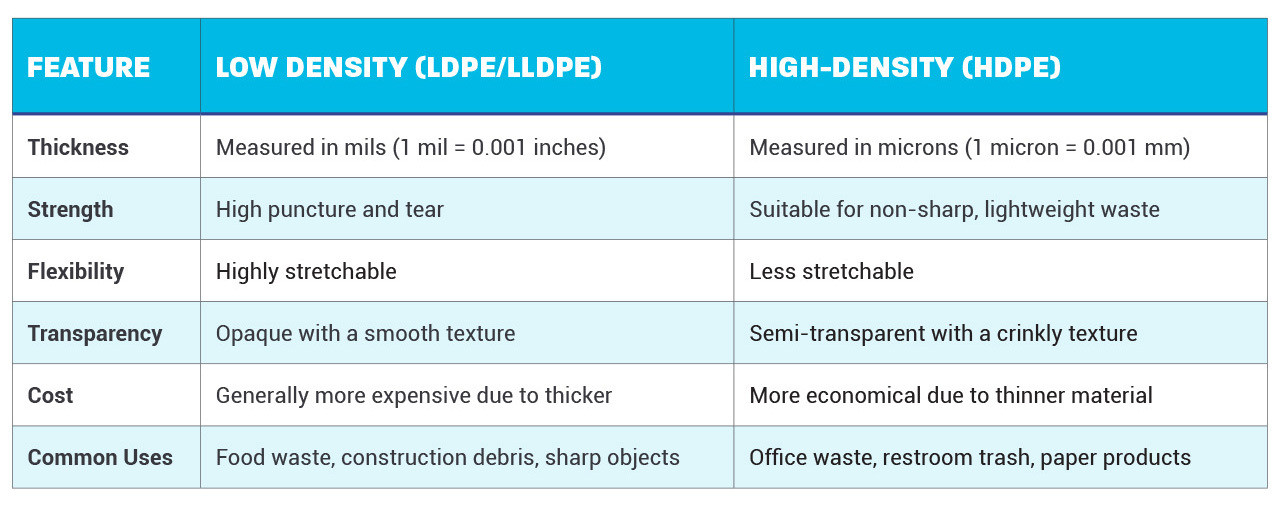
Whether you frame it as high density vs low density trash bags or the other way round, it is the same decision, and it turns on the waste rather than the price. The table below sets the two side by side.
| Factor | Low Density (LLDPE) | High Density (HDPE) |
|---|---|---|
| Material | Linear low-density polyethylene | High-density polyethylene |
| Measured In | Mils (1 mil = 0.001 inch) | Microns (1 micron = 0.001 mm) |
| Typical Range | 0.9–1.5 mil | 6–14 micron |
| Feel | Soft, stretchy, flexible | Crinkly, stiff, makes noise |
| Puncture Resistance | High — stretches around sharp points | Low — a nick propagates into a tear |
| Load Strength | Good, with stretch under weight | Excellent for straight-down weight |
| Cost per Bag | Roughly 22–39 cents | Roughly 1–9 cents |
| Best For | Kitchens, food waste, glass, construction debris, wet waste | Offices, restrooms, paper, packaging, general light waste |
| Plastic Used | More resin per bag | Less resin per bag — lower material footprint |
What Does Low Density Mean in Trash Bags?
Low density means the bag is made from linear low-density polyethylene (LLDPE), a resin whose molecules are branched rather than tightly packed. That branching is what makes the film stretch. When a sharp edge presses into a low-density bag, the plastic gives and wraps around it instead of splitting.
Practically, low density means: thicker film, measured in mils, more give, better puncture resistance, higher cost per bag. It is the bag you use when you cannot control what goes in it.
High Density Trash Bags Meaning
High density means the bag is made from high-density polyethylene (HDPE), a resin whose molecules pack in tight, straight chains. That structure gives excellent tensile strength for very little material — which is why a high-density liner can hold a surprising amount of weight while feeling almost like tissue.
The trade-off is tear propagation. HDPE has little stretch, so once the film is nicked, the tear runs. High density means: thinner film, measured in microns, stiff and crinkly, very low cost per bag, and unforgiving of anything sharp.
Mils vs Microns: Why You Cannot Compare Them Directly
One mil equals 25.4 microns, so the units convert cleanly. Performance does not. A 13-micron high-density liner converts to about 0.51 mil, but it will not behave like a 0.51 mil low-density bag — it will carry more straight-down weight and fail faster on a broken bottle.
| High Density Gauge | Mil Equivalent | Typical Use |
|---|---|---|
| 6 micron | 0.24 mil | Desk-side bins, small restroom cans |
| 8 micron | 0.31 mil | 7–10 gallon office and restroom cans |
| 13–14 micron | 0.51–0.55 mil | 33 gallon commercial-grade, heavier paper and packaging |
The rule: never spec a bag by gauge alone. Convert if you need to compare like for like, but choose by material first and gauge second. Buyers who switch from a 1.0 mil low-density bag to a "thicker sounding" high-density equivalent are the ones who end up with bags splitting on the loading dock.
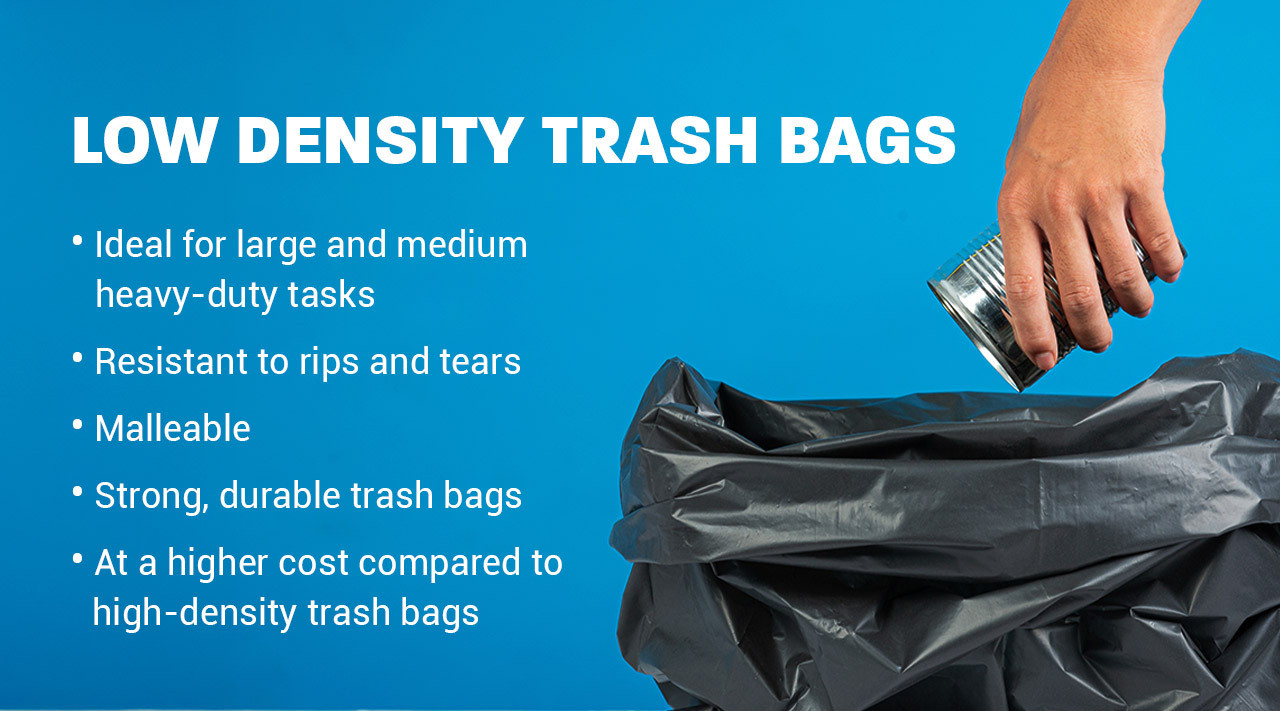
What Are Low-Density Trash Bags Best For?
Anything sharp, heavy, wet, or irregular. Low-density bags stretch instead of splitting, which is exactly what you need when the contents are unpredictable.
- Kitchens and restaurants: Food waste, liquids, bones, and packaging with sharp corners.
- Construction sites: Wood offcuts, metal, broken glass, and drywall scrap.
- Outdoor and yard work: Branches, leaves, and soil-heavy waste.
- Healthcare and lab general waste: Anything with a rigid or irregular edge.
- Wet waste of any kind: Where a leak means a mop, not just a re-bag.
These are also the bags to reach for when several departments share one dumpster run and nobody can guarantee what ends up in the liner.
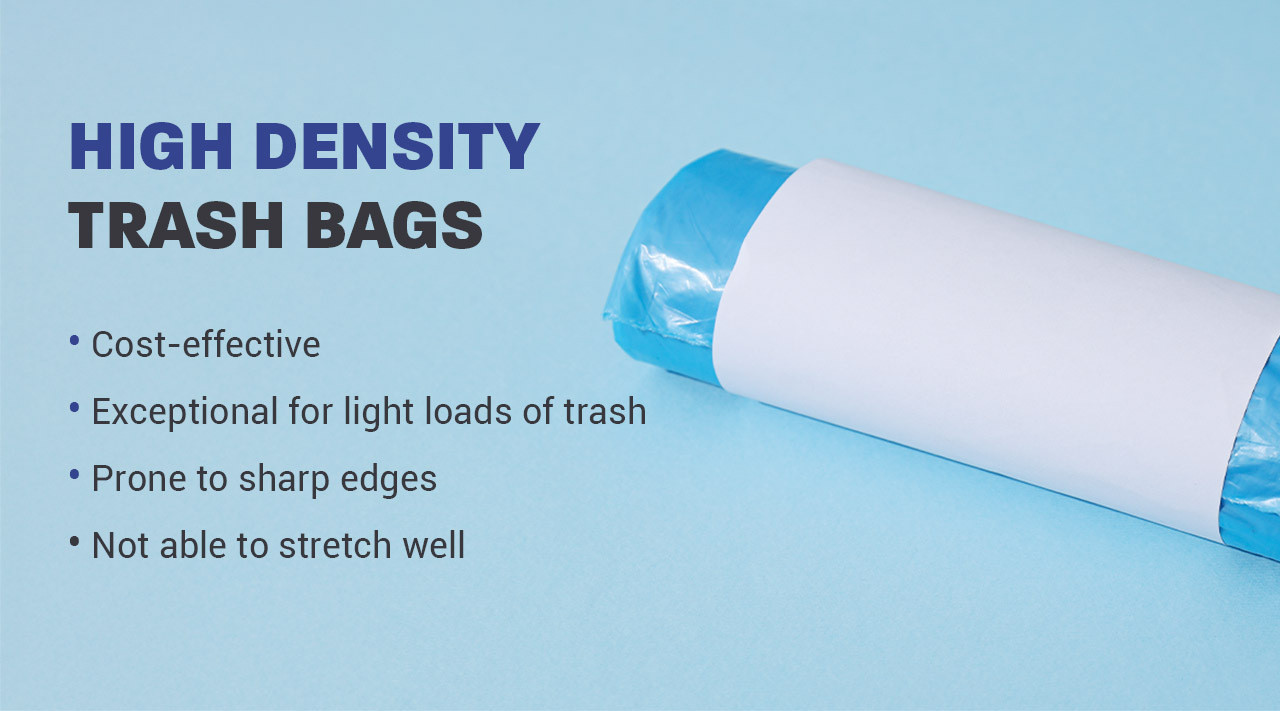
When to Use High-Density Trash Bags
Paper, packaging, restroom waste, and anything soft. High-density liners handle real weight for a fraction of the cost, as long as nothing in the bag can nick the film.
- Offices: Paper, envelopes, packaging, desk-side bins.
- Restrooms: Paper towels, tissue, and sanitary waste.
- Public areas and lobbies: Cups, wrappers, and general light waste.
- Recycling streams: Clean paper and cardboard collection.
- High-volume, cost-sensitive sites: Schools and large offices where bag count runs into the tens of thousands a year.
Not recommended for: sharp or heavy waste. A single broken bottle will open a high-density liner from top to bottom.
Zogics Cost Analysis: What Each Type Costs per Bag
High-density liners cost between about 1 and 9 cents per bag. Low-density liners cost between about 22 and 39 cents. That is a 10x to 30x difference, and it is why matching bag type to waste type is a budget decision as much as a performance one.
How we calculated this: prices are Zogics list prices from live product pages on August 17, 2026. Cost per bag = case price divided by bags per case.
| Product | Type | Gauge | Case | Cost per Bag |
|---|---|---|---|---|
| Zogics 2-4 Gallon | High density | 6 mic | $18.71 / 2,000 | $0.009 |
| Zogics 7-10 Gallon | High density | 8 mic | $21.71 / 1,000 | $0.022 |
| Zogics 12-16 Gallon | High density | 6 mic | $27.71 / 1,000 | $0.028 |
| Zogics 33 Gallon Commercial | High density | 13 mic | $43.95 / 500 | $0.088 |
| Zogics 56 Gallon | Low density | 1.5 mil | $22.46 / 100 | $0.225 |
| Zogics 55 Gallon | Low density | 1.5 mil | $26.21 / 100 | $0.262 |
| Earthsense 33 Gallon Recycled | Low density, recycled content | 0.9 mil | $25.33 / 80 | $0.317 |
What that means for a 50-bin office. Fifty desk-side bins emptied daily is about 18,250 bags a year. Lined with an 8-micron high-density liner at 2.2 cents, that is roughly $396 a year. Lined with a 0.9 mil low-density bag at about 25 cents, the same job costs roughly $4,558 — over $4,100 a year of avoidable spend for waste that is almost entirely paper.
The inverse mistake costs more. Putting kitchen or construction waste in a high-density liner means split bags, spilled contents, re-bagging labor, and floor cleanup — which will exceed the few cents you saved on the first failure.
Choosing the Right Trash Bag for Your Facility
Work from the waste stream backwards. Identify what actually goes in the bin, then pick the material, then the gauge, then the size.
| Waste Type | Choose | Suggested Gauge | Seal |
|---|---|---|---|
| Office Paper and Packaging | High density | 6–8 micron | Flat or star |
| Restroom Waste | High density | 8 micron | Star |
| Break Room and Light Food | Low density | 0.9 mil | Star or drawstring |
| Commercial Kitchen | Low density | 1.2–1.5 mil | Star |
| Glass, Metal, Construction Debris | Low density | 1.5 mil or heavier | Star |
| Yard and Outdoor Waste | Low density | 0.9–1.5 mil | Star |
| Mixed or Unknown Waste | Low density | 1.2 mil minimum | Star |
Two further considerations: budget — high-density is the cheaper option wherever the waste allows it, and the saving compounds across thousands of bags; and environmental goals — high-density uses less resin per bag, and recycled-content options like the Earthsense recycled liner lower impact further on the low-density side.
Why Bag Seals Matter
The seal determines where the bag fails and whether it leaks. Star seals distribute weight around the base and have no channel for liquid to escape; flat seals are cheaper but concentrate stress along one line.
| Seal Type | Strengths | Best For |
|---|---|---|
| Star Seal | No gaps or channels for leaks; distributes weight evenly; conforms to the can shape | Wet waste, heavy loads, kitchens, anything you cannot afford to have leak |
| Flat Seal | Economical and space-saving; simple straight seam across the bottom | Light, dry waste in low-risk areas |
| Drawstring | Easy to close and carry; contains odor better in transit | Break rooms and front-of-house bins that staff carry by hand |
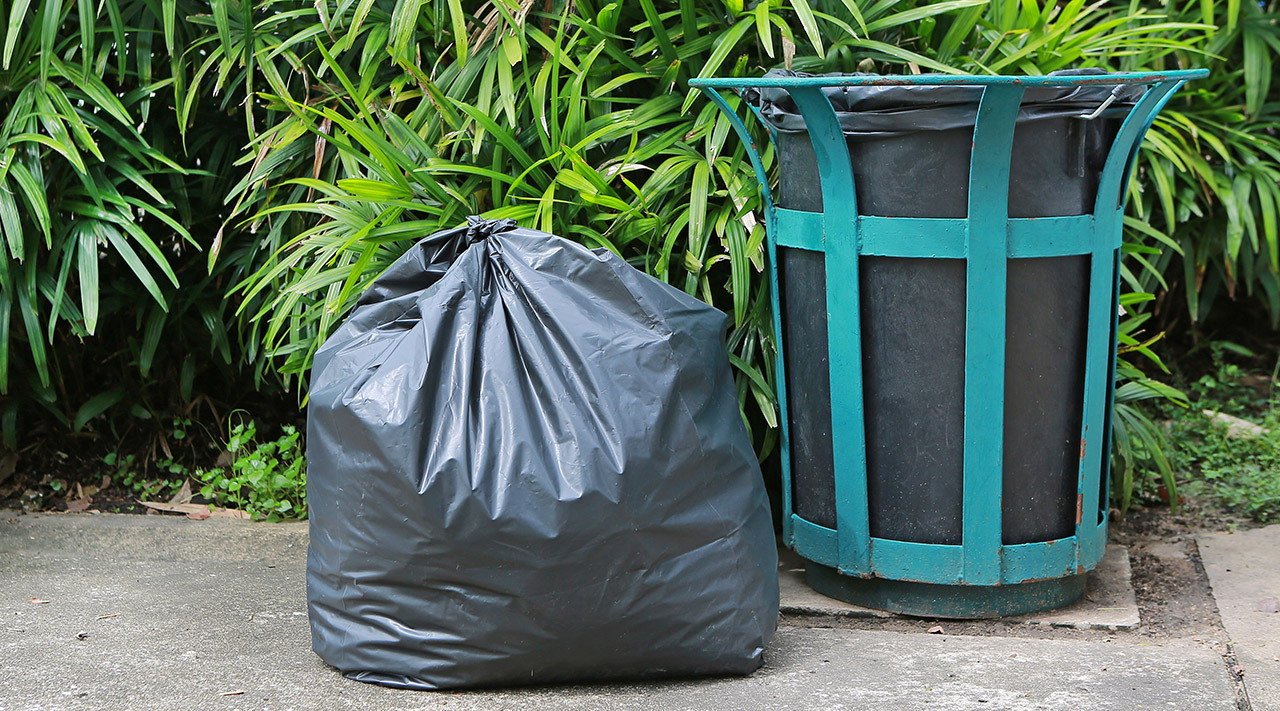
Match the bag to the can as well as the waste. A liner that is too large wastes plastic and slips; too small and it tears at the rim. See our range of commercial trash cans to size the pair together.
Shop Smart: Choose the Right Trash Bags for Your Facility
Low-Density Trash Bags — Heavy-Duty, Puncture-Resistant
- Built tough for sharp, bulky, or wet waste
- Great for restaurants, kitchens, and construction sites
- Star seal, 0.9–1.5 mil
Shop Zogics 55 Gallon Low-Density Liners (1.5 mil)
High-Density Trash Bags — Lightweight, Budget-Friendly
- Perfect for paper, restroom waste, and general office use
- Cost-effective without compromising performance
- Star seal, 6–13 micron
Shop Zogics 7-10 Gallon High-Density Liners (8 mic)
Browse the full range of trash bags and can liners, or contact our team for recommendations based on your waste streams and bin count.
Frequently Asked Questions
What is the difference between low density and high density trash bags?
Low-density bags are made from LLDPE and stretch around sharp objects, making them puncture-resistant but more expensive. High-density bags are made from HDPE, are much thinner and cheaper, and handle straight-down weight well but tear once nicked.
What does low density mean in trash bags?
It means the bag is made from linear low-density polyethylene, a resin with branched molecules that let the film stretch. That stretch is what resists punctures. Low-density bags are measured in mils, typically 0.9 to 1.5 mil.
What does high density mean in trash bags?
It means the bag is made from high-density polyethylene, a resin with tightly packed straight molecular chains. That structure gives high tensile strength from very little material. High-density bags are measured in microns, typically 6 to 14.
Which is stronger, high density or low density trash bags?
It depends on the failure mode. High density is stronger for straight-down weight per unit of material. Low density is far stronger against punctures and tears. For mixed or sharp waste, low density is the stronger practical choice.
Are mils and microns the same thing?
No. One mil equals 25.4 microns, so they convert mathematically, but the performance does not transfer. A 13-micron high-density bag equals about 0.51 mil, yet behaves very differently from a 0.51 mil low-density bag because the two materials fail in different ways.
Which trash bag is cheaper?
High density, by a wide margin. High-density liners run roughly 1 to 9 cents per bag against 22 to 39 cents for low density. Use high density wherever the waste stream allows it and the saving compounds quickly across a facility.
What trash bag should I use for kitchen or food waste?
A low-density bag at 1.2 to 1.5 mil with a star seal. Food waste combines weight, liquid, and sharp packaging, which is exactly the combination that splits a high-density liner.
What trash bag should I use for office and restroom waste?
A high-density liner at 6 to 8 microns. Paper, tissue, and packaging carry no puncture risk, so there is no reason to pay for low-density film.
What is the difference between a star seal and a flat seal?
A star seal gathers the base into a multi-point seal with no channels, so it distributes weight evenly and resists leaks. A flat seal is a single straight seam across the bottom, which is cheaper but concentrates stress and leaks more easily.
Can I use high density bags for recycling?
Yes. Clean paper and cardboard recycling is an ideal high-density application, since there is no puncture risk. Check whether your hauler requires clear liners so contents can be inspected.
Selecting the Ideal Trash Bag for Your Needs
The decision comes down to one question asked honestly: can anything in this bin puncture a bag? If yes, buy low density and accept the cost. If no, buy high density and keep the difference — which across a facility runs into thousands of dollars a year.
For a fuller breakdown of sizes, gauges, and eco-friendly options, see the ultimate trash bag guide.