Help Center

Quick Answer
Why the Smell Returns: Odour comes from bacteria in drains, grout, and under benches — not from the surfaces you wipe.
The Three Levers: Control moisture, remove the organic residue bacteria feed on, then disinfect. In that order.
Humidity Target: 40–60% relative humidity. Above that, microbial growth accelerates.
Ventilation: ASHRAE 62.1 specifies 0.50 cfm per square foot of exhaust for locker rooms with showers.
Air Freshener Placement: At entrances and in air movement, never near the source. Fragrance masks; it does not remove.
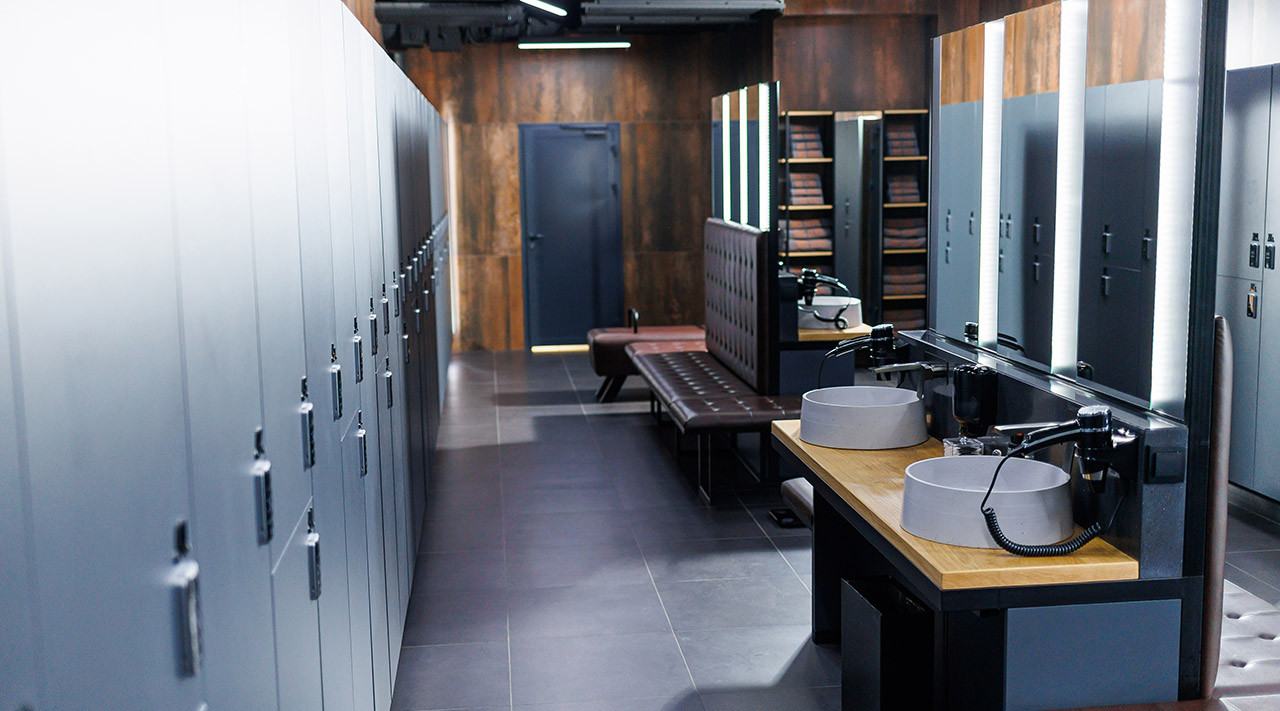
That unmistakable locker-room smell hits you the moment you open the door — sweat, dampness, and something you cannot quite place. It is real, and it is biological. Odour-causing bacteria thrive in hidden, damp zones while standard cleaning only addresses visible surfaces.
This guide covers locker room sanitation best practices that work on the cause rather than the symptom: moisture control, targeted disinfection, correct ventilation rates, and where air care actually belongs in the sequence.
Locker Room Sanitation Best Practices
Effective locker room sanitation runs in a fixed order: control moisture first, remove organic residue second, disinfect third, and use air care last. Reversing that order is why most facilities clean constantly and still smell.
| Priority | What It Covers | Why It Comes First |
|---|---|---|
| 1. Moisture Control | Squeegeeing, drainage, exhaust, humidity monitoring, drying time | Bacteria cannot multiply without moisture. Everything else is downstream of this |
| 2. Residue Removal | Enzymatic treatment of drains, grout, under benches, locker bases | Removes the organic material bacteria feed on. Disinfectant over residue is wasted |
| 3. Disinfection | EPA-registered disinfectant at full label contact time on high-touch surfaces | Kills what remains, and satisfies hygiene and inspection requirements |
| 4. Air Care | Purification, ventilation, and fragrance | Manages what is airborne. It cannot fix a source problem, so it goes last |
The test of a working programme: the room smells neutral when the air fresheners are switched off. If it only smells acceptable while fragrance is running, you are masking rather than sanitising.
How to Get Rid of Locker Room Smell
Find the source before treating the air. Persistent locker room smell almost always traces back to one of five places, and none of them are the surfaces staff wipe every day.
| Source | Tell-Tale Sign | Fix |
|---|---|---|
| Floor Drains and P-Traps | Sewer-like smell strongest near the floor, worse in the morning | Enzymatic drain treatment weekly. Keep traps primed so they do not dry out |
| Grout and Tile Joints | Musty smell in shower zones that returns hours after mopping | Enzymatic cleaner with dwell time, then rinse. Reseal grout when due |
| Under and Behind Benches | Smell concentrated in changing areas, worst at floor level | Move benches and clean beneath them daily. This is the most skipped task in the room |
| Inside Lockers | Odour spikes when locker doors open | Ventilated locker doors, locker deodorisers, and a policy on overnight storage |
| HVAC Returns and Ducts | Smell is uniform across the room and worse when the system runs | Clean return vents, change filters on schedule, inspect for condensate |
These are damp, dark, organic-rich spots — exactly the conditions bacteria and mould need. The EPA notes that mould growth requires moisture and organic material, which is why moisture control is the first lever rather than a later one.
Why Standard Cleaning Falls Short
Most facilities mop floors, wipe benches, and spray air freshener. Odours return within hours because none of those three actions reach the source.
- Surface wiping misses the reservoirs. Odour-causing microbes live behind benches and lockers, inside floor drains and P-traps, in HVAC returns, and deep in grout lines.
- Moisture keeps regenerating the problem. Every shower, wet towel, and workout adds water. Sustained humidity above 60% in a poorly ventilated room means bacteria multiply faster than cleaning removes them.
- Porous materials hold odour. Carpet, unsealed wood, and worn grout absorb and re-release smell. Non-porous surfaces resist colonisation.
The chemistry behind the smell is worth knowing: bacteria and mould release microbial volatile organic compounds (mVOCs), the gaseous by-products responsible for that musty note. These are distinct from the chemical VOCs found in some cleaning products and fragrances. Fragrance adds VOCs to the air; it does not remove mVOCs, which is why masking never holds.
Fast-Acting Disinfectants That Work
Use an EPA-registered disinfectant, keep the surface wet for the full label contact time, and choose a fast-dry formula so the room is not left damp afterward.
- Quick-dry formulas reduce the moisture bacteria need, and cut the downtime before a zone reopens.
- Contact time is the whole game. A disinfectant that dries before its rated dwell time has cleaned, not disinfected. Re-wet if the surface dries early.
- Clean before you disinfect. Organic residue neutralises disinfectant. Two passes beats one wet pass — see our guide to enzyme cleaners vs disinfectants.
Application timing: treat during low-traffic periods, focus on high-touch and high-moisture zones, and schedule a weekly deep treatment. Browse commercial disinfectants and bathroom cleaners.
Ventilation and Humidity: The Numbers That Matter
Ventilation is specified in exhaust airflow per square foot, not air changes per hour. ASHRAE Standard 62.1 Table 6-4 sets 0.50 cfm per square foot of exhaust for locker rooms, and 0.25 cfm per square foot for locker or dressing rooms without showers.
| Space Type | ASHRAE 62.1 Exhaust Rate | Example: 1,000 sq ft Room |
|---|---|---|
| Locker Room (With Showers) | 0.50 cfm/ft² | 500 cfm — roughly 3 air changes per hour at a 10 ft ceiling |
| Locker / Dressing Room (No Showers) | 0.25 cfm/ft² | 250 cfm — roughly 1.5 air changes per hour |
A note on air-change figures: you will see much higher ACH numbers quoted for locker rooms online. Treat them with caution — codes are written in cfm per square foot, and converting the ASHRAE rate at typical ceiling heights lands around 3 ACH, not twenty or thirty. Spec from the airflow figure and have a mechanical engineer confirm against your local code, which may exceed the ASHRAE baseline.
Humidity Control
Hold relative humidity between 40% and 60%. Below 40% is uncomfortable; above 60% accelerates microbial growth in exactly the porous materials that hold odour.
- Run exhaust fans continuously in shower and wet zones, not just during peak hours.
- Place hygrometers in the wettest corner and the driest, and read both.
- Add commercial dehumidification where exhaust alone cannot hold the range.
- Fix leaks and standing water the day you find them.
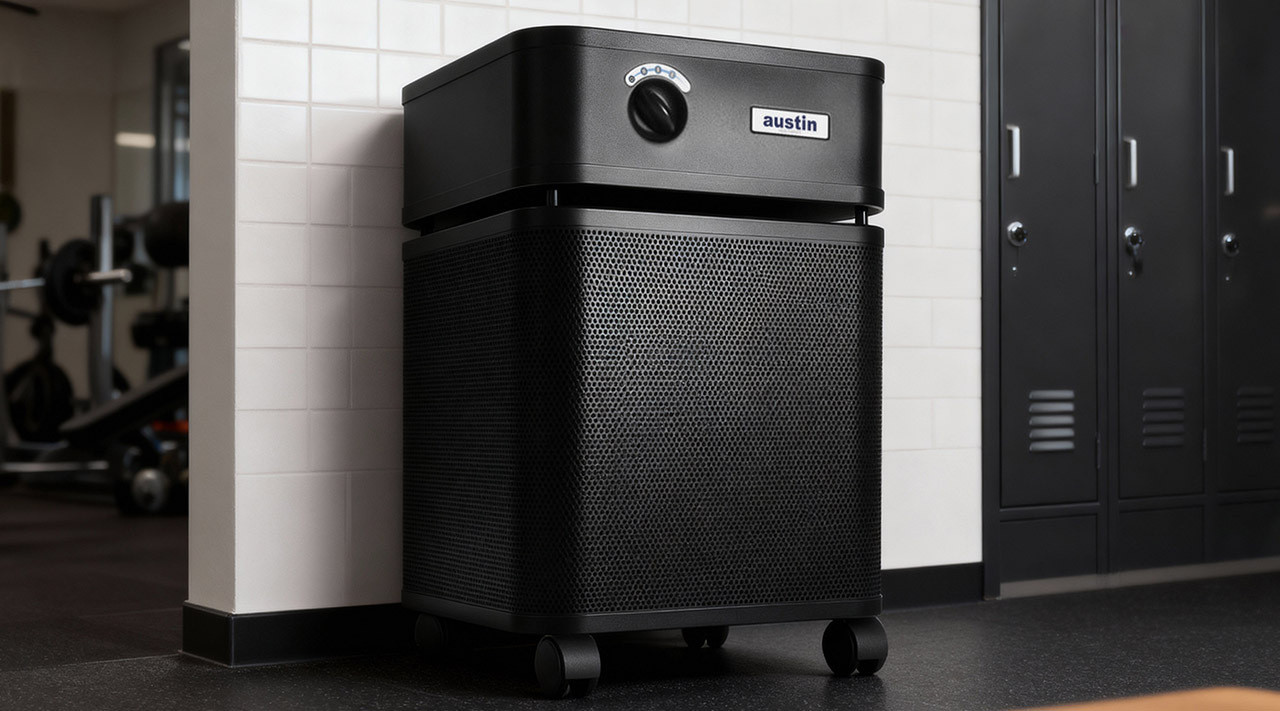
Air Purification: Gym and Industrial Locker Rooms
Air purification handles what is already airborne. Commercial units pairing HEPA filtration with activated carbon capture particles and adsorb the odour compounds that filters alone pass straight through.
Austin Air Systems purifiers and other commercial air filtration systems combine both. Carbon content is the specification that matters for odour — a HEPA-only unit removes particulates but leaves the smell.
Placement for Maximum Effect
- Position units at least four inches from walls so intake is not restricted.
- Target high-moisture zones: shower entries and changing areas.
- Run continuously during operating hours rather than intermittently.
- Set to high overnight, when the room is empty and air can turn over fully.
Application in Factory and Industrial Locker Rooms
Industrial and factory locker rooms carry a different load than a gym. Alongside sweat and moisture you may have oils, solvents, welding residue, or process dust carried in on workwear, and shift patterns concentrate use into short windows.
- Prioritise carbon capacity over filter area. Chemical and hydrocarbon odours need adsorption, not just particulate filtration.
- Size for peak, not average. A shift change puts the whole workforce through the room in fifteen minutes. Units sized for average occupancy will not keep up.
- Separate contaminated workwear. Dedicated ventilated storage for soiled uniforms keeps process residue out of the general air.
- Coordinate with plant ventilation. Locker rooms adjacent to production often inherit air from it. Confirm the room is under negative pressure relative to the plant floor.
- Check the substances involved. Where workwear carries regulated substances, air handling may fall under occupational exposure rules rather than comfort guidance — involve your EHS lead.
Air Freshener Placement in a Gym
Place air fresheners at entrances and in moving air, never near the odour source. Fragrance at the source produces a smell that reads as worse than the original, because the two mix rather than one replacing the other.
A locker room air freshener is the finishing layer, not the fix. Sited well it keeps a clean room smelling clean between services; sited badly it advertises the problem it is trying to cover. The table below shows where each dispenser earns its place.
| Location | Place a Dispenser? | Why |
|---|---|---|
| Locker Room Entrance | Yes — the priority position | First impression forms in the first two seconds. This is where fragrance earns its keep |
| Near Supply Vents or Fans | Yes | Moving air distributes fragrance evenly instead of leaving a hot spot |
| Changing Areas | Light coverage only | People are close to the dispenser here. Heavy fragrance becomes a complaint |
| Directly Over Drains or Wet Zones | No | Fragrance mixed with source odour smells worse than either alone |
| Inside Shower Stalls | No | Humidity degrades cartridges fast and the scent is washed out immediately |
| Restroom Section | Yes, on its own schedule | Different odour profile and usage pattern from the locker area |
Programme settings: increase output around peak hours, choose light and fresh over heavy or sweet, and rotate scents periodically — regular users stop registering a constant fragrance within days. Compare commercial air freshener dispensers and air freshener refills.
Best Odor Control Products for Gym Locker Rooms
Build the programme in layers. Each product below does a job the others cannot, which is why single-product approaches fail.
| Product Type | What It Does | Use It On | Shop |
|---|---|---|---|
| Enzymatic Cleaner | Digests the organic residue producing the smell | Drains, grout, under benches, locker bases | Enzyme floor cleaner |
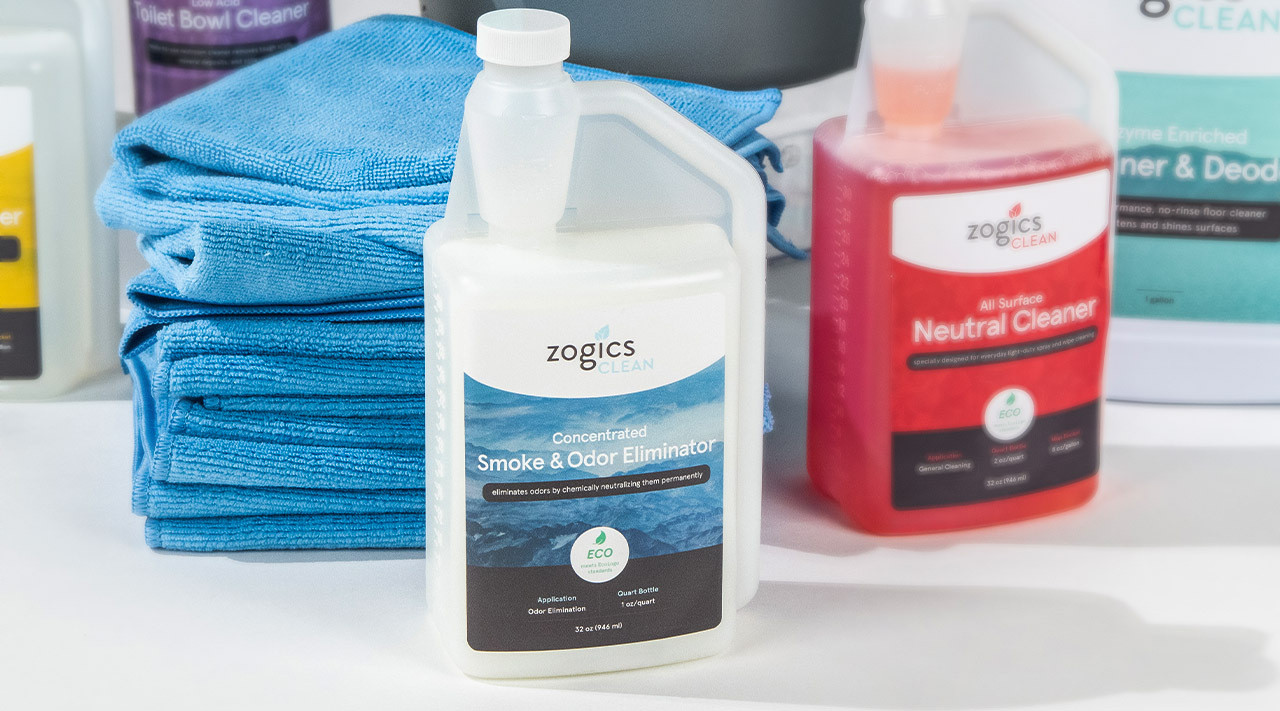
| Odour Eliminator Spray | Neutralises airborne and surface odour on contact | Spot treatment and emergency response | Zogics Smoke & Odor Eliminator |
| EPA-Registered Disinfectant | Kills bacteria on hard surfaces to a verified standard | Benches, handles, lockers, high-touch points | Disinfectants |
| Urine and Stain Remover | Breaks down uric salts that survive normal cleaning | Restroom floors, urinal surrounds, toilet bases | Urine stain and odor remover |
| Air Freshener Dispenser | Maintains a pleasant baseline between cleans | Entrances and air movement, not sources | Odor control range |
| Air Purifier | Removes airborne particulate and adsorbs odour compounds | Whole-room, running continuously | Air filtration systems |
Locker Deodorisers and Locker-Level Odour
Individual lockers hold damp kit between visits, which makes them small incubators. The best locker deodoriser approach is airflow first, absorbent second, fragrance last.
- Ventilated locker doors are the single biggest improvement. Perforated or louvred doors let kit dry instead of stewing.
- Activated carbon inserts adsorb odour inside the locker rather than covering it.
- A wipe-out schedule. Empty lockers get wiped with disinfectant on a rota, not only when a member complains.
- An overnight-storage policy. Day-use lockers cleared nightly do not develop the smell that permanent lockers do.
High-Usage Soaps for Gym Locker Rooms
Locker room soap has to survive volume. A high-usage gym gets thousands of pumps a week, so the specification is different from an office restroom: dispensed rather than bar, mild enough for daily use, and bought in bulk so it is never the reason a shower runs dry.
| Requirement | Why It Matters at Volume |
|---|---|
| Bulk Gallon Format | Lowest cost per wash and the fewest reorders. One gallon covers roughly 170 washes |
| Wall-Mounted Dispenser | Nothing to steal, nothing to knock over, and no bottle clutter on the shower floor |
| Mild, Low-Fragrance Formula | Serves every skin type across a whole membership, and does not compete with air care |
| Multi-Purpose Where Practical | A 3-in-1 body wash, hand soap, and shampoo means one chamber and one SKU to restock |
| Easy Refill Access | Housekeeping should top up in under a minute or it gets skipped on a busy shift |
Shop bulk body wash, bulk body care, and wall-mounted shower dispensers. For the full shower-room routine, see 6 simple steps to keeping gym showers clean.
Traffic-Zone Cleaning Strategies
Different zones need different attention. Treating the whole room identically wastes labour on low-risk areas and under-serves the ones producing the smell.
| Zone | Frequency | Priority Actions |
|---|---|---|
| Entry and Transition | Every 2–3 hours | Extended matting to trap moisture and grit, dry floors, air freshener at the door |
| Shower and Wet Zones | After each use cycle | Squeegee standing water, run exhaust continuously, treat grout and corners |
| Locker and Changing | Daily, plus spot checks | Move benches and clean beneath, wipe locker interiors on rota, improve airflow |
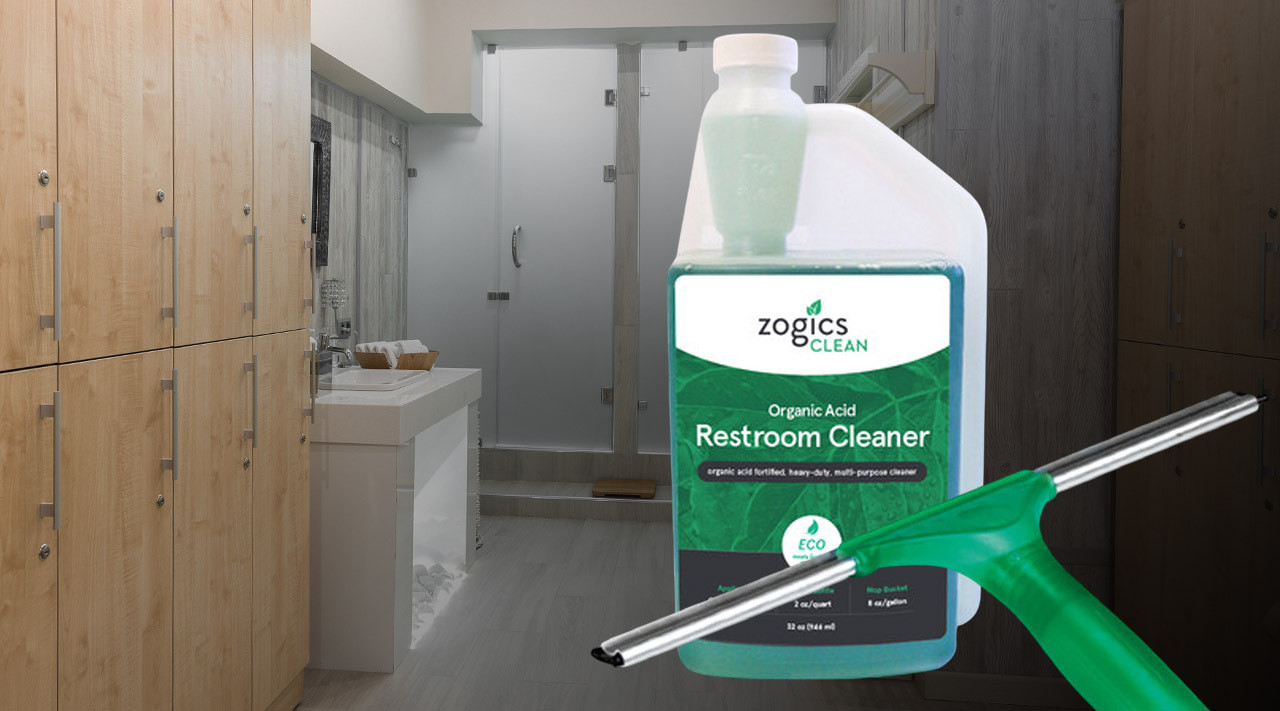
| Restroom Section | Multiple times daily | Enzymatic treatment around bases and drains, acid cleaner for scale |
| Drains (All Zones) | Weekly | Enzymatic drain treatment, check traps are holding water |
Use microfiber systems throughout — they trap soil rather than redistributing it, which matters most in exactly these zones.
Daily, Weekly, and Monthly Protocols
| When | Tasks |
|---|---|
| Morning, Before Opening | Run ventilation 30 minutes. Apply fast-dry disinfectant to all surfaces. Check and refill air fresheners and soap. Inspect drains for standing water |
| Hourly During Operation | Spot-clean with antibacterial wipes. Remove wet items. Squeegee shower areas. Check humidity is holding 40–60% |
| Evening Deep Clean | Full disinfectant treatment. Enzymatic drain cleaning. Move benches and clean beneath. Run purifiers on high overnight |
| Weekly | Biofilm removal in drains and grout. Clean HVAC return vents and check filters. Wipe locker interiors. Inspect all odour control equipment |
| Monthly | Survey members on perceived cleanliness. Log humidity across the room. Inspect for hidden mould. Review supply usage and adjust protocols |
Prevention Beats Remediation
Material Selection for Renovations
- Solid polymer or phenolic lockers rather than metal or wood — non-porous and washable.
- Antimicrobial rubber flooring instead of carpet.
- Epoxy-coated walls for wipe-down cleaning.
- Non-porous bench materials that resist absorption.
- Ventilated locker doors specified at purchase, which is far cheaper than retrofitting.
Member Education
- Post clear signage about wet towel disposal, and provide enough bins that it is easy.
- Encourage shower shoes — good for members and for your floors.
- Promote post-workout equipment wiping.
- Set and communicate an overnight locker policy.
Emergency Odor Response
When odour spikes unexpectedly, work in this order.
- Maximise ventilation. Open every available airway and run exhaust at full.
- Find the source before treating the air. Check drains first, then trash, then hidden moisture. Air treatment on an untreated source buys minutes.
- Treat the source. Enzymatic cleaner in drains, disinfectant on surfaces.
- Deploy portable purifiers on maximum in the affected area.
- Apply an odour eliminator to neutralise what remains airborne.
- Raise cleaning frequency to every two hours until the room holds neutral on its own.
Create a Fresh, Welcoming Environment
Persistent locker room odour is not inevitable, and it is not a cleaning-frequency problem. It is a sequence problem: moisture, then residue, then disinfection, then air.
Start with the foundations — hold humidity in range, treat drains weekly, clean under the benches, and get an EPA-registered disinfectant used at its full contact time. Those four changes are usually noticeable within days.
Explore odor control, disinfectants, air filtration, and locker room fixtures, or see everything we supply to fitness facilities. Which zone in your locker room still smells after a full clean? That is where to start.