Help Center

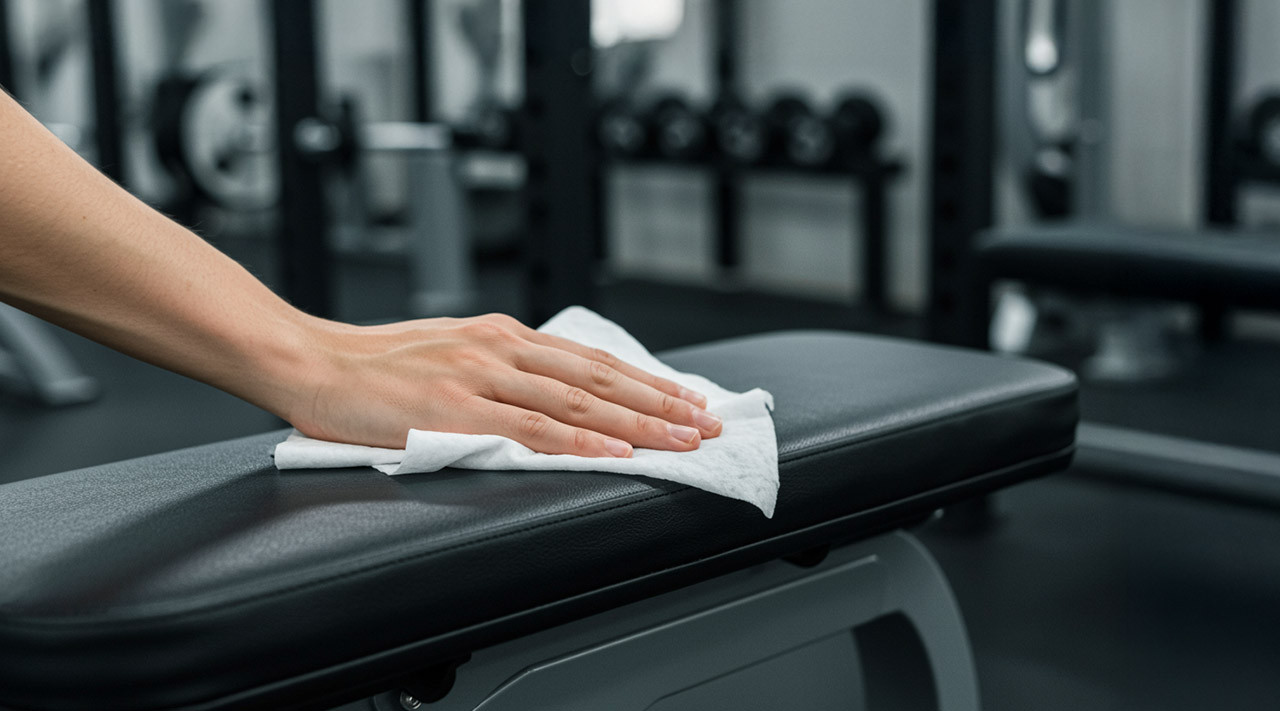
A gym is clean enough when high-touch surfaces are disinfected multiple times daily, locker rooms meet humidity and microbial control standards, and members have immediate access to wipes and hand sanitizer throughout the facility. Anything less creates measurable risk: research from the health and fitness industry shows member satisfaction drops from 83% to 43% when cleanliness expectations go unmet, and retention falls from 90% to 52%.
Free weights can carry 362 times more bacteria than a toilet seat. Treadmill surfaces harbor 74 times more bacteria than a public restroom faucet. These numbers are not anomalies; they reflect what happens in any high-traffic facility without a structured hygiene program.
This guide gives you that program, organized by frequency, zone, product selection, and culture, so nothing gets missed even during peak hours.
Quick answer: Gym equipment should be disinfected after every use. High-touch zones (entry points, locker rooms, cardio rows) need multiple cleaning passes per day. Deep cleaning of mats, vents, and floors should happen weekly, with HVAC maintenance and full-floor sanitation monthly.
What Members Expect (and Where Most Gyms Fall Short)
Today's gym members evaluate cleanliness before they evaluate equipment, pricing, or class schedules. They want visible proof that hygiene is active, not reactive.
What members expect to see:
-
Gym equipment wipes and hand sanitizer dispensers positioned throughout the floor
-
Disinfectants that are visibly equipment-safe, not generic household sprays
-
Locker rooms that are odor-free and dry, not humid and musty
-
Adequate air circulation that signals active ventilation, not stale air
Where gyms consistently fall short:
-
Yoga mats and shared floor gear: Porous surfaces that absorb sweat and become breeding grounds for skin infections if not deep-cleaned weekly
-
Adjustment knobs and cable mechanisms: Frequently touched, rarely sanitized; often missed in standard cleaning rounds
-
Locker room humidity control: Excess moisture enables mold and bacterial growth; ventilation and dehumidification are not optional
-
Entry and reception points: High-touch surfaces that require disinfection multiple times per day, not just at opening and close
-
Cleaning cloth cross-contamination: Using the same cloth across zones spreads pathogens rather than removing them; a color-coded microfiber system prevents this
If you have already reviewed the basics of wiping techniques and product contact times, the How to Clean Gym Equipment guide covers that ground. This guide focuses on embedding those practices into a whole-facility strategy.
Gym Cleaning Frequency: Daily, Weekly, and Monthly Breakdown
A structured cleaning schedule is the difference between a reactive wipe-down and a defensible hygiene program. The table below maps tasks to frequency based on member contact risk.
| Task | Frequency | Priority |
|---|---|---|
| Disinfect High-Contact Equipment (weights, handles, benches) | After each use / continuously | Critical |
| Wipe Entry Points, Reception Surfaces, Door Handles | Multiple times daily | Critical |
| Locker Room and Shower Disinfection | Before peak sessions + end of day | High |
| Restock Wipes and Hand Sanitizer Stations | As needed throughout the day | High |
| Move and Clean Under/Behind Equipment | Weekly | Medium |
| Deep Clean Mats and Porous Floor Surfaces | Weekly | Medium |
| Ventilate and Deodorize Enclosed Spaces (Saunas, Steam Rooms) | Weekly | Medium |
| HVAC Filter Replacement | Monthly | High |
| Equipment Safety Inspections + Cleaning | Monthly | Medium |
| Full-Floor Sanitation With Non-Slip Disinfectants | Monthly | Medium |
Daily: The Non-Negotiables
Daily cleaning is not about thoroughness; it is about consistency. The goal is to eliminate pathogen accumulation before it becomes visible or symptomatic.
-
Run "micro cleans" between peak sessions rather than one end-of-day sweep
-
Station trained staff in high-traffic zones during rush hours to sanitize in real time
-
Complete locker room and shower disinfection before the evening rush, not after
-
Position wipe dispensers between cardio rows, next to squat racks, and near every exit
Weekly: Depth Over Speed
Weekly tasks target the surfaces and spaces that daily cleaning cannot reach.
-
Move all equipment and clean underneath and behind it
-
Deep clean yoga mats, stability balls, and other porous shared surfaces
-
Vent and deodorize enclosed spaces including sauna and steam rooms
-
Inspect and replace any damaged or soiled cleaning cloths
Monthly: Infrastructure Hygiene
Monthly maintenance addresses the systems that support daily cleanliness.
-
Replace HVAC filters to maintain indoor air quality standards
-
Conduct full-floor sanitation with non-slip disinfectants
-
Run equipment safety inspections alongside cleaning checks
-
Review and update your cleaning log to identify recurring problem zones
For placement strategy and station layouts, the Zogics Clean Guide maps out where dispensers and cleaning stations perform best across facility types.
Peak-Hour Cleaning: Turning High Traffic Into a Hygiene Advantage
Most gyms treat peak hours as a cleaning obstacle. The floor is busy, staff are stretched, and cleaning gets deferred until the crowd clears. Progressive facilities flip this approach.
Strategies that work during peak hours:
-
Station staff in high-use zones rather than sending them on full-floor sweeps; focused presence in cardio and free-weight areas catches contamination at the source
-
Make cleaning visible to members: when members see staff actively sanitizing, it signals that the facility takes hygiene seriously; this directly influences perceived cleanliness scores
-
Use booking and check-in data to predict which equipment clusters will peak at which times, then schedule targeted micro-cleans accordingly
-
Distribute gym equipment wipes and sanitizer at the exact points where members reach for them: between cardio rows, flanking squat racks, at mat zones, and near every exit
The CDC's guidance on environmental cleaning in public spaces reinforces that frequency and placement matter as much as product selection. Having the right disinfectant on the shelf does nothing if it is not accessible where and when members need it.
Choosing the Right Products for Gym Cleaning
Not all disinfectants are equal, and fitness environments have specific requirements that general-purpose cleaners do not meet. The wrong product can damage equipment finishes, fail to meet EPA contact time requirements, or simply not be effective against the pathogens common in gym settings.
Product Selection by Zone
| Zone | Product Type | Key Requirement |
|---|---|---|
| Cardio and Weight Equipment | Gym equipment wipes | Equipment-safe formula; no bleach or alcohol that degrades upholstery |
| Locker Rooms and Showers | Disinfectant cleaners | Mold and mildew efficacy; fast dry time |
| Mats and Rubber Flooring | Non-slip, pH-neutral disinfectant | Safe for rubber; will not degrade surface grip |
| Entry Points and Door Handles | Antibacterial wipes or spray + microfiber | Broad-spectrum, fast-contact kill claim |
| Air Quality | HEPA air filtration systems | Captures airborne particulates, not just surface pathogens |
| Cleaning Cloths | Color-coded microfiber | Zone-specific assignment to prevent cross-contamination |
What to Look For on the Label
The EPA's Safer Choice program certifies disinfectants that are effective against common pathogens while being safer for people and surfaces. For gym settings, look for:
-
EPA registration number confirming disinfectant status (not just a sanitizer)
-
Listed kill claims for MRSA, Staph, and common fungal pathogens
-
Contact time of 2 minutes or less for practical in-use compliance
-
Equipment-safe designation for use on vinyl, rubber, and upholstery
For a curated list of products tested in fitness environments, see Top Gym Cleaning Products for 2026.
Wipes vs. Spray: Which Is Right for Your Gym?
Both formats work, but they serve different use cases. Wipes are faster for member self-service and high-turnover equipment. Spray with microfiber gives staff more control over coverage on irregular surfaces. Our Comparing Wipes and Spray Bottles guide breaks down cost, contact time, and coverage by application.
Building a Hygiene Culture: Staff and Members
A cleaning schedule only works when people follow it consistently. That requires two things: staff who are trained and accountable, and members who understand their role.
Staff Training and Accountability
-
Hands-on refresher training every quarter, not just onboarding; product formulations, contact times, and zone assignments change, and staff need to stay current
-
Rotate cleaning assignments to prevent routine fatigue and the "blind spots" that come from cleaning the same area the same way every day
-
Use a cleaning log with timestamps and staff initials; this creates accountability and gives you data to identify problem zones before members notice them
-
Train on product safety as well as technique: staff should know which products require ventilation, which require gloves, and which are safe for member-facing use
Member Engagement
Members are not just recipients of your cleaning program; they are participants in it.
-
Orient new members on your hygiene expectations during onboarding, not as a liability disclaimer but as a feature of your facility culture
-
Remove friction from compliance: wipe dispensers placed within arm's reach of equipment get used; dispensers tucked in corners do not
-
Use positive signage that frames wiping down equipment as part of the workout culture, not a scolding reminder
-
Acknowledge members who model good behavior: a simple thank-you from staff reinforces the norm
For a deeper look at the difference between genuine hygiene programs and surface-level optics, see What Is Hygiene Theater and How to Move Beyond It.
Technology and Emerging Standards in Gym Hygiene
Member expectations and regulatory guidance are both moving in the same direction: more rigorous, more verifiable, and more proactive. Facilities that invest in the right tools now will not be scrambling to catch up in two years.
Technologies worth adopting now:
-
Electrostatic sprayers: Apply disinfectant as a charged mist that wraps around surfaces, achieving coverage that manual wiping misses on complex equipment shapes
-
UV-C sanitizing stations: Effective for quick-turnover items like shared accessories and small equipment; not a replacement for surface disinfection but a useful supplement
-
Smart scheduling software: Automates high-traffic cleaning alerts based on check-in data, removing the guesswork from when to clean and where
-
Air quality monitoring: CO2 levels, particulate counts, and humidity readings give facilities objective data on ventilation performance; this data is increasingly expected by health-conscious members
The EPA's guidance on indoor air quality in commercial buildings provides a baseline framework for ventilation standards that fitness facilities can adapt. Air quality is no longer a back-of-house concern; it is part of the hygiene conversation members are already having.
Also worth reviewing: locker room odor control strategies that address humidity, fast-dry disinfectants, and traffic-zone management in one of the most complaint-prone areas of any gym.
Key Takeaways
-
Cleanliness is a retention driver, not just a compliance requirement; losing half your members after a hygiene failure is a real business outcome
-
High-touch surfaces need disinfection after every use; locker rooms and entry points need multiple daily passes
-
Product selection matters: use EPA-registered disinfectants with listed kill claims for MRSA, Staph, and fungal pathogens
-
Color-coded microfiber systems and zone-specific wipe placement prevent cross-contamination and improve compliance
-
Air quality is part of the hygiene program; HVAC maintenance and filtration affect what members breathe, not just what they touch
-
Staff training and member orientation are what make a cleaning schedule stick beyond the first week
Ready to build out your facility hygiene program? Browse gym cleaning supplies, equipment wipes, and air quality solutions at Zogics, or explore the 6 Simple Steps to Keeping Gym Showers Clean for locker room-specific guidance.