Help Center

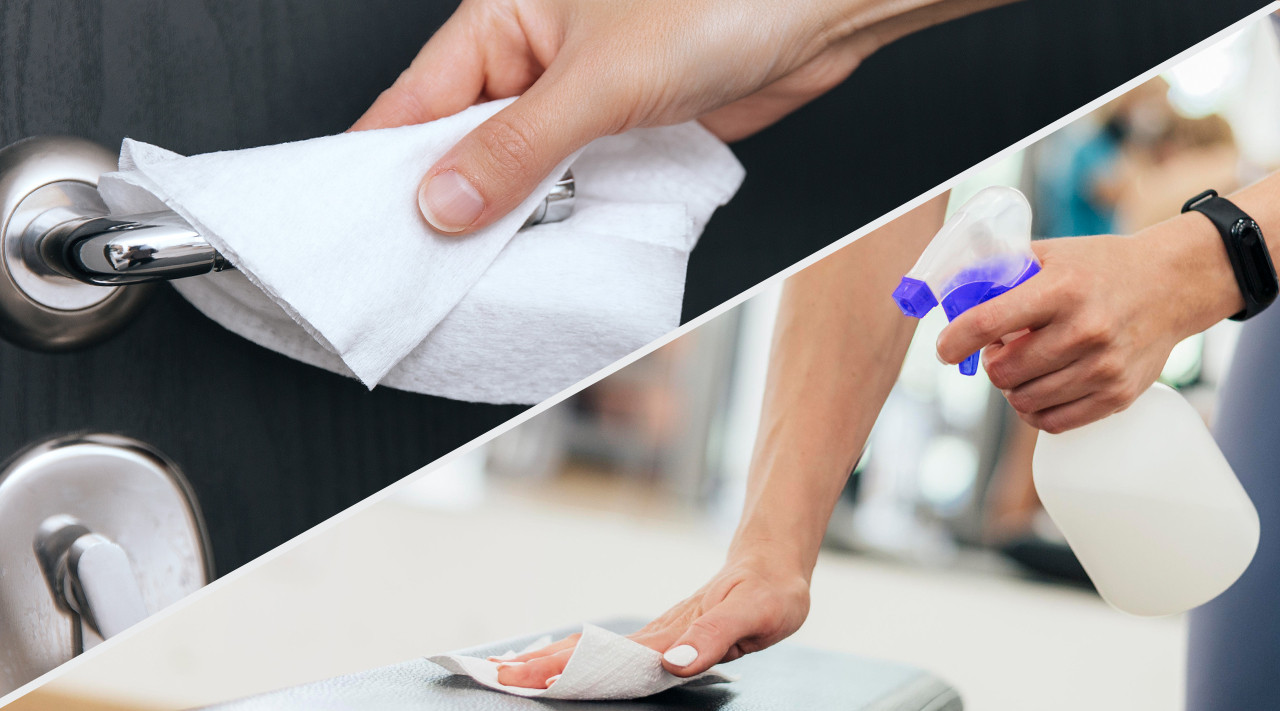
Wipes or spray? It’s one of the most common questions we get from gym owners, facility managers, and cleaning teams and the honest answer is that most well-run facilities use both.
Each tool wins in a different situation. This guide breaks down the real differences, the pros and cons of each, and exactly when to reach for one over the other, starting with a quick answer you can act on right now.
Key Takeaways
- Use disinfecting wipes for fast, high-traffic touchpoint cleaning, handles, seats, screens, dumbbells, where members clean up after themselves.
- Use spray cleaners for large surfaces, deep cleaning, and staff-led sanitation where you need full control over disinfectant contact time.
- For most facilities, the best system is both: wipes at member stations, sprays and concentrates for scheduled deep cleans.
Wipes vs. Spray Cleaners at a Glance
Here’s how the two methods compare across the factors that actually affect cleaning quality, cost, and member experience.
|
Factor |
Disinfecting Wipes |
Spray Cleaners |
|
Speed / convenience |
Fastest — grab, wipe, toss. Ideal between-use cleaning. |
Slower — spray, wait, wipe with a towel. |
|
Surface coverage |
Best for handles, seats, screens, small touchpoints. |
Best for large surfaces, mats, benches, open areas. |
|
Contact (dwell) time |
Pre-measured, but surface can dry too fast if wiped immediately. |
Easier to keep a surface visibly wet for the full dwell time. |
|
Cost per use |
Higher per wipe; predictable. |
Lower per use with concentrates/refills; needs towels. |
|
Waste |
More disposable waste. |
Less waste with refillable systems (towels excepted). |
|
Best user |
Members self-cleaning; fast turnover. |
Staff-led deep cleans and nightly sanitation. |
|
Best for |
High-traffic touchpoints, quick turnover. |
Deep cleaning, large equipment, controlled disinfection. |
What’s the Difference Between Disinfecting Wipes and Spray Cleaners?
Disinfecting wipes are pre-moistened, pre-measured towelettes. The disinfectant is already loaded onto the cloth, so cleaning is a single grab-and-wipe step, no bottles, no towels, no mixing. That simplicity is why they’re the go-to for self-service cleaning stations.
Spray cleaners apply liquid disinfectant or cleaner from a bottle, which you then wipe with a paper towel or cloth. They give you more control over how much product goes down and how long it dwells, and they’re usually cheaper per use; especially when paired with refillable concentrate systems. The trade-off is that they’re a multi-step process and depend on the user applying enough product and letting it sit.
Disinfecting Wipes: Pros and Cons
Pros
- Quick and easy for fast equipment wipe-downs between uses.
- Highly convenient for members, which encourages more frequent cleaning and better compliance.
- Pre-measured disinfectant helps ensure consistent, proper application.
- Ideal for high-traffic facilities with constant equipment turnover.
- No extra supplies needed, streamlining daily cleaning workflows.
Cons
- Can dry out if dispensers aren’t maintained or lids are left open.
- Generate more disposable waste than refillable spray systems.
- Higher cost per clean than concentrate-based sprays.
Spray Cleaners: Pros and Cons
Pros
- Provide broader surface coverage for large equipment and open areas.
- Allow better control over disinfectant contact time for effective germ elimination.
- Often more cost-effective for staff-led, high-volume cleaning routines.
- Compatible with refill and concentrate systems, reducing waste and long-term supply costs.
- Useful for deep cleaning during off-peak hours or nightly sanitation.
Cons
- Require paper towels or cloths, adding steps to the cleaning process.
- Slower for quick wipe-downs between member use.
- Higher risk of over-spraying or uneven application if not used properly.
- Less convenient for members who prefer fast, grab-and-go cleaning.
Which Should You Use? By Facility Type
Gyms & Fitness Centers
Gyms are the classic case for a hybrid system. Place wipe dispensers at every equipment zone so members can quickly clean handles, benches, and screens after each use, that convenience is what actually drives compliance. Then have staff use spray cleaners and concentrates for nightly deep cleans of mats, upholstered equipment, and high-touch communal areas where contact time matters most.
Schools & Educational Facilities
Classrooms benefit from sprays and concentrates for cost-effective daily surface cleaning by custodial staff, with wipes stationed for teachers and shared-device stations. Bulk buying keeps per-use costs down across many rooms.
Offices & Wellness Centers
For desks, shared equipment, and reception touchpoints, wipes offer the fastest self-service option, while sprays handle end-of-day surface sanitation. Alcohol-free, dual hand-and-surface formulas work well in these lower-intensity environments.
Travel, Camping & On-the-Go
When there’s no sink, towel, or trash bin nearby, wipes win by default, they’re self-contained and require no extra supplies. Sprays make more sense at a fixed base camp or RV where you have surfaces to deep-clean and somewhere to dispose of towels.
1. Zogics Biodegradable Disinfectant Wipes
Zogics Biodegradable Disinfectant Wipes are eco-friendly, EPA-registered wipes completely free of bleach, dyes, phosphates, synthetic fragrances, parabens, phenol, and phthalates. They kill 99.9% of germs and bacteria in one step and are designed to be gentle on equipment and surfaces.
Disinfecting Effectiveness:
These EPA-registered disinfectant wipes are biodegradable and plant-based. These wipes kill 99.9% of germs and bacteria in one step.
Equipment Care:
Gentle on equipment and surfaces, reducing wear and tear.
Maintenance and Upkeep:
Low maintenance with natural breakdown, minimizing disposal issues.
Initial Cost:
Slightly higher due to eco-friendly materials.
Long-Term Cost:
Reduced costs due to less frequent disposal and environmental benefits.
Member Satisfaction:
High satisfaction for their effectiveness and environmental benefits.
Best used for:
• Facilities that prioritize eco-friendly cleaning products.
• Locations with high-touch surfaces that require effective and quick disinfecting.
• Environments looking to reduce environmental impact while maintaining high hygiene standards.
Things to consider:
• Higher initial cost due to eco-friendly materials.
• Must be paired with a dedicated dispenser for ease of use.
• Ensure availability of trash cans or proper disposal methods as these are still single-use wipes.

2. Zogics Antibacterial Disinfecting Wipes
Zogics Antibacterial Disinfecting Wipes are powerful, EPA-registered wipes that kill 99.9% of bacteria in just 15 seconds. They are effective against MRSA, HIV-1, H1N1, E. coli, and more. These wipes are free of bleach, alcohol, and phenol, making them suitable for high-touch surfaces in busy environments.
Disinfecting Effectiveness:
Highly effective against a broad range of pathogens, suitable for high-touch surfaces.
Equipment Care:
Safe for most surfaces, though some delicate materials may require extra care.
Maintenance and Upkeep:
Easy to use and dispose of, though chemical content needs handling.
Initial Cost:
Moderate, often less than biodegradable options.
Long-Term Cost:
Ongoing costs for replenishment, but effective in maintaining hygiene.
Member Satisfaction:
High due to reliable performance and effectiveness.
Best used for:
• High-traffic areas that require quick and effective disinfection.
• Locations that need to meet strict sanitation guidelines.
• Facilities where reducing the spread of specific pathogens like MRSA, HIV-1, and H1N1 is critical.
Things to consider:
• While safe for most hard surfaces, care should be taken with delicate materials.
• Requires frequent restocking to maintain supply, especially in busy environments.
• Not as eco-friendly as biodegradable options, so consider the environmental impact.
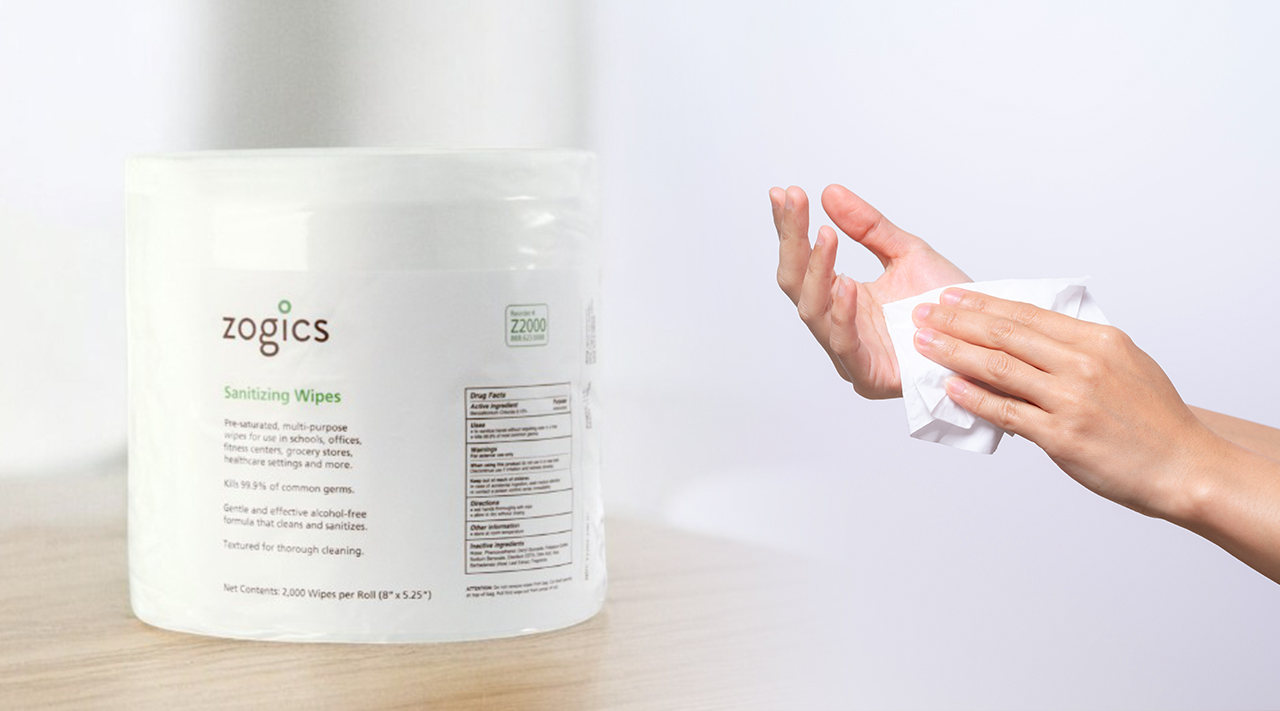
3. Zogics Hand & Surface Sanitizing Wipes
Zogics Hand & Surface Sanitizing Wipes feature an alcohol-free formula that cleans, sanitizes, and kills 99.99% of germs on hands and surfaces. These versatile and gentle wipes make them ideal for use in various settings where a milder sanitizing solution is needed. Disinfecting Effectiveness: The gentle and effective alcohol-free formula cleans, sanitizes, and kills 99.99% of germs on hands and surfaces.
Equipment Care:
Safe for use on various surfaces, but the solution may be slightly harsher on sensitive materials. Maintenance and Upkeep: Requires regular restocking but is straightforward in use.
Initial Cost:
Moderate initial cost per case.
Long-Term Cost:
Ongoing costs for regular use, with potential savings in bulk purchasing.
Member Satisfaction:
Generally high for their sanitizing effectiveness and convenience.
Best used for:
• Dual-purpose use for both hand and surface sanitizing.
• Offices, gyms, and wellness centers where a gentler formula is preferred.
• Facilities that want a convenient, multipurpose sanitizing option.
Things to consider:
• Regular restocking is necessary for continuous availability.
• It is not suitable for heavy-duty disinfection, so use alongside more potent cleaners for high-risk areas.
• Bulk purchasing can reduce long-term costs.

4. Zogics Cleaning Wipes
Zogics Cleaning Wipes are versatile, quaternary disinfectant wipes free of phenol, bleach, and alcohol. These wipes are suitable for general cleaning tasks and provide a reliable option for maintaining cleanliness across various surfaces.
Disinfecting Effectiveness:
Good for general cleaning and disinfecting, though slightly less potent than higher-rated antibacterial wipes.
Equipment Care:
Suitable for most surfaces but may not be as gentle as biodegradable options.
Maintenance and Upkeep:
Moderate, requiring regular restocking and disposal.
Initial Cost:
Cost-effective compared to some other wipes.
Long-Term Cost:
Ongoing costs for replenishment; however, bulk purchases may reduce overall expenses.
Member Satisfaction:
Positive feedback for general use, with satisfaction varying by cleaning needs.
Best used for:
• General cleaning and disinfecting tasks.
• Facilities that require a versatile wipe for various surfaces without harsh chemicals.
• Locations with mixed surfaces need a consistent cleaning product.
Things to consider:
• May not be as effective against tough pathogens compared to specialized antibacterial wipes.
• Regular restocking and disposal are needed, impacting long-term costs.
• Consider additional disinfection methods for high-risk areas.
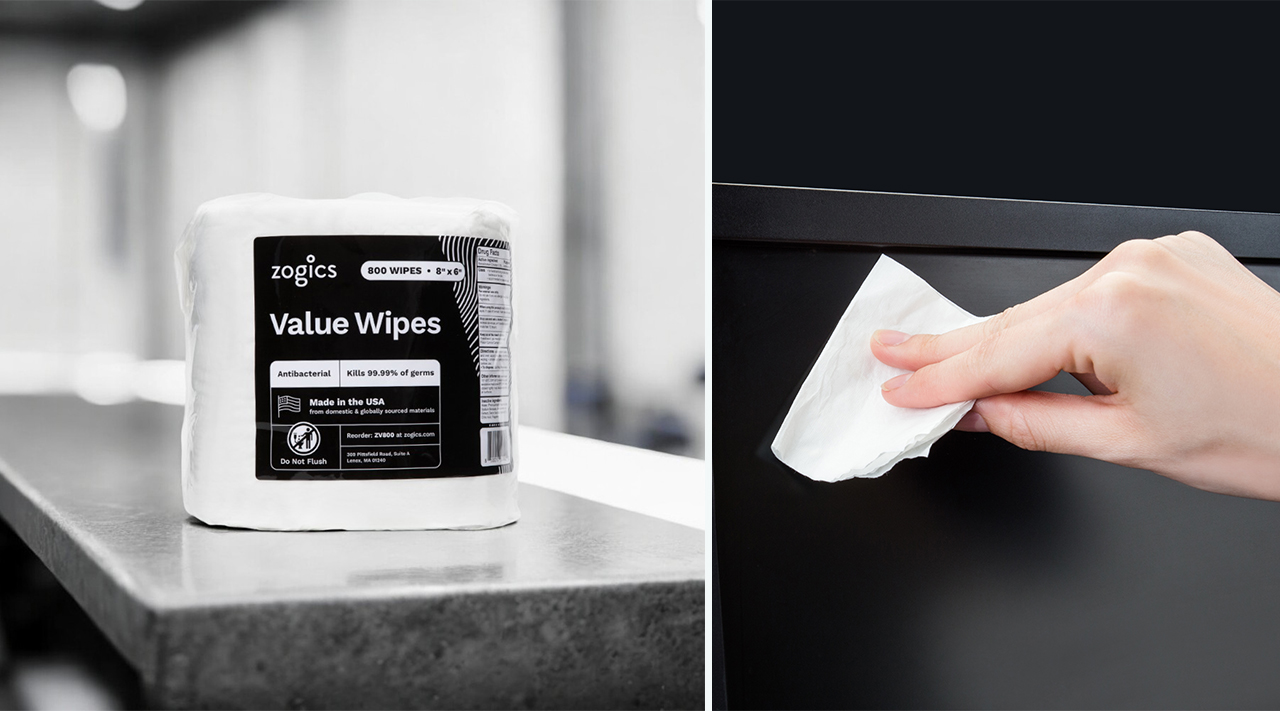
5. Zogics Value Wipes
Zogics Value Wipes are budget-friendly wipes designed for light cleaning tasks. While they may not offer the same disinfecting power as other wipes, they are suitable for facilities that need frequent cleaning at a lower cost.
Disinfecting Effectiveness:
These wipes eliminate 99.9% of germs and bacteria and are quat-based.
Equipment Care:
Safe for general use.
Maintenance and Upkeep:
Regular replenishment is needed, with refills potentially simplifying inventory management.
Initial Cost:
Lower initial cost, making them budget-friendly.
Long-Term Cost:
Cost-effective if used in bulk, though effectiveness may impact overall satisfaction.
Member Satisfaction:
Varied satisfaction depending on cleaning requirements and expectations.
Best used for:
• Budget-conscious facilities needing basic cleaning.
• Areas with low traffic or less stringent cleaning requirements.
• Environments where frequent wipe use is necessary but cost is a concern.
Things to consider:
• Lower disinfecting capabilities compared to specialized wipes.
• Smaller size could lead to more frequent usage and higher overall costs.
6. Spray Bottles & Paper Towels
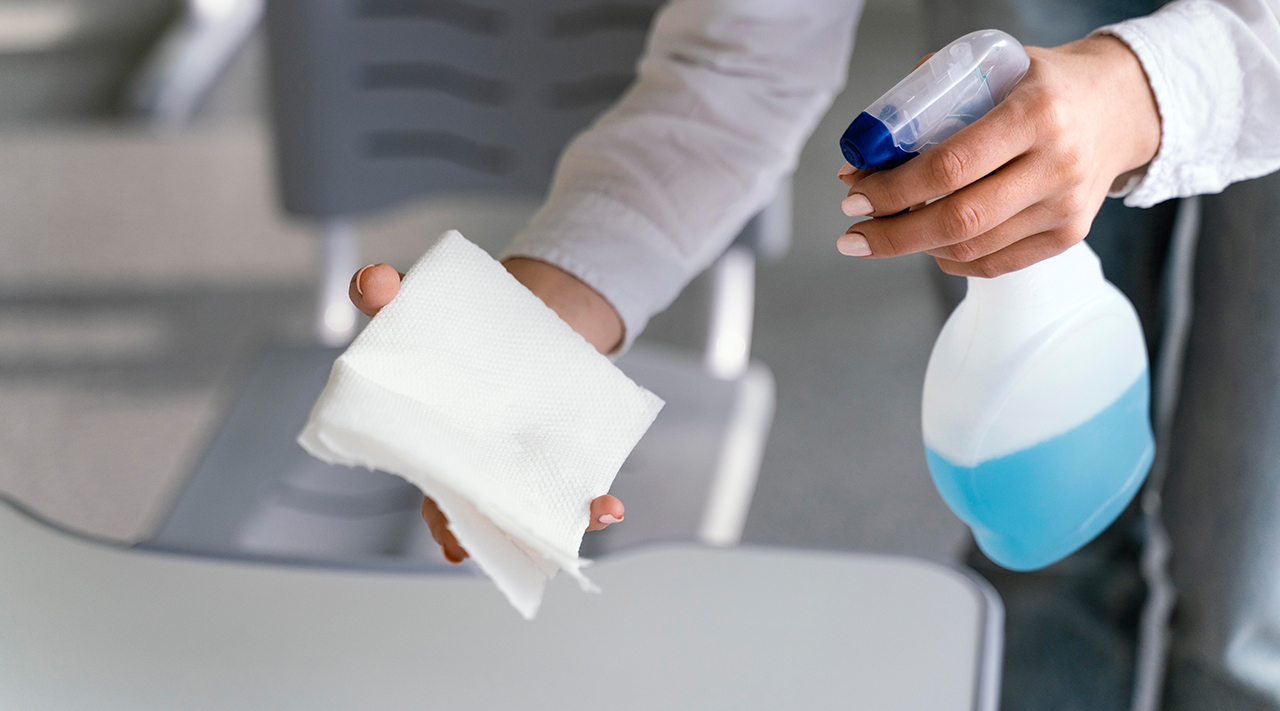
Using spray bottles and paper towels is a traditional cleaning method where the effectiveness largely depends on the cleaning solution used. Paper towels are disposable, making this option less eco-friendly but easy to use.
Disinfecting Effectiveness:
Effectiveness depends on the cleaning solution used. We recommend our Zogics Clean Concentrates, from general-purpose cleaner to toilet bowl cleaner, each cleaner offers great effectiveness in cleaning. Paper towels do not disinfect themselves. Equipment Care: Paper towels can leave lint and are less environmentally friendly.
Maintenance and Upkeep:
Requires constant restocking of both spray solutions and paper towels.
Initial Cost:
Low initial cost but requires ongoing purchases.
Long-Term Cost:
Higher long-term costs due to repeated purchases of paper towels and cleaning solutions.
Member Satisfaction:
Generally lower due to the inconvenience and lower cleaning efficiency.
Best used for:
• Facilities with low budgets for cleaning supplies.
• Situations where versatile use of different cleaning solutions is required.
• Quick, temporary cleaning tasks without the need for strong disinfection.
Things to consider:
• Effectiveness is dependent on the cleaning solution used.
• Overspray of cleaning solution onto sensitive electronics can be an issue.
• Paper towels are not reusable, leading to higher waste and environmental impact.
• Requires frequent restocking of both towels and cleaning solutions, increasing long-term costs.
7. Spray Bottles & Cloth Towels
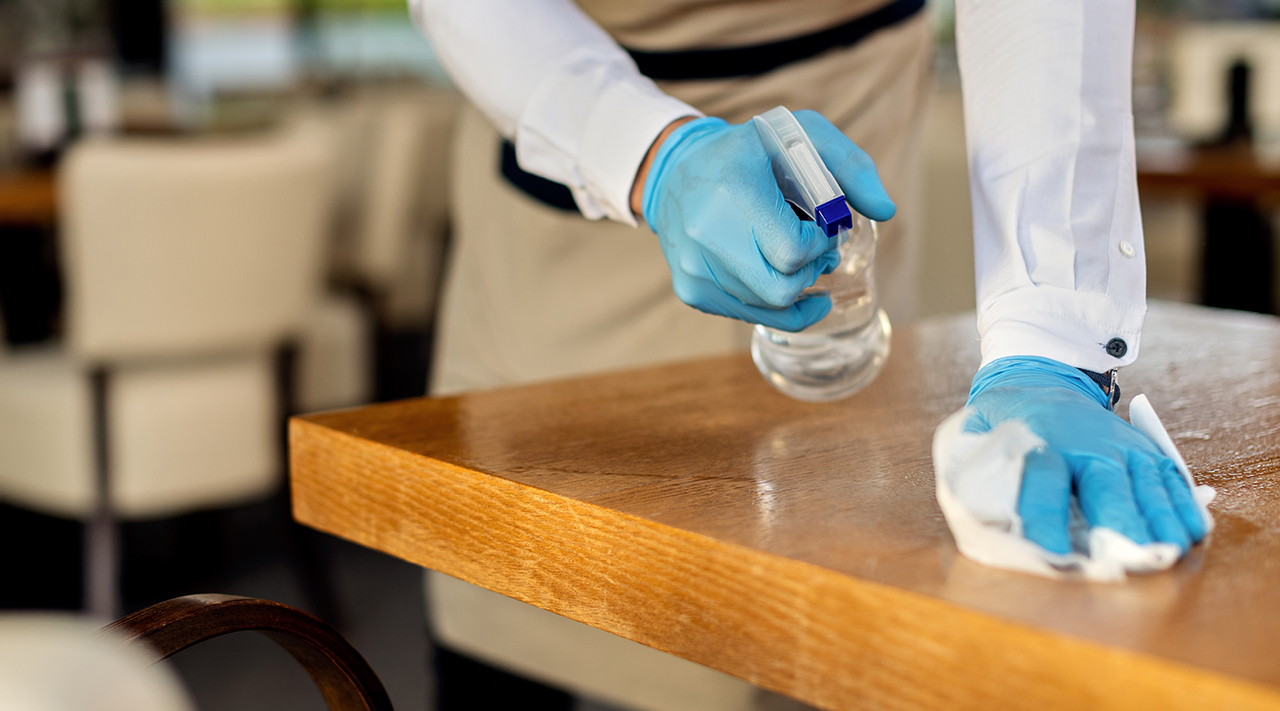
This method involves using spray bottles with reusable cloth towels. While cloth towels can be washed and reused, they require significant maintenance and proper laundering to remain effective and hygienic.
Disinfecting Effectiveness:
Similar to paper towels, effectiveness depends on the cleaning solution. Cloth towels need regular washing, which can impact their effectiveness.
Equipment Care:
Cloth towels can be rough on surfaces and require frequent laundering.
Maintenance and Upkeep:
High maintenance due to laundering and storage needs.
Initial Cost:
Low initial cost but requires investment in multiple towels and cleaning solutions.
Long-Term Cost:
Higher costs due to laundering and potential replacements.
Member Satisfaction:
Lower satisfaction due to the labor involved in maintaining towels and the potential for less effective cleaning.
Best used for:
• Environments that can handle high-maintenance cleaning setups.
• Facilities looking to reduce single-use products and move towards reusable options.
• Areas where tailored cleaning solutions for different surfaces are necessary.
Things to consider:
• High maintenance due to the need for regular laundering and storage.
• Initial investment in quality cloth towels is necessary for long-term effectiveness.
• Potential for damage to delicate surfaces if not used properly.
Cost and Bulk Buying: Getting the Best Value
Per clean, concentrate-based sprays are usually the cheapest option at scale, which is why staff-led, high-volume routines lean on them. Wipes cost more per use but save on labor and drive better member compliance.
For multi-site operations or high-traffic facilities, buying in bulk: cases of wipes or concentrate refills; is the biggest lever on long-term cost. Match the format to who’s doing the cleaning: members and quick turnover favor wipes; scheduled staff cleaning favors bulk concentrates.
What About Eco-Friendly Options?
Both formats offer greener choices. Look for biodegradable, EPA-registered wipes and refillable concentrate systems that cut down on plastic and shipping weight.
Biodegradable wipes carry a higher upfront cost but reduce waste and often pay off in member satisfaction and disposal impact; a worthwhile trade for facilities prioritizing sustainability.