Help Center

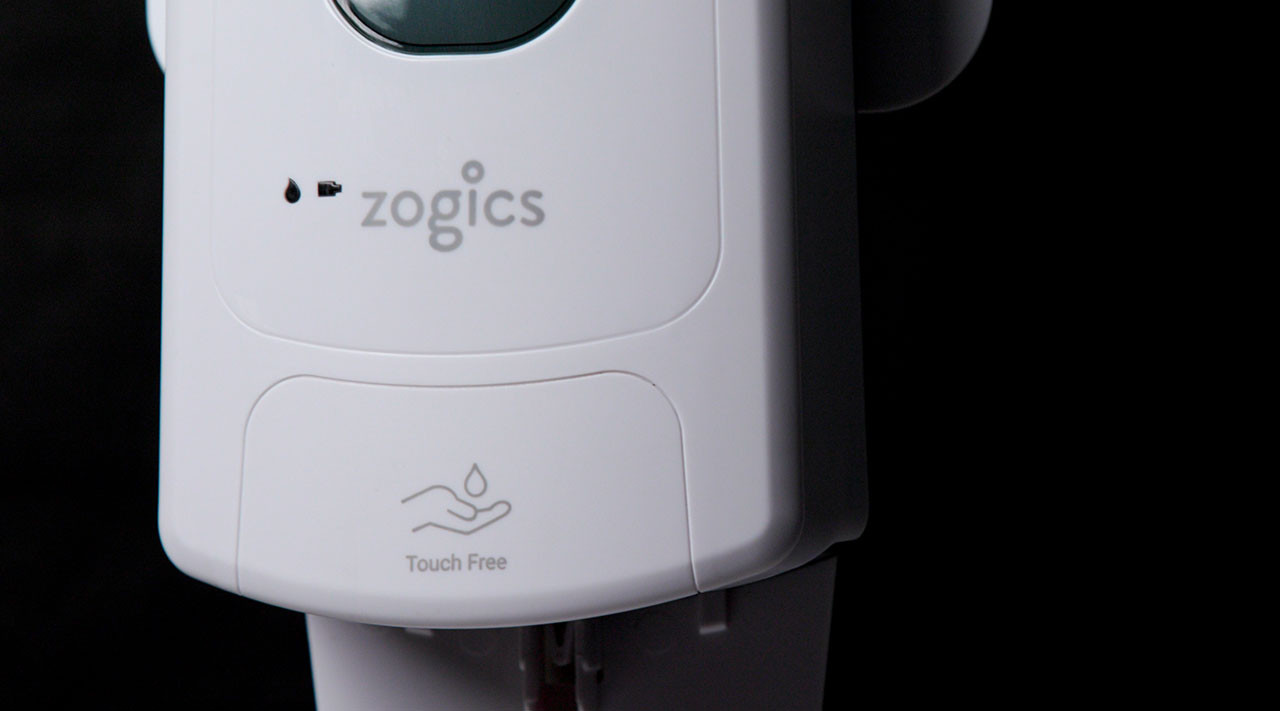
The best hand sanitizer dispenser for most commercial facilities is a touchless, wall-mounted unit that holds at least 1,000 mL. For healthcare, the Purell ES8 and Purell TFX-12 lead because they use sealed refills and hands-free sensors. For gyms, schools, and offices, a bulk-refill unit like the Zogics Touch-Free Foam Dispenser cuts refill costs. Lobbies where drilling isn't allowed are best served by a free-standing sanitizer station. Reception desks suit tabletop units, and manual push dispensers suit low-traffic back-of-house areas.
Key Takeaways
-
Touchless (automatic) dispensers are the best choice for public and shared spaces because users never touch the unit.
-
Choose at least 1,000 mL of capacity for high-traffic areas to reduce refill frequency and empty-dispenser downtime.
-
Dose volume matters: a 2025 study in the American Journal of Infection Control found 2 of 5 common touch-free foam dispensers averaged less than 1.0 mL per dispense.
-
Sealed, proprietary cartridges lower contamination risk; bulk-refill reservoirs lower long-term cost per use.
-
In healthcare and schools, NFPA 101 limits alcohol-based dispensers in corridors to 1.2 L each, spaced at least 48 inches apart.
-
Mount the operating mechanism no higher than 48 inches from the floor to meet ADA reach-range standards.
-
Wall-mounted units save floor space; floor stands offer flexible placement where wall mounting isn't possible.
Read on for the best hand sanitizer dispensers by use case, a side-by-side comparison of each type, and the features that matter most for your facility.
Best Hand Sanitizer Dispensers by Use Case
The best hand sanitizer dispenser depends on your environment: touchless wall-mounted units lead for healthcare and commercial settings, free-standing stations work best for lobbies and entryways, and tabletop units suit desks and counters. The table below matches the top pick to each setting.
Top Hand Sanitizer Dispenser Picks
| Use Case | Top Pick | Why It Works | Capacity |
|---|---|---|---|
| Best Overall for Healthcare | Purell ES8 Touch-Free Dispenser | Each refill includes its own battery, so a new refill also means fresh power. Sealed refills and hands-free sensor. | 1,200 mL |
| Best Touchless for High-Volume Commercial Spaces | Purell TFX-12 Touch-Free Dispenser | Hands-free sensor and sealed refills in a simple, widely stocked design for busy commercial spaces. | 1,200 mL |
| Best for Gyms, Schools, and Offices | Zogics Automatic Foam Hand Sanitizer Dispenser | Bulk-refill chamber with no cartridges, pre-measured 0.4 mL pumps (1 or 2 per use), and 4 C batteries. | 1,000 mL |
| Best for Lobbies and Entrances | Zogics Hand Sanitizer Dispenser Stand | Free-standing touchless station with sight glass and tamper-resistant design. No drilling required. | 1,000 mL |
| Best for Hospitality and Design-Forward Spaces | Purell LTX-12 Touch-Free Dispenser | Brushed chrome/black finish, large sight window, and skylight for quick fill checks. | 1,200 mL |
| Best for Reception Desks and Counters | Zogics Touch-Free Tabletop Foam Dispenser | Automatic dispenser on a tabletop stand for check-in desks and waiting areas. | 1,000 mL |
| Best Budget Option for Low-Traffic Areas | Purell ES4 Push-Style Dispenser | No batteries to maintain, sealed refills, and at-a-glance refill visibility. | 1,200 mL |
Browse all hand sanitizer dispensers to compare finishes, refill formats, and mounting options.
Types of Hand Sanitizer Dispensers
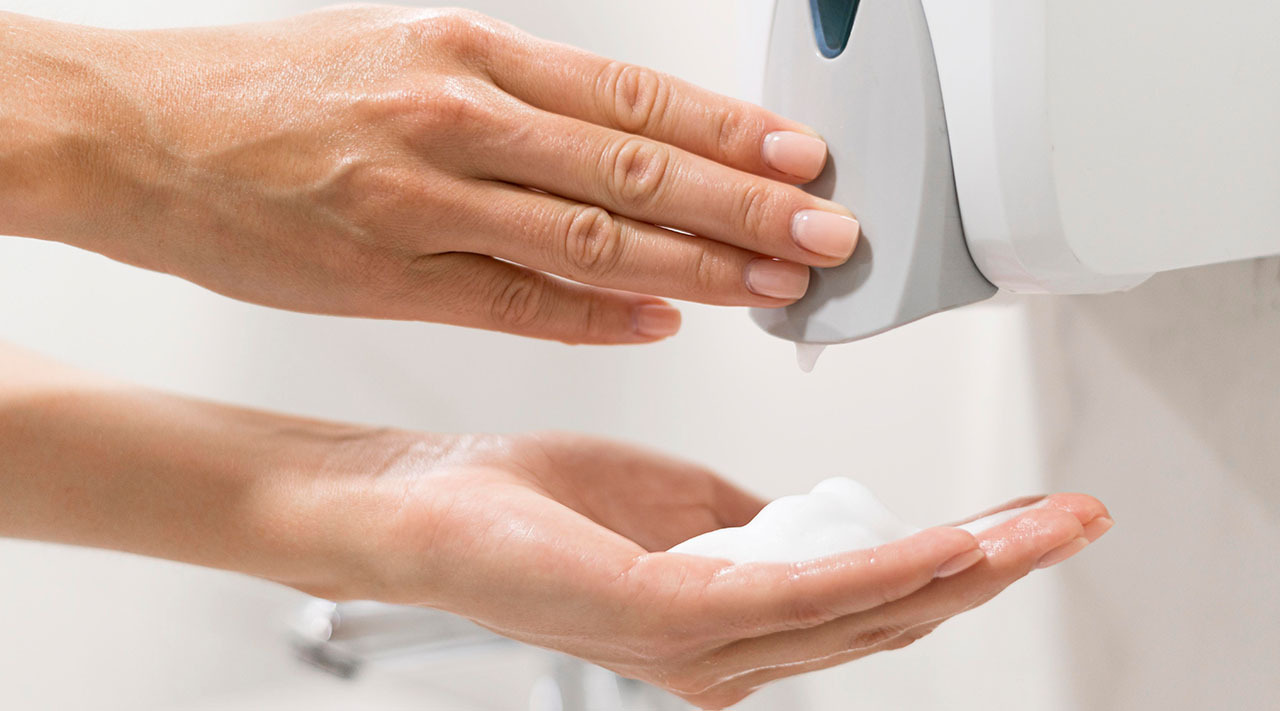
There are five main types of hand sanitizer dispensers: manual, automatic (touchless), wall-mounted, floor stand, and tabletop. Activation (manual or automatic) and mounting style (wall, floor, or table) are separate choices, so most facilities combine them, such as an automatic wall-mounted unit.
Hand Sanitizer Dispenser Types: Quick Comparison
| Dispenser Type | How It Works | Main Advantage | Main Drawback | Best For |
|---|---|---|---|---|
| Manual | Push lever or button | Low cost, no batteries | Users touch the unit | Warehouses, break rooms, back-of-house |
| Automatic (Touchless) | Infrared motion sensor | No physical contact | Needs batteries or power | Healthcare, gyms, lobbies, retail |
| Wall-Mounted | Fixed to wall | Saves floor space, reduces theft | Permanent installation | Corridors, restrooms, doorways |
| Floor Stand | Free-standing station | Flexible, highly visible | Takes up floor space | Entrances, event venues, retail floors |
| Tabletop | Sits on desk or counter | Compact and unobtrusive | Lower visibility in large spaces | Reception desks, offices, classrooms |
1. Manual Hand Sanitizer Dispensers
Manual dispensers release sanitizer when a user presses a lever or button. They are the lowest-cost option and need no power source.
Pros:
-
Affordable and easy to install.
-
No batteries or power required.
-
Ideal for low-traffic areas.
Cons:
-
Higher risk of cross-contamination because every user touches the push bar.
-
Requires more frequent surface cleaning.
Best Used For: Warehouses, staff break rooms, and back-of-house restrooms.
2. Automatic Hand Sanitizer Dispensers
Automatic dispensers use an infrared motion sensor to release a pre-measured dose without any physical contact. They are the most hygienic choice for shared and public spaces.
Pros:
-
Reduced risk of germ transmission.
-
Encourages frequent use because users never touch the unit.
-
Consistent, pre-measured dosing reduces waste.
-
Modern, professional appearance.
Cons:
-
Requires batteries or electricity.
-
Higher upfront cost than manual units.
Best Used For: Healthcare facilities, gyms, lobbies, and retail entrances.
3. Wall-Mounted Hand Sanitizer Dispensers
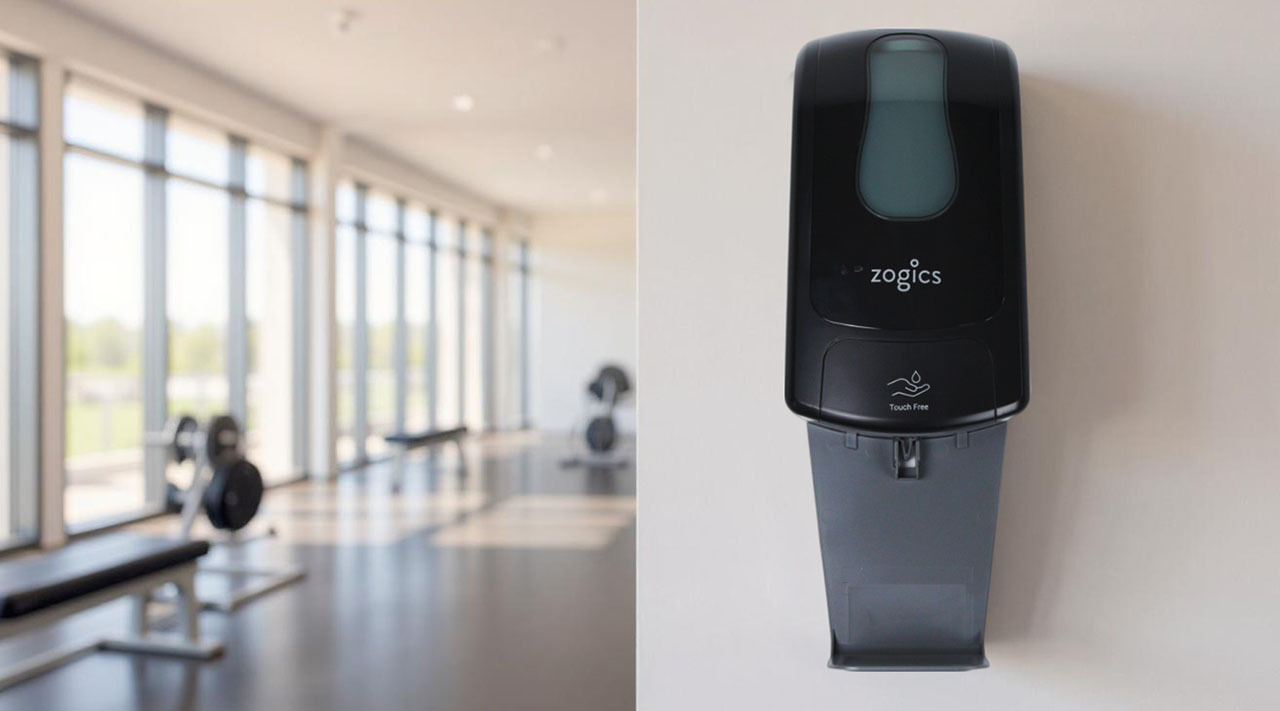
Wall-mounted dispensers are fixed to the wall to save floor space and keep traffic moving. They are the standard choice for permanent installations.
Pros:
-
Keeps units out of walkways.
-
Ideal for long-term installations.
-
Reduces tampering and theft.
Cons:
-
Requires drilling and permanent installation.
-
Less flexible if traffic patterns change.
Best Used For: Corridors, hallways, restrooms, and doorways.
4. Floor Stand Hand Sanitizer Dispensers
Floor stand dispensers are free-standing stations that can be moved wherever traffic flows. Their height and visibility prompt more people to use them. Zogics offers both a gel station and a foam floor stand dispenser.
Pros:
-
Highly flexible placement.
-
Eye-catching, which increases use.
-
No wall damage or drilling.
Cons:
-
Takes up floor space.
-
Can be tipped or tampered with in unsupervised areas.
Best Used For: Event venues, building entrances, open-concept offices, and retail floors.
5. Tabletop Hand Sanitizer Dispensers
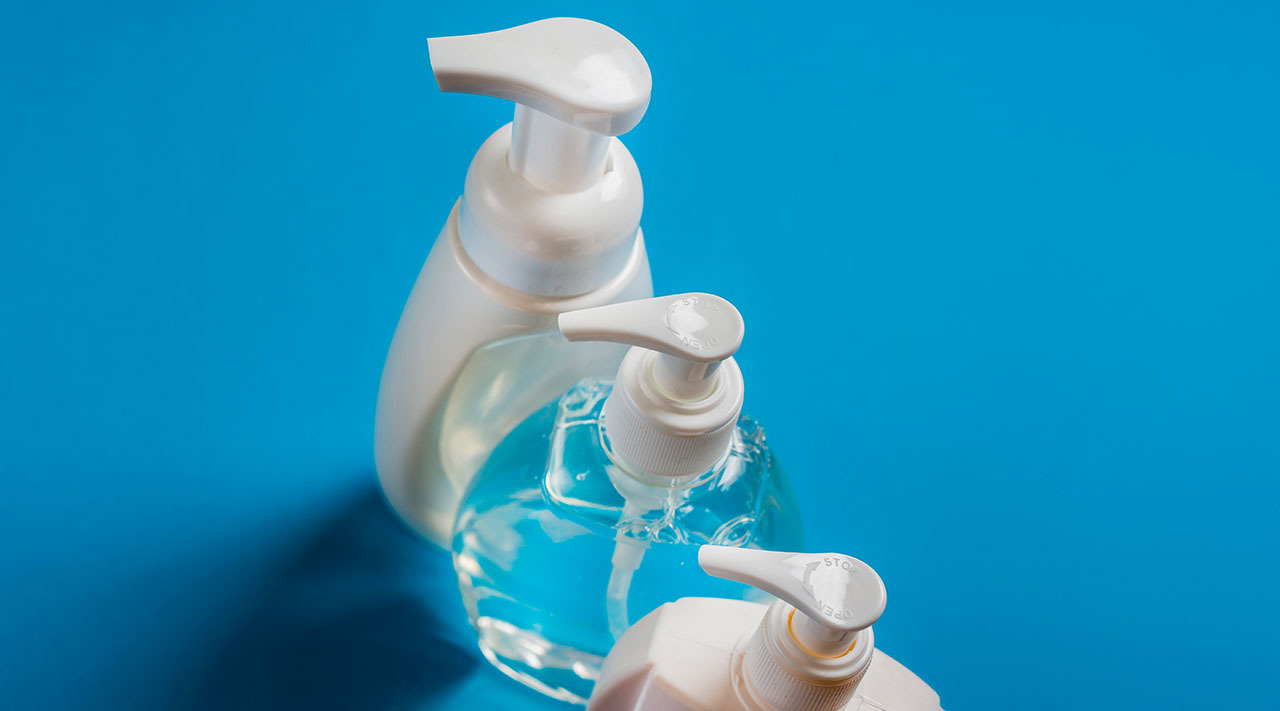
Tabletop dispensers are compact units designed for desks, counters, and reception areas. They put sanitizer within arm's reach at points of interaction.
Pros:
-
Small and unobtrusive.
-
Excellent for check-in points and small rooms.
Cons:
-
Less visible in large spaces.
-
Easier to move or knock over.
Best Used For: Reception desks, offices, classrooms, and waiting areas.
Manual vs. Automatic Hand Sanitizer Dispensers
Automatic dispensers are the better choice for public and high-traffic spaces; manual dispensers are the better choice for low-traffic areas where budget and zero battery maintenance matter most. The comparison below shows the trade-offs.
| Factor | Manual Dispenser | Automatic Dispenser |
|---|---|---|
| Hygiene | Users touch the push bar | Fully touch-free |
| Upfront Cost | Lower | Higher |
| Power | None required | Batteries or AC power |
| Dose Control | Varies by how hard users push | Pre-measured dose per activation |
| Maintenance | Refills and surface cleaning | Refills, battery checks, sensor tests |
| Best For | Break rooms, warehouses, low traffic | Healthcare, gyms, lobbies, schools |
What Are the Best Automated Hand Sanitizer Dispensers for Public Spaces?
The best automated hand sanitizer dispensers for public spaces are high-capacity, touch-free units with a reliable sensor, a visible fill window, and a consistent dose. For lobbies, gyms, schools, and retail entrances, the Zogics touch-free sanitizer stand and Zogics Automatic Foam Dispenser combine 1,000 mL bulk capacity with pre-measured dosing. For busy commercial spaces that prefer sealed refills, the Purell TFX-12 and Purell LTX-12 hold 1,200 mL.
Look for these features in any public-space dispenser:
-
Capacity of 1,000 mL or more so the unit doesn't run empty between service checks.
-
Sight window or low-level indicator so staff can spot a low refill at a glance.
-
Low-battery indicator to prevent sensor downtime.
-
Tamper-resistant housing with a lock for unsupervised areas.
-
Consistent dose volume so every user gets enough sanitizer to cover both hands.
Dose consistency is often overlooked. A 2025 study in the American Journal of Infection Control tested 5 touch-free foam dispensers common in U.S. hospitals across more than 10,000 dispenses and found that 2 averaged less than 1.0 mL per dispense, with pump design driving the difference. A separate 2025 Journal of Hospital Infection study found that dispensed volume directly determines how much of the hand gets covered, and that users frequently misjudge whether they received enough.
Key Features to Consider When Choosing a Dispenser
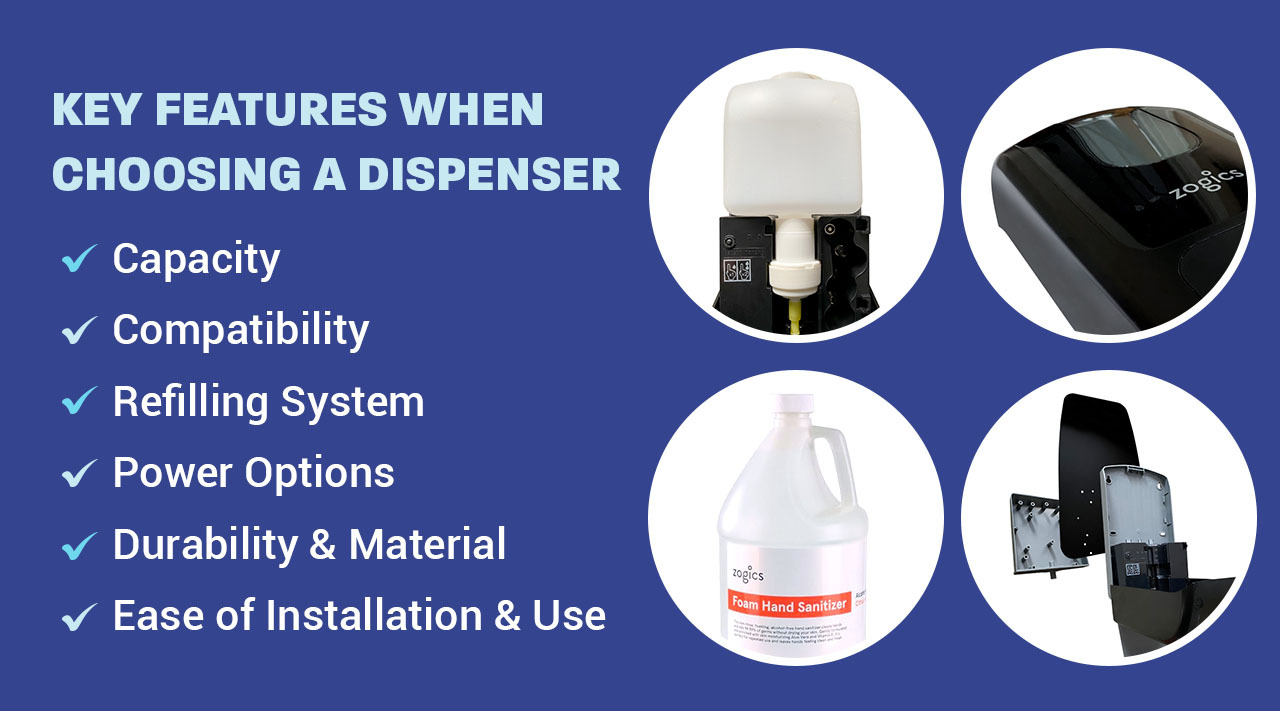
The six features that matter most are capacity, refill compatibility, refill system, power source, durability, and ease of installation. Use the checklist below to compare models.
| Feature | What to Look For | Why It Matters |
|---|---|---|
| Capacity | 1,000 mL or more for high-traffic areas | Fewer refills and less empty-dispenser downtime |
| Refill Compatibility | Gel, foam, or both; proprietary vs. universal | Determines which sanitizers you can buy and at what cost |
| Refill System | Sealed cartridge or bulk-fill reservoir | Trades contamination control against cost per use |
| Power Source | Batteries, battery-in-refill, or AC power | Affects mobility and maintenance workload |
| Durability | ABS plastic or stainless steel, locking cover | Resists vandalism, corrosion, and wear |
| Installation and Access | Tool-free setup, ADA-compliant mounting height | Speeds installation and keeps units usable for everyone |
1. Capacity
Choose a dispenser that holds 1,000 mL or more for high-traffic locations. Larger capacity means fewer refills and fewer moments when users find an empty unit.
2. Compatibility
Confirm the dispenser works with the sanitizer format your facility uses. Some dispensers accept only gel or only foam sanitizer. Others accept only proprietary refill cartridges, while bulk-fill units offer more flexibility. For effective germ reduction, the CDC recommends sanitizer with at least 60% alcohol. See our guide to alcohol-based vs. alcohol-free hand sanitizers to choose a formula.
3. Refill System
Sealed cartridges are the most hygienic refill system; bulk refills are the most cost-effective. The table below compares the two.
| Factor | Sealed Cartridge | Bulk Refill Reservoir |
|---|---|---|
| Contamination Risk | Lowest; refill is never opened | Higher if the reservoir is topped off |
| Cost Per Use | Higher | Lower |
| Refill Speed | Fast swap | Pour and close |
| Brand Flexibility | Locked to one brand's refills | Works with many bulk sanitizers |
| Best For | Healthcare, food service | Gyms, schools, offices, retail |
Pro Tip: With bulk-fill units, empty and clean the reservoir before refilling instead of topping off a partially full unit. Look for spill-proof reservoirs and transparent windows for refill monitoring.
4. Power Options
Automatic dispensers run on replaceable batteries, battery-in-refill systems, or AC power. Battery-operated units offer mobility, while wired options suit permanent locations. The Purell ES8 places a battery in every refill, so power is renewed each time the refill is changed.
5. Durability and Material
For high-traffic or industrial areas, choose ABS plastic or stainless steel with a locking cover. These materials resist vandalism, corrosion, and daily wear.
6. Ease of Installation and Use
Choose dispensers your team can install without professional help and that meet ADA reach-range requirements. The 2010 ADA Standards for Accessible Design set the maximum height for operable parts at 48 inches. See our hand sanitizer dispenser placement guide for height, traffic-flow, and drip-management tips.
What Automated Sanitizer Dispensers Are Best for Hygiene-Focused Buildings?
For hospitals, clinics, labs, and food service, the best automated sanitizer dispensers use sealed refills, a touch-free sensor, and a reliable dose. The Purell ES8, Purell ES6, and Purell TFX-12 all hold 1,200 mL in sealed refills, which prevents contamination during servicing. The WHO 2025 World Hand Hygiene Day campaign reinforces that gloves never replace hand hygiene, so dispensers belong at every point of care.
Healthcare, education, and day-care facilities must also follow fire-code rules for alcohol-based hand rub (ABHR) dispensers. According to NFPA 101 Life Safety Code and the CDC, the key requirements are:
NFPA 101 Alcohol-Based Dispenser Requirements
| Requirement | Rule |
|---|---|
| Maximum Capacity in Corridors and Rooms | 1.2 L (0.32 gal) per dispenser |
| Maximum Capacity in Suites Separated From Corridors | 2.0 L (0.53 gal) per dispenser |
| Minimum Spacing Between Dispensers | 48 inches (4 ft) horizontally |
| Distance From Ignition Sources | At least 1 inch; not above or below an ignition source |
| Minimum Corridor Width | 6 ft where dispensers are installed in the corridor |
| Aggregate Limit | No more than 10 gal in use per smoke compartment |
| Carpeted Floors | Only allowed in sprinklered smoke compartments |
For food-service settings, see our guide to essential hand sanitizers for commercial kitchens.
Which Trusted Automatic Sanitizer Dispensers Are Worth Considering?
The most trusted automatic sanitizer dispensers are the Purell ES8, ES6, TFX-12, and LTX-12 for sealed-refill systems, and the Zogics touch-free wall, floor stand, and tabletop units for bulk-refill systems. Compare their specifications below.
| Dispenser | Activation | Capacity | Refill Type | Best For |
|---|---|---|---|---|
| Purell ES8 | Touch-free | 1,200 mL | Sealed refill with built-in battery | Hospitals, clinics, senior living |
| Purell ES6 | Touch-free (4 C batteries) | 1,200 mL | Sealed refill | Healthcare, offices, schools |
| Purell TFX-12 | Touch-free | 1,200 mL | Sealed refill | High-traffic commercial spaces |
| Purell LTX-12 | Touch-free | 1,200 mL | Sealed refill | Hotels, restaurants, upscale lobbies |
| Zogics Automatic Foam Dispenser | Touch-free (4 C batteries) | 1,000 mL | Bulk refill, 0.4 mL per pump | Gyms, schools, offices |
| Zogics Touch-Free Floor Stand | Touch-free (4 C batteries) | 1,000 mL | Bulk refill, 0.4 mL per pump | Entrances, event venues, retail |
| Purell ES4 | Manual push | 1,200 mL | Sealed refill | Low-traffic areas, budget installs |
Note on dosing: Zogics bulk-refill dispensers can be set to 1 or 2 pumps per use (0.4 or 0.8 mL). Set them to 2 pumps in high-risk areas so each user gets enough sanitizer to cover both hands.
Top Industries and Their Dispenser Needs
Each industry needs a different mix of dispenser types based on traffic, hygiene standards, and design. Use this table to match your facility to the right setup.
| Industry | Best Dispenser Type | Where to Place It | Why |
|---|---|---|---|
| Gyms and Fitness Centers | Touchless wall-mounted | Entrances, workout floors, locker rooms | Supports hygiene after shared-equipment use and high member turnover |
| Healthcare Facilities | Automatic with sealed foam refills | Every patient room door and point of care | Strict hygiene standards require hands-free, hospital-grade solutions |
| Hospitality and Restaurants | Sleek floor stands or designer wall units | Lobbies, dining areas, elevator banks | Aesthetics and guest reassurance are paramount |
| Educational Institutions | Durable manual or automatic wall-mounted | Hallways, cafeterias, classroom doors | Frequent student use requires sturdy, refillable units |
| Corporate Offices | Tabletop and wall-mounted | Meeting rooms, reception, break rooms | Encourages hygiene without disrupting workspace design |
Maintenance Best Practices for Dispensers
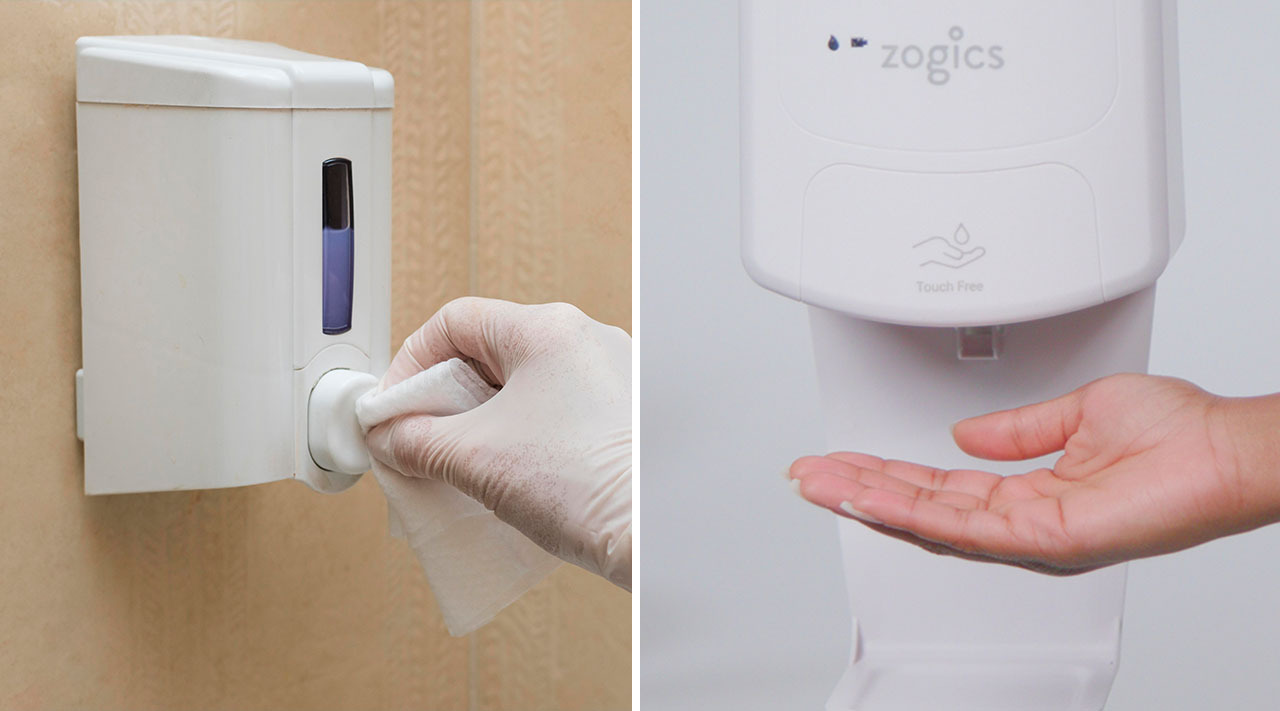
Keep dispensers working by refilling on a set schedule, checking batteries, cleaning surfaces daily, and testing sensors weekly. An empty or broken dispenser discourages use faster than having no dispenser at all.
| Task | Frequency | Why It Matters |
|---|---|---|
| Check Refill Levels | Daily in high-traffic areas | Prevents empty dispensers |
| Wipe Exterior Surfaces | Daily, especially manual models | Removes germs from the push bar and housing |
| Test Sensors, Nozzles, and Valves | Weekly | Catches clogs and sensor failures early |
| Check Batteries | Monthly or when the indicator shows low | Prevents touchless downtime |
| Clean Bulk Reservoirs | At every refill | Avoids contamination from topping off |
For step-by-step instructions, see our guide on how to refill a sanitizer dispenser. Stock disinfecting wipes near dispensers for quick exterior cleaning.
Benefits of Investing in High-Quality Dispensers
High-quality dispensers build user trust, support compliance, lower long-term costs, and improve your facility's image.
-
User Trust: A clean, working dispenser signals a visible commitment to hygiene.
-
Compliance: Supports health codes, NFPA 101, ADA, and CDC hand sanitizer guidance.
-
Cost Savings: Durable, high-capacity units with pre-measured dosing reduce waste and service time.
-
Brand Image: Modern dispensers enhance the facility's professional appearance.
Sustainability Considerations
The most sustainable dispenser setup combines refillable bulk units, energy-efficient sensors, and green-certified sanitizer. Eco-conscious businesses can:
-
Use refillable bulk dispensers to reduce single-use plastic waste.
-
Choose energy-efficient sensor technology to extend battery life.
-
Stock green-certified hand sanitizers that are compatible with your dispenser system.
-
Choose refills with recyclable bottles or brands that offer cartridge recycling programs.
Make Hygiene Effortless with the Right Dispenser
The right hand sanitizer dispenser matches your traffic, hygiene standards, and budget: touchless wall-mounted units for most commercial spaces, sealed-refill models for healthcare, floor stands for entrances, and tabletop units for desks. Choosing correctly improves hand hygiene, reduces waste, and shows guests and employees that their health matters. Shop Zogics hand sanitizer dispensers and bulk hand sanitizer refills, or request a quote for multi-location or volume orders.