Help Center

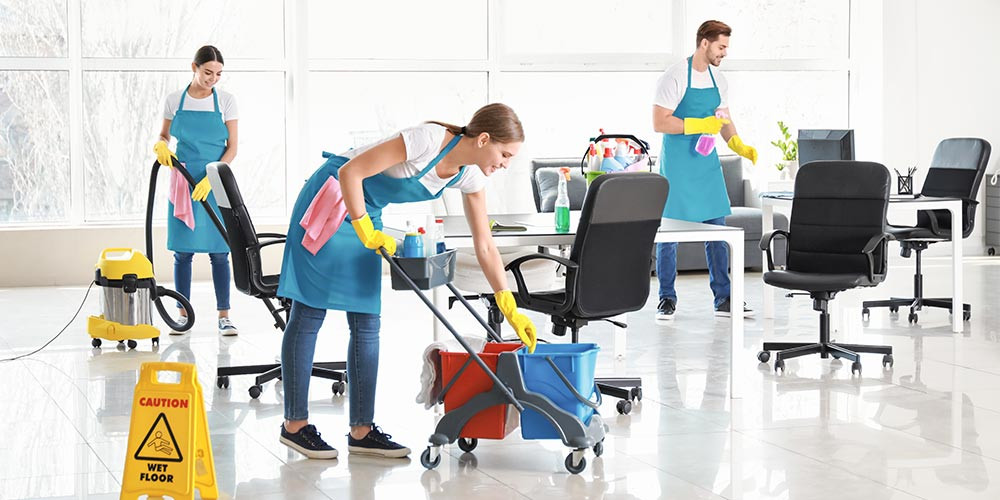
The five most common commercial cleaning mistakes are: confusing cleaning with disinfecting, misusing cleaning products, skipping a consistent schedule, neglecting low-touch areas, and using dirty cleaning tools. Each mistake can compromise the health of your facility and the people in it.
Key Takeaways:
-
Cleaning removes dirt; disinfecting kills pathogens. Both steps are required.
-
EPA-registered disinfectants must stay on surfaces for a set "dwell time" to work.
-
High-touch surfaces need attention multiple times per day, not just once.
-
Dirty mops, cloths, and sponges spread germs instead of removing them.
-
A written schedule with assigned roles is the single most effective way to maintain consistency.
Read on for the full breakdown of each mistake and exactly what to do instead.
Mistake #1: Confusing Cleaning and Disinfecting
The mistake: Treating cleaning and disinfecting as the same task. They are two distinct steps, and skipping either one leaves your facility at risk.
Cleaning uses soap or detergent and water to remove dirt, dust, and organic matter from surfaces. It does not kill germs. Disinfecting uses EPA-registered chemicals to destroy bacteria, viruses, and other pathogens. According to the CDC, cleaning must happen before disinfecting because a dirty surface blocks disinfectants from reaching and killing germs effectively.
Cleaning vs. Disinfecting vs. Sanitizing: Quick Comparison
| Term | What It Does | When To Use It |
|---|---|---|
| Cleaning | Removes visible dirt and debris | Always the first step |
| Sanitizing | Reduces bacteria to safe levels | Food-contact surfaces, gyms |
| Disinfecting | Kills bacteria, viruses, and fungi | Restrooms, high-touch surfaces, post-illness |
What to do instead: Always clean first, then disinfect. Stock your facility with both commercial cleaning supplies for the cleaning step and EPA-approved disinfectants for the kill step. For a deeper look at the distinction, see our guide on what's the difference between cleaning, disinfecting, and sanitizing.
Mistake #2: Not Using Cleaning Products Properly
The mistake: Using the wrong product for a surface, over-diluting concentrates, or wiping away a disinfectant before it has finished working.
The most overlooked error here is ignoring dwell time: the amount of time a disinfectant must remain wet on a surface to kill pathogens. Most commercial disinfectants require 30 seconds to 10 minutes of contact time. Wiping the surface dry before that window closes means the product did not work.
What to do instead:
-
Read the product label before each use. Dilution rates, compatible surfaces, and dwell times are printed there.
-
Use only EPA-registered disinfectants that list the specific pathogens you need to eliminate.
-
Match the product to the surface: harsh degreasers can damage delicate finishes; mild cleaners cannot cut through heavy grease.
-
For concentrated products, measure precisely. More product does not mean better results; it means residue, waste, and potential surface damage.
Our cleaning concentrates are EPA-approved and include clear dilution instructions, making it easier to get the ratio right every time. For facilities choosing between wipes and spray bottles, our comparison guide covers the trade-offs in detail.
Mistake #3: Skipping a Regular Cleaning Schedule
The mistake: Cleaning reactively, only when a space looks dirty, instead of following a set routine.
Visible dirt is a lagging indicator. By the time surfaces look grimy, bacteria and viruses have already had time to multiply and spread. A consistent schedule prevents that buildup and makes each cleaning session faster and more effective.
Recommended Commercial Cleaning Frequency
| Task | Frequency |
|---|---|
| Wipe High-Touch Surfaces (doorknobs, light switches, elevator buttons) | Multiple times daily |
| Disinfect Restrooms | At least twice daily in high-traffic facilities |
| Mop Hard Floors | Daily |
| Deep-Clean Floors, Walls, and Fixtures | Weekly |
| Clean HVAC Filters and Vents | Monthly or per manufacturer guidance |
What to do instead:
-
Write the schedule down and post it where staff can see it.
-
Assign specific tasks to specific team members so nothing gets skipped.
-
Use a color-coded cleaning system to assign different tools and cloths to different zones, which also prevents cross-contamination.
-
Hold brief team check-ins to address gaps and reinforce accountability.
Consistency is the most cost-effective cleaning investment a facility can make. One missed deep-clean session is far more expensive to recover from than the time it takes to prevent it.
Mistake #4: Neglecting Low-Touch Areas
The mistake: Focusing all cleaning effort on obvious high-touch hotspots while ignoring surfaces that are touched less frequently but still accumulate pathogens.
High-touch surfaces like doorknobs, light switches, elevator buttons, and shared equipment are rightfully prioritized. But desks, conference tables, chair armrests, stairwell handrails, and break room appliances also collect germs and are rarely disinfected on a consistent basis. According to the CDC, respiratory and gastrointestinal illnesses spread readily through contact with contaminated surfaces, including ones that don't see heavy traffic.
What to do instead:
-
Expand your cleaning checklist beyond the obvious hotspots.
-
Audit your space once a quarter to identify surfaces that are touched but rarely cleaned.
-
Include these areas in your daily or weekly schedule, not just during deep-clean sessions:
-
Desk surfaces and chair armrests
-
Conference room tables and AV equipment
-
Break room appliance handles and buttons (microwave, coffee maker, refrigerator)
-
Stairwell handrails
-
Shared storage handles and cabinet pulls
-
A thorough checklist is the easiest fix here. If it isn't written down, it won't get done consistently.
Mistake #5: Using Dirty Cleaning Tools
The mistake: Reusing mops, cloths, and sponges without cleaning them between uses, which spreads bacteria from one surface to the next instead of removing it.
A mop that isn't rinsed after each use carries the contamination from the last floor it cleaned onto the next one. The same applies to sponges, microfiber cloths, and vacuum filters. Dirty tools are one of the most common and least visible sources of cross-contamination in commercial facilities.
Cleaning Tool Maintenance Guide
| Tool | After Each Use | Periodic Deep Clean |
|---|---|---|
| Microfiber Cloths | Machine wash with detergent, air dry | Replace every 6-12 months or when fibers degrade |
| Mop Heads | Rinse with hot water, air dry | Machine wash weekly; replace when worn |
| Sponges | Wash by hand or machine with hot water | Replace every 1-2 weeks |
| Vacuum Cleaners | Empty dustbin, check filters | Clean filters per manufacturer schedule |
| Brooms | Shake out debris, rinse | Deep clean monthly |
What to do instead:
-
Wash microfiber cloths after every use. Microfiber traps and holds dirt and bacteria rather than spreading it, but only when clean.
-
Use a dedicated laundry detergent designed for commercial cleaning textiles to maintain fiber integrity.
-
Periodically soak mops and sponges in a diluted bleach or disinfectant solution for several hours, then rinse thoroughly and air dry.
-
Replace tools on a set schedule, not just when they look worn. Degraded fibers and old sponges harbor bacteria even after washing.
-
Store clean tools separately from used tools to prevent recontamination.
For a step-by-step breakdown, see our guide on how to clean microfiber cloth and our guide on changing a commercial mop head.