Help Center

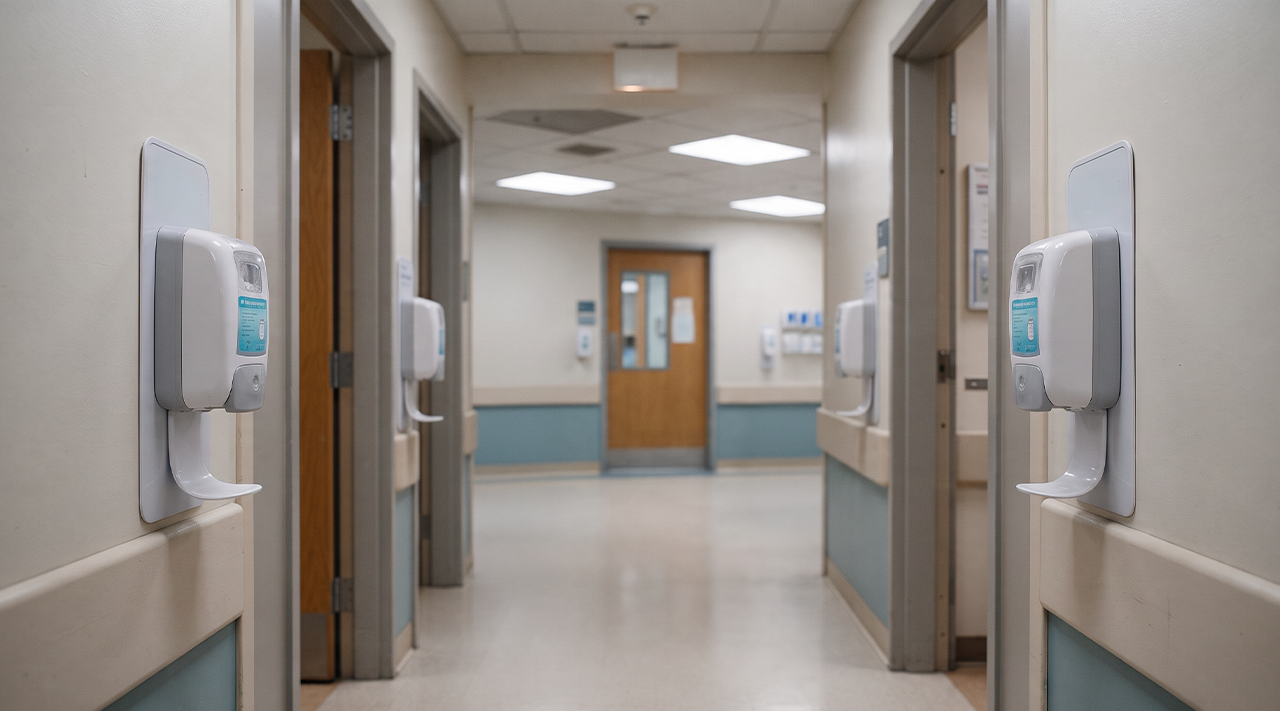
For most healthcare facilities, the best soap dispenser is a touch-free, wall-mounted unit that matches your existing refill program, cleans up fast for EVS teams, and holds enough product for the traffic it serves. Default to touchless operation in patient-facing areas, standardize the refill format across departments, and size capacity to how heavily each space is used.
Zogics top picks by use case:
- Best Touchless: Zogics Touch-Free Foam Soap Dispenser. 1000 mL bulk foam for everyday clinical, staff, and patient areas.
- Best cartridge system: Draco Touch-Free Foaming Dispenser. 1000 mL sealed cartridge for controlled refill programs across departments.
- Best budget: Manual Foam Hand Soap Dispenser. 1000 mL with no batteries or sensors, for lower-traffic rooms and backups.
- Best high-capacity: Alpine Automatic Foam Dispenser. 1200 mL foam or sanitizer for hospitals and high-traffic restrooms.

Hand hygiene is one of the most consistently cited factors in reducing healthcare-associated infections (HAIs). According to the CDC, hand hygiene compliance among healthcare workers remains a persistent challenge, and the equipment available in a facility directly affects how easy it is to comply. A dispenser that's empty, hard to activate, or difficult to clean creates friction at exactly the wrong moment.
The right dispenser does four things well: it supports hand hygiene compliance, holds up under high traffic, reduces cross-contamination by cutting shared touchpoints, and makes life easier for EVS teams managing refills across dozens of locations.
This guide covers what to look for in a healthcare soap dispenser, which products fit which spaces, and the most common mistakes facilities make when specifying dispensers. The framework below applies to a single new clinic or a full hospital system.
What to Look for in Healthcare Soap Dispensers
Not every dispenser built for commercial use is the right fit for healthcare. The demands are different: higher traffic, stricter cleaning protocols, more scrutiny on cross-contamination, and EVS teams who need to move fast. Here's what matters most.
Touch-Free or Automatic Operation
Touchless dispensers are the strongest choice for patient-facing and high-contact areas. When a user doesn't need to press a lever or push a pump, there's one fewer shared surface to manage.
Key advantages of automatic dispensers in healthcare settings:
- Sensor-activated dispensing removes the need to touch the unit entirely
- Pre-measured output reduces product waste and keeps dispensing consistent
- Faster activation in busy spaces like nurse stations and high-traffic restrooms
- Better user experience for staff wearing gloves or carrying supplies
For most clinical environments, touchless operation should be the baseline, not an upgrade.

Sealed Cartridge Systems
Sealed cartridge dispensers offer a more controlled refill process than open bulk-fill models. Because the refill remains sealed until installed, there's less opportunity for contamination during the changeover.
Facilities that benefit most from cartridge systems:
- Those managing standardized refill programs across multiple departments
- Environments where refill speed matters (high-turnover restrooms, busy nurse stations)
- Facilities that want to reduce the risk of staff using incorrect or incompatible soap products
Cartridge systems also simplify purchasing: one SKU covers both the dispenser and the refill, which makes inventory management more straightforward.
Easy-to-Clean Design
Healthcare dispensers get wiped down frequently, sometimes multiple times per day. A housing with deep seams, textured surfaces, or hard-to-reach corners creates cleaning challenges that slow down EVS teams.
Look for:
- Smooth ABS plastic housings with minimal surface texture
- Drip trays to catch overflow and keep buildup off walls and floors
- Locking or tamper-resistant covers that stay closed during cleaning
- Fewer crevices where product residue or contaminants can accumulate

Durability for High-Traffic Use
Hospitals, urgent care centers, and long-term care facilities run their dispensers hard. A unit that works well in a hotel lobby may not hold up to the same cycle of use and cleaning in a clinical environment.
Durability factors to evaluate:
- Wall-mounted design keeps the unit secure and off countertops
- Locking mechanisms prevent tampering and accidental activation
- Battery life for automatic models (fewer battery changes means less maintenance burden)
- Sensor reliability over thousands of activations
Accessibility and Reach
Dispensers only help if people can reach them. Under the 2010 ADA Standards, operable parts on an unobstructed route sit no higher than 48 inches and no lower than 15 inches above the finished floor, with lower maximums when reaching over an obstruction. For full mounting heights, sink-distance, and drip-management specs, see our hand sanitizer and soap dispenser placement guide, and always confirm against current ADA Standards and your local building codes.
Refill Visibility
An empty dispenser in a healthcare setting is a hand hygiene gap. Dispensers with sight windows or translucent chambers let EVS staff check levels at a glance without opening the unit, which speeds up rounds and reduces the chance of running out during peak hours.
Top Soap Dispensers for Healthcare Facilities
Browse the full hand soap dispenser selection at Zogics. The four picks below map to the decisions most healthcare buyers are weighing: touch-free operation, sealed cartridges, cost, and capacity.
Best Touchless Dispenser: Zogics Touch-Free Foam Soap Dispenser
Best for: Everyday clinical, staff, and patient areas where hands-free operation is the priority
The Zogics Touch-Free Foam Soap Dispenser is the everyday touchless standard for healthcare spaces. Sensor activation means there's no shared surface to press, and the refillable bulk chamber works with your existing Zogics foaming soap, so there are no cartridges to source. It's a Zogics-brand unit, which keeps refills and support in one place.
Key specs:
- Capacity: 1000 mL refillable bulk chamber
- Dispensing: Touch-free automatic, 0.4 mL per pump (configurable to 1 or 2 pumps)
- Power: 4 C batteries (up to 80,000 uses)
- Sight window: Yes, for refill monitoring
- Security: Security key included
- Included: Drip tray and mounting hardware
- Compatibility: All Zogics foaming body care liquids; not compatible with gel
Prefer gel soap? The same touch-free design comes in a gel version built for bulk gel gallons. Foam and gel units are not interchangeable, so match the dispenser to the soap you stock. Our foam vs liquid soap guide covers the cost and maintenance tradeoffs.
Best Cartridge System: Draco Touch-Free Wall Mounted Foaming Dispenser
Best for: Facilities that want controlled refill changes and tamper-resistant dispensing
The Draco Touch-Free Wall Mounted Foaming Dispenser uses a sealed cartridge format, which makes it a good fit for facilities running standardized refill programs or managing supply across multiple departments.
Key specs:
- Capacity: 1000 mL cartridge
- Dispensing: Touch-free wall-mounted sensor
- Refill type: Eversoft foaming sanitizer or soap gel cartridges
- Dispenses per cartridge: Up to 1,250
- Security: Locking device included
- Housing: Durable ABS plastic
Because the cartridge stays sealed until installation, the refill process is faster and more controlled than open bulk-fill models. The locking device adds tamper resistance that's useful in public-facing areas like lobbies and visitor restrooms.
Best Budget Option: Manual Foam Hand Soap Dispenser
Best for: Lower-traffic rooms, backup installations, and facilities that want to avoid batteries and sensors
The Manual Foam Hand Soap Dispenser is the lowest-cost way to equip a space. There are no batteries to replace and no sensor to fail, so it holds up in rooms where simple and reliable beats high-tech. A no-clog foaming mechanism keeps it working between refills, and it runs on the same Zogics foaming soap as the touch-free models, so you can standardize refills across both.
Key specs:
- Capacity: 1000 mL (33.8 oz)
- Dispensing: Manual push, no power required
- Refill type: Bulk foam soap
- Mechanism: No-clog foaming pump
- Mounting: Wall, tile, or mirror; mounting kit included
- Warranty: 1 year
- Compatibility: Zogics foaming hand soap; not compatible with gel
Choose this one for staff restrooms, break rooms, exam rooms, and backup locations where traffic is lighter and battery upkeep isn't worth it.
Best High-Capacity Option: Alpine Automatic Hands-Free Foam Soap/Sanitizer Dispenser
Best for: Hospitals, long-term care facilities, public restrooms, and high-contact areas
The Alpine Automatic Hands-Free Foam Dispenser is the strongest option for the busiest spaces in a facility. At 1200 mL, it holds meaningfully more than the standard 500-800 mL commercial dispenser, which matters in restrooms and hallway stations that see hundreds of uses per day. It works with both foam soap and hand sanitizer, giving facilities flexibility when standardizing product across departments.
Key specs:
- Capacity: 1200 mL
- Dispensing: Automatic hands-free sensor activation
- Refill type: Foam soap or sanitizer
- Sight window: Yes, for easy refill monitoring
- Security: Lock and key
- Housing: Durable ABS plastic with drip tray included
The included drip tray catches overflow and keeps walls and floors clean between EVS rounds, without requiring any extra hardware.
Comparison: Healthcare Soap Dispensers at a Glance
| Category | Product | Dispensing | Refill Type | Capacity | Best Use Case |
|---|---|---|---|---|---|
| Best touchless | Zogics Touch-Free Foam Soap Dispenser | Touchless | Bulk foam (refillable) | 1000 mL | Everyday clinical, staff, and patient areas |
| Best cartridge system | Draco Touch-Free Foaming Dispenser | Touchless | Sealed cartridge | 1000 mL | Controlled refill programs across departments |
| Best budget | Manual Foam Hand Soap Dispenser | Manual | Bulk foam (refillable) | 1000 mL | Lower-traffic rooms, backups, no-power installs |
| Best high-capacity | Alpine Automatic Foam Dispenser | Touchless | Bulk foam or sanitizer | 1200 mL | Hospitals, long-term care, high-traffic restrooms |
For most healthcare facilities, the best choice is a touchless, wall-mounted dispenser with either a sealed cartridge system or a high-capacity bulk refill format. Cartridge systems are often easier to standardize and manage across departments, while bulk refill models are more flexible for facilities already committed to a specific soap product.
Which Dispenser Fits Each Healthcare Space
The right dispenser for a patient restroom isn't necessarily the right one for an exam room or a procedural area. Here's how to match a unit to each space. For where to mount each dispenser and how far from the sink, see the placement guide.
Patient restrooms. Prioritize a high-capacity touchless unit with a sight window, like the Alpine. These restrooms see staff, patients, and visitors; they're cleaned frequently, and a visible refill level reduces the chance of running out during busy periods.
Exam rooms and staff spaces. Reach for a compact touch-free unit, or the manual dispenser in lower-traffic rooms where battery upkeep isn't worth it. These spaces have limited wall space and need a dispenser that's easy to activate with one hand, quick to refill, and simple to clean between patients. Avoid large-footprint units that crowd out other equipment.
Nurse stations. Choose a high-capacity unit that supports rapid, repeated activation without sensor lag and shows a clear low-level indicator. Higher capacity means fewer interruptions during busy shifts.
Public lobbies and waiting rooms. A high-capacity, lockable unit like the Alpine or the cartridge-based Draco works best here. These spaces are more accessible to the general public, so tamper resistance matters as much as refill frequency.
Long-term care facilities. Standardize on one or two models across the building. Long-term care runs dispensers for years, not months, and a single standard simplifies training, purchasing, and inventory for EVS teams.
Procedural areas. Follow your own internal infection prevention protocols and applicable regulatory guidance. Product selection in these spaces should be made in coordination with infection prevention staff.
Common Mistakes to Avoid
Even well-run facilities make avoidable errors when specifying soap dispensers. These are the ones that come up most often.
Choosing residential dispensers for healthcare use. Residential units aren't built for the traffic, cleaning frequency, or durability demands of a clinical environment. They wear out faster, are harder to maintain, and often don't support the soap formats healthcare facilities use.
Ignoring refill compatibility. Not all dispensers work with all soap formats. Confirm whether a unit uses bulk hand soap, foaming soap, gel soap, or sealed cartridges before standardizing across the facility. Foam and gel are not interchangeable in the same unit, and mixing incompatible products causes dispensing failures and product waste.
Overlooking refill visibility. An empty dispenser is a hand hygiene gap. Dispensers without sight windows or clear level indicators make it harder for EVS staff to catch low-fill situations before they become outages. In high-traffic areas, that's a real operational risk.
Installing dispensers without considering accessibility. Mounting height and reach range affect whether patients and visitors with mobility limitations can use a unit.
Using dispensers that are hard to clean. Complicated housings with deep seams, textured surfaces, or recessed areas slow down EVS teams and create spots where residue can accumulate. Smooth, simple housings are easier to maintain and more consistent to clean.
Not standardizing across the facility. Running too many different dispenser models creates complexity in purchasing, refill management, and staff training. Standardizing on one or two models wherever possible reduces that burden significantly.
Find the Right Dispenser for Your Facility
The right soap dispenser for a healthcare facility depends on how it fits into your refill program, your EVS workflows, and the specific demands of each area in your building.
Start with your highest-traffic spaces and work outward. Touchless, high-capacity units in patient restrooms and nurse stations. Compact bulk-fill units in exam rooms. Sealed cartridge systems where standardization and tamper resistance matter most.
Browse the full hand soap dispenser selection at Zogics, including the Zogics Touch-Free Foam Soap Dispenser, the Draco Touch-Free Foaming Dispenser, the Manual Foam Hand Soap Dispenser, and the high-capacity Alpine Automatic Foam Dispenser. If you also need to spec sanitizer stations, see our guide to choosing a hand sanitizer dispenser, and explore our full range of healthcare cleaning and hygiene supplies to round out your program. If you're not sure which option fits your setup, we're here to help.